Blog

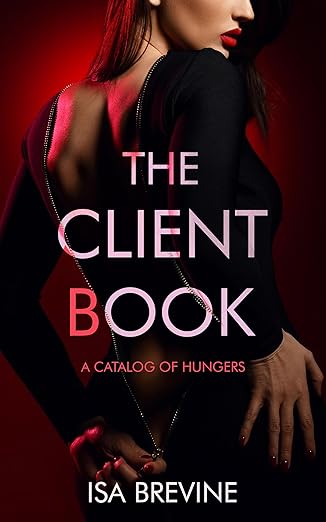
Interview with Isa Brevine, Author of The Client Book: A Catalog of Hungers

What's the story behind the story? What inspired you to write this book?

We live in an era of curation. We curate our feeds, our resumes, and our dating profiles, presenting a polished, invulnerable surface to the world while hiding the messy, terrified human beneath. I wanted to take that impulse to its absolute extreme. The character of Aura was born from a single question: What happens when a woman decides to turn herself into a work of art so she never has to feel pain again? I wanted to explore the intersection of high intellect and primal hunger. Aura believes that if she can analyze desire, if she can name it, categorize it, and charge a fee for it, she can control it. She uses the language of art history to distance herself from the act of sex, turning intimacy into a transaction. But the body has a way of telling the truth that the mind tries to hide. Writing this book was an investigation into the difference between being looked at and being seen. It is about the fortresses we build to protect ourselves and the terrifying, beautiful relief of letting them burn down.

If you had to pick theme songs for the main characters of your book, what would they be? (Meant to be fun. Skip if you need to!)

Mirrorball maybe?

What's your favorite genre to read? Is it the same as your favorite genre to write?

I am a fantasy nerd myself. I read/listen to escape, so I tend to be drawn to the fantastical.

What books are on your TBR pile right now?

I absolutely cannot wait to listen to Book 8 in the Dungeon Crawler Carl series. After that, I am planning to go back through The Stormlight Archives.

What scene in your book was your favorite to write?

It might surprise readers that my favorite scene isn’t one of the high-heat encounters in a penthouse or a hotel suite. It’s a quiet moment in a dusty shop. For the first 19 chapters, Aura is a character defined by disintegration. She is taking herself apart, piece by piece, and selling the fragments to her clients. She views her life as a “collection of broken things.” Writing the scene where Arlo, the bookbinder, forces her to sit down and physically sew a book signature together was the turning point for me as the writer and for her as the character. There is a line where Arlo says, “A book has a spine. It has integrity. All the pages, they have to hold on to each other.” That was the moment the metaphor became literal. Until then, Aura had been trying to write her life with her mind, using her skills in analyzing, curating, and distancing. In this scene, she has to use her hands. She has to pierce the paper and pull the thread. It is a moment of profound, non-sexual intimacy that is actually more vulnerable than any of the nude scenes that came before it. I loved writing it because it is the antithesis of her life as “Aura.” It’s a messy, tactile lesson. It is also the moment she realizes that she doesn’t just have to document the ruin of her life. She can actually build a new structure to hold it. It’s the moment she stops being a loose collection of pages and starts becoming a book in her own right.

Do you have any quirky writing habits? (lucky mugs, cats on laps, etc.)

I have a faithful Bichon Frise who is my constant writing companion. He listens to my ideas attentively!

Do you have a motto, quote or philosophy you live by?

Never take those you love for granted and cherish each day with them!

If you could choose one thing for readers to remember after reading your book, what would it be?

We are often unwittingly the architects of our own cages!


Isa Brevine is the author of the new book The Client Book: A Catalog of Hungers

Connect with Isa Brevine
Website

Facebook

The Client Book: A Catalog of Hungers

Interview with Aubrey E Drummond, Author of Welcome Darkness (Life's Tree Spins On...)

What's the story behind the story? What inspired you to write this book?

Well, I don’t know whether or not you read my long introduction to the book yet. But I will try to answer your question without restating everything I wrote in that introduction. Or maybe I just might rehash everything. Who knows? The previous poetry books I wrote for the Inside the Circle of the Sun series—there were six of them—featured poems I had mostly written during the life of my wife. Poems she enjoyed, read, and cajoled me to publish, to which I resisted until after her death. I’m ashamed to say. Welcome Darkness is the first book in a new series, Life’s Tree Spins On, or rather, second, depending on your perspective. I explained all that in the book’s introduction. This book and its sequels may feature some emotions I felt after her death: dark, depressed, and full of despair. But there will be plenty of lighter moments too. Because even when you have gone through the worst possible moment in your life, Life’s Tree Spins On.

What's your favorite genre to read? Is it the same as your favorite genre to write?

My favorite genre to read is horror. Fantasy horror, not that Michael Myers stuff. I like monsters and sci-fi creatures, and I love psychological horror. I even write the stuff. Hoping to drop a book one day, at least that’s what I keep telling myself. Of course, my favorite genre to write is poetry, prose, or whatever you want to call the stuff I write.

What books are on your TBR pile right now?

Right now, I’m reading The End of the World as We Know It, edited by Christopher Golden and Brian Keene; How to Market a Book by Ricardo Fayet, and Black AF History by Michael Harriot.

What scene in your book was your favorite to write?

I’m a poet, so again I find this question hard to answer. The poem First Memory was fun to write, although I’m itching right now to rewrite it.

Do you have any quirky writing habits? (lucky mugs, cats on laps, etc.)

Check out the first interview I did for this site for the book Hello Stranger.

If you could choose one thing for readers to remember after reading your book, what would it be?

Sure, just remember, no matter how hard things get in life. And believe me, there will be a lot of hard times; there will always be a rainbow somewhere waiting for you. So, as I stated earlier, even if the worst thing in your life has happened, open your eyes, and you will see: life goes on.


Aubrey E Drummond is the author of the new book Welcome Darkness (Life's Tree Spins On...)

Connect with Aubrey E Drummond

Website

Facebook

Twitter

Welcome Darkness (Life's Tree Spins On...)

Interview with P. A. Fielding, Author of Burt vs Them

What's the story behind the story? What inspired you to write this book?

My great-great-grandpa suffered with his mental health, which became a family secret, hidden since 1888. I developed his story into the narrative. The idea for Them emerged whilst I was writing The Rattler Trilogy. It was then placed in the “development pile.” In the following years, Burt, my West Highland Terrier, suffered injuries from a traumatic event. I couldn’t understand why anyone would want to hurt a dog. Why? Questioning the rationale, I had a what-if moment—and I remembered Them. Burt vs Them was born.

If you had to pick theme songs for the main characters of your book, what would they be?

‘Crazy Train’ by Ozzy Osbourne. Not only is it Fee’s ringtone, but it’s also mine.

What's your favorite genre to read? Is it the same as your favorite genre to write?

I love reading thrillers and creepy books — and writing them too.

What books are on your TBR pile right now?

Quite a few. Notably, The Spy and the Traitor by Ben Macintyre, Never Flinch by Stephen King, and Going Home in the Dark by Dean Koontz.

What scene in your book was your favorite to write?

The Barcelona chapter. Liverpool hosted Barcelona in the Champions League semi-final second leg — The Reds needed to win 4–0. That night, I was among the lucky few who had a ticket. Writing it brought back so many memories. Anfield was rocking.

Do you have any quirky writing habits? (lucky mugs, cats on laps, etc.)

An iced latte, cheese and onion crisps, and chocolate. Plenty of chocolate.

Do you have a motto, quote or philosophy you live by?

As a Liverpudlian, it has to be ‘You’ll Never Walk Alone’.

If you could choose one thing for readers to remember after reading your book, what would it be?

Friendship — look out for one another.


P. A. Fielding is the author of the new book Burt vs Them

Connect with P. A. Fielding

Instagram

Burt vs Them

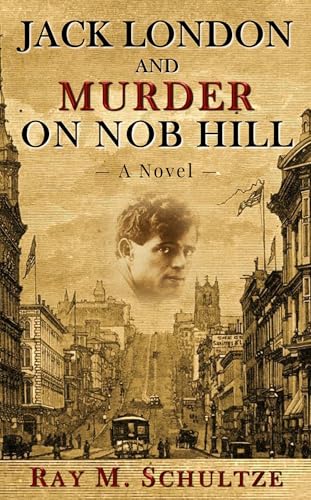
Interview with Ray M. Schultze, Author of Jack London and Murder on Nob Hill

What's the story behind the story? What inspired you to write this book?

What author wouldn’t want to write about Jack London? At the peak of his short writing career, Jack was a rock star of the literary world, his fame spreading well beyond America. He was a larger-than-life figure whose personal exploits fascinated the public just as much as his novels and short stories entertained them. By the age of 22, he had tramped from California to New York, prospected for gold in the Yukon, pirated oysters in San Francisco Bay, and earned notoriety as the “boy socialist of Oakland.” Given his lifelong craving for adventure, who wouldn’t want to make him the protagonist in a murder mystery novel?

What's your favorite genre to read? Is it the same as your favorite genre to write?

I’ve always enjoyed reading fast-paced thrillers, especially those set in particularly dramatic historical periods. The first short story that made an impression on me was “The Most Dangerous Game.” As an adult, I became a fan of the World War II thrillers penned by Ken Follett and Alan Furst. They were the direct inspiration for my earlier novel, THE DEVIL IN DREAMLAND, about a down-on-his-luck stagehand who becomes enmeshed in a Nazi conspiracy during the filming of CASABLANCA. When I read, I’m looking for thoughtful escapism, and that’s what I try to write.

What books are on your TBR pile right now?

THE MARBLE HALL MURDERS by Anthony Horowitz and THE PARIS DECEPTION by Bryn Turnbull. Bonnie MacBird’s Holmesian THREE LOCKS is lurking nearby, and in the non-fiction category, I’ve just finished Hampton Sides’ epic about Captain Cook, THE WIDE WIDE SEA.

What scene in your book was your favorite to write?

Two scenes come to mind: first, when Jack finally comes face-to-face with the beautiful, mysterious Liang Mei Lin, the only witness to the murder that he’s become obsessed with solving, and he finds himself outmatched; second, when he becomes imprisoned in a derelict building’s pitch-black basement, teeming with rats, and fights despair as he tries to figure a way to save himself.

Do you have any quirky writing habits? (lucky mugs, cats on laps, etc.)

Sometimes I find myself kneading a polished black stone that I found on a beach at Point Reyes National Seashore in Northern California. Either I’m doing it for luck or to settle my nerves. Maybe both.

Do you have a motto, quote or philosophy you live by?

That life is too complicated and messy to be guided by a single motto or quote.

If you could choose one thing for readers to remember after reading your book, what would it be?

The singular character of Jack London, a bright, passionate force, full of contradictions and handicapped by the prejudices of his time but striving to understand and become a better version of himself. And perhaps that will prompt the reader to seek out one of his classic novels, such as CALL OF THE WILD.

What is your Author Website? (If you have one, great! If not, no worries! Ex. https://yourauthorsite.com)

https://raymschultze.com


Ray M. Schultze is the author of the new book Jack London and Murder on Nob Hill

Connect with Ray M. Schultze

Jack London and Murder on Nob Hill

Interview with Mike Stetz, Author of Don't Stop the Presses

What's the story behind the story? What inspired you to write this book?

It’s a comic farce about a laid-off newspaper reporter who takes over a newsroom to save a story he was writing. The idea came from my reality: I’m a laid-off newspaper reporter. It was quite the blow, so I thought it would be fun to create a novel where a newspaper reporter gets revenge by holding editors hostage and making them squirm a bit. Spoiler alert: No one gets hurt. It’s just a cool, little fantasy.

What's your favorite genre to read? Is it the same as your favorite genre to write?

I like humor.

What scene in your book was your favorite to write?

It’s about an older laid-off copy editor who’s on the beach reading. The main character runs into him, and the older man talks about how he’s thinking of walking into the ocean and never coming back. It’s a dark scene, but it’s meant to show how devastating these layoffs can be.

If you could choose one thing for readers to remember after reading your book, what would it be?

That layoffs can be one of the more emotionally trying events a person can go through. It’s right up there with divorce and loss of family. It sucks. For newspaper reporters, it’s particularly trying because you really have few options after such work. And those jobs are gone, vanished.

What is your Author Website?

https://mikestetzauthor.com/

Link to your Facebook Page

https://www.facebook.com/michael.stetz.3


Mike Stetz is the author of the new book Don't Stop the Presses

Connect with Mike Stetz

Don't Stop the Presses

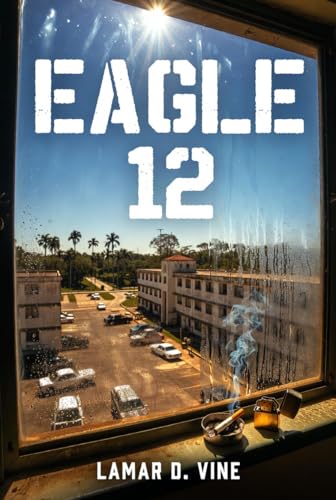
Interview with Lamar D. Vine, Author of Eagle 12

What's the story behind the story? What inspired you to write this book?

I was twenty-one years old, broke, and had nothing left to lose when I enlisted. I’d just survived the tail end of Operation Just Cause in Panama, and the Army gave me a way out of a dead-end life back home. That’s where Eagle 12 came from. I became the youngest Military Police Investigator on post and picked up the call sign “Eagle 12.” One single weekend in the old Coco Solo barracks changed everything for me. The loneliness, the pressure, the feeling that you’re either going to make it or you’re going to break—I carried those real moments for thirty years. I finally wrote the book as fiction based on true events because I wanted readers to feel what it was really like to be that young, that far from home, and suddenly responsible for other people’s lives. It’s short, it’s raw, and every page is rooted in what actually happened. The story behind Eagle 12 is really the story of one intense weekend that never left me. After the invasion of Panama, the whole base was still on edge. I was brand new to the MPI job, still learning how to wear a suit and tie instead of BDUs, and I caught a case that pulled me into the underbelly of post-life—drugs, desperation, and guys who were just trying to survive like I was. I worked around the clock, barely slept, and saw things that showed me how thin the line is between doing your duty and losing yourself. I turned that real weekend into fiction because some details and people needed to stay protected, but the heart of it—the pressure, the fear, the feeling of being completely on your own—is all true. I wrote it as a novelette, so other young soldiers (and anyone who’s ever felt trapped and had to fight their way out) would know they’re not alone. It’s the shortest book I’ve ever written, but it might be the most honest one, too.

If you had to pick theme songs for the main characters of your book, what would they be?

For the main character—the young 21-year-old MPI nicknamed Eagle 12—I’d pick “November Rain” by Guns N’ Roses. That song was everywhere in 1993, right when this story takes place. The emotion and the weight in it really capture what that young soldier was feeling—the loneliness, the pressure, and trying to hold everything together when you’re so far from home.

What's your favorite genre to read? Is it the same as your favorite genre to write?

My favorite genre to read is military fiction and stories based on real events. I’ve always been drawn to books that show what it’s really like for young soldiers—the pressure, the loneliness, the brotherhood, and the hard choices. Guys like W. E. B. Griffin, Nelson DeMille, and some of the newer veteran writers keep me turning pages late into the night. And yes, it’s exactly the same as my favorite genre to write. I only write military drama and short stories pulled straight from my own time in the Army. That’s what I know, that’s what feels natural, and that’s what I keep coming back to even after all these years. I guess once a soldier, always a soldier—on the page and off it.

What books are on your TBR pile right now?

My TBR pile is getting ridiculous these days! I keep buying more books than I can possibly read. Right now I’ve got: Project Hail Mary by Andy Weir—smart sci-fi that actually sounds like a blast. The Silent Patient by Alex Michaelides—a psychological thriller everybody keeps raving about. The Lincoln Highway by Amor Towles—everybody says it’s fantastic, so I finally gave in. At this rate, I’ll still be working through this pile when I’m 85.

What scene in your book was your favorite to write?

Hands down, the scene where I first get called “Eagle 12” over the radio. I’m standing there in my Hawaiian shirt and jeans, trying to look like I know what the hell I’m doing, when this voice crackles through: “Eagle 12, Eagle 12, respond.” I smiled the whole time I was writing that part. It’s the exact second everything changes. One minute I’m just this scared 21-year-old trying not to screw up; the next minute, I’ve got a call sign and the whole post is waiting on me. That mix of pure terror and “holy crap, this is really happening” is what made the whole story feel alive to me.

Do you have any quirky writing habits? (lucky mugs, cats on laps, etc.)

I mostly write on my Samsung Galaxy phone. Most of my books are written on my phone. I proofread on my MS Pro, but I prefer lying by the pool or waiting at the doctor’s office. I’ll just take my phone out and start writing.

Do you have a motto, quote or philosophy you live by?

Stop daydreaming. I’m retired now. It’s time to get my thoughts and ideas down—on paper or in pixels—so others can read them. Writing them down makes them real.

If you could choose one thing for readers to remember after reading your book, what would it be?

Writing down your thoughts—getting them out of your head and onto paper or a screen—is the single most powerful way to turn daydreams into something real, lasting, and shareable.

Link to your Facebook Page

https://www.facebook.com/profile.php?id=61585636137100

Link to your Twitter Profile

https://x.com/SanctuaryRow83


Lamar D. Vine is the author of the new book Eagle 12

Connect with Lamar D. Vine

Eagle 12

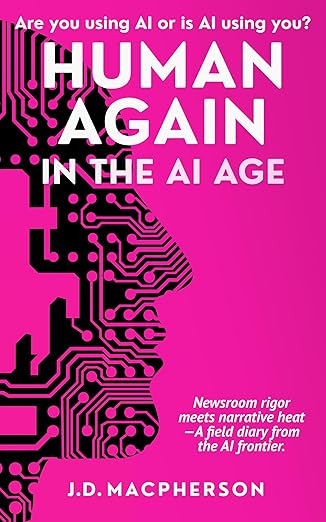
Interview with J.D. Macpherson, Author of Human Again: In the AI Age

What's the story behind the story? What inspired you to write this book?

I’ve been a journalist and writer my entire adult life. I’m a mid-30s mother of two who accidentally had my mind blown by ChatGPT a year ago. I felt this burning need to try to express what I was feeling and learning as I discovered this new thing. As I used it more and thought about it, I started questioning my own humanity. I felt alone and alienated, consumed by my thoughts. Writing Human Again didn’t feel like a choice. My hope is that other people will find some comfort in my writing and a renewed appreciation for critical thinking.

What's your favorite genre to read? Is it the same as your favorite genre to write?

Since journalism school, I have always been drawn to storytelling that tells the truth, but better. Journalism that reads like fiction, that makes you feel something, and makes you think differently. The stories that stick with you and change your perspective on more than just the direct subject. Conversations questioning the self, identity, and the world around us, ultimately in the pursuit of happiness. I love confessional, voice-driven writing, the kind of immersive storytelling that makes you feel like you’re living inside someone else’s skin. And yes, that’s my favorite way to write as well.

What books are on your TBR pile right now?

I am rereading This Boy’s Life by Tobias Wolff. I’m currently reading Quick Silver by Callie Hart. I always have Joan Didion and The Lord of the Rings nearby.

What scene in your book was your favorite to write?

Probably the Horoscopes scene. I was spending a lot of time talking to AI and poking holes in what was possible and where it fell short. Those moments I describe in the Sentience chapter really made me think and ultimately were driving factors in the need to write about my experiences.

Do you have any quirky writing habits? (lucky mugs, cats on laps, etc.)

I often write late at night and in bursts. I also often get my best ideas in my dreams. Lately, I ask AI to argue with me constantly. If it agrees too quickly, I don’t trust it.

Do you have a motto, quote or philosophy you live by?

I love The Hobbit and The Lord of the Rings. Many quotes, but specifically the idea that “it’s the small everyday deeds of ordinary folk that keep the darkness at bay.”

If you could choose one thing for readers to remember after reading your book, what would it be?

Right now, we need creatives, thought leaders, writers, thinkers, artists, and everyone in between to play, test, push, discover, philosophize, and explore, document this incredible and terrifying artificial intelligence. I hope this book is part of that story.


J.D. Macpherson is the author of the new book Human Again: In the AI Age

Connect with J.D. Macpherson

Author Site

Facebook

Human Again: In the AI Age

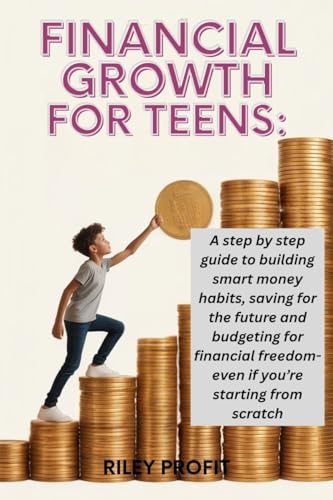
Interview with Riley Profit, Author of Financial Growth For Teens

What's the story behind the story? What inspired you to write this book?

This book hit home for me. It is a topic that I feel really strongly about. Finance has always been a huge source of constant worry and struggle throughout my life. I grew up poor, and my mother had a scarcity mindset about money that she passed on to me and my siblings. The only thing I knew about money while growing up was that I didn’t have enough and always wanted more, but never knew how to get it. Schools didn’t teach teenagers how to make money and spend it wisely. I feel that this information could have been life-changing for me as I grew up. I would have made better life choices about money if I had known the information in this book when I was a teenager. The purpose of this book is to reach as many people as possible, and hopefully it will have a positive impact on them throughout their lives.

What's your favorite genre to read? Is it the same as your favorite genre to write?

I like to read self-help and Christian books that inspire and uplift. These types of books are what gave me the motivation to write Financial Growth for Teens.

What books are on your TBR pile right now?

Graced to Go by Victoria Osteen and Get Out of Your Own Way by Mark Goulston.

Do you have a motto, quote or philosophy you live by?

I have always lived by the philosophy of treating people the way I would want to be treated. While writing this book, I kept the thought, “Is this information I would have learned from when I was a teenager?” in the back of my mind. Upon completing this book, I can answer that with an emphatic “yes.”

If you could choose one thing for readers to remember after reading your book, what would it be?

I don’t want them to just read it, put it away, and remember only one thing. This book is much more valuable than that. I want it to be a constant reference they can go to every day.


Riley Profit is the author of the new book Financial Growth For Teens

Connect with Riley Profit

Financial Growth For Teens

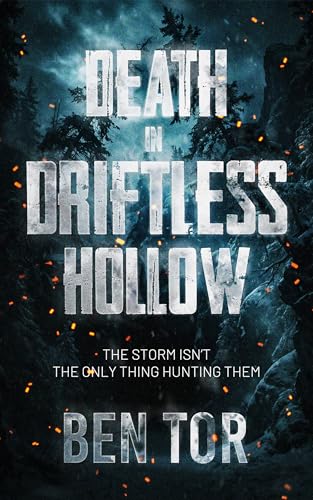
Interview with Ben Tor, Author of Death in Driftless Hollow

What's the story behind the story? What inspired you to write this book?

I wrote Death in Driftless Hollow because I don’t think most of us are afraid of “big” things. We’re afraid of what happens inside us when the rules change. We live by old wiring—fight, flee, freeze—while modern life teaches us to smile, push through, and call it “fine.” Many of us are not fine. We avoid. We manage. We negotiate with our own nervous systems. And sometimes that works—until it doesn’t. The Driftless gave me the perfect stage—and I genuinely love the land here. It’s beautiful. Remote when you want it. Quiet in a way that feels like permission. A pocket world—the kind of place you go to reset. But this story isn’t about relaxation. It’s about the body’s drive to stay alive. At its core, the book is about transformation through ordeal—the brutal kind that doesn’t ask politely. The ancient calamities by which humans once lived and died are reapplied to modern characters I’ve grown to adore—even, and especially, the ones who don’t survive. When comfort dissolves, and safety proves fragile—who decides what survival looks like? That’s the question behind DDH.

What's your favorite genre to read? Is it the same as your favorite genre to write?

I read just about anything—fiction and nonfiction—but I’m consistently drawn to stories that test people under pressure in interesting environments. Thrillers, especially those built around isolation or survival, are probably closest to my center. I’m fascinated by what happens when the rules change—when weather, geography, or circumstance strip away comfort and force characters to confront something older inside themselves. That interest cuts across genres more than it might seem. I can enjoy the tight, escalating tension of something like Freida McFadden’s One by One, the oceanic dread of Mira Grant’s Into the Drowning Deep, or the more intimate wilderness ordeal of Stephen King’s The Girl Who Loved Tom Gordon (loved). There are also quieter, harsher works that I approach with respect—Cormac McCarthy’s The Road, or Adam Nevill’s The Ritual—stories that linger because they’re unflinching about what survival costs. So yes—the genre I most love to read is also the one I most love to write. Stories where isolation isn’t just a setting, but a human catalyst.

What books are on your TBR pile right now?

I prefer paper books. So at the moment, my TBR is a literal book pile. A mix of survival and psychological thrillers—Michael Rutger’s The Anomaly, C.J. Cooke’s The Ghost Woods, and a couple of winter-set suspense novels that I’ve somehow missed. And then, inevitably, there are a few completely unrelated books waiting their turn. The pile grows faster than I can read it!

What scene in your book was your favorite to write?

My favorite scene to write wasn’t the most violent—it was the moment fear becomes useful. There are points in the story where panic stops being a “flaw” and starts being a survival tool. Writing that shift—from avoidance to acceptance—felt like the heart of the book. That’s where transformation through ordeal really begins.

Do you have any quirky writing habits? (lucky mugs, cats on laps, etc.)

Death in Driftless Hollow was nearly 20,000 words longer at one point. I tend to overwrite first and then carve the story back down until only what’s necessary remains. At some point in every project, I print the manuscript and read it on paper. Something shifts when the words leave the screen. I see rhythm differently. It’s a slower, more honest read for me. So no lucky mug—just a stack of marked-up paper pages!

Do you have a motto, quote or philosophy you live by?

“Endure, and see.” Those who’ve read Death in Driftless Hollow will recognize the spirit of it. We humans live imperfectly and only once—and that’s okay. We’re fragile creatures, finite and flawed, clinging to a rock racing through space, and yet we spend enormous energy trying to avoid discomfort in our narrow context. But avoidance rarely saves us. Life will bring pain, trauma, and trials we never asked for. We suffer less, I think, when we endure them with acceptance rather than resistance. Ordeal changes us. And if we’re a little more willing to stay through it, something honest and better can be revealed on the other side.

If you could choose one thing for readers to remember after reading your book, what would it be?

If Mara’s fear felt recognizable, I hope readers remember that panic or anxiety is not a personal failure. We carry ancient wiring. Sometimes it misfires. Sometimes it’s simply loud. But the suffering we often endure alone in silence—the loops, the scary thoughts, the dread, the unease—are shared human experiences. We are not alone in them. And we are not broken because of them.

What is your Author Website?

https://www.bentorauthor.com/


Ben Tor is the author of the new book Death in Driftless Hollow

Connect with Ben Tor

Death in Driftless Hollow