Blog

Interview with Christopher Mirabile, Author of The Holdfast

What's the story behind the story? What inspired you to write this book?

I believe the world needs more genuine heroes. No superpowers here; just a man and his dog fighting crime. When life feels overwhelming, we look for relatable characters who remind us that decency and grit still matter. Silas Lopez was born from that need. The modern world is loud: news alerts, outrage cycles, doomscrolling. In the middle of all that noise, most of us are starving for a place to rest, and for me that refuge has always been great books—stories about admirable, if flawed, people trying to do right in an imperfect world. Five or so years ago, I reached a point where I needed less bad news and more good narratives, and I wanted to get back to my love of fiction that explores resilience, integrity, loyalty, and second chances. Silas started there: an entertaining, fallible, but fundamentally decent man dropped into the real world, where he tries to do the right thing even when it costs him. As for why a plainspoken former ranch hand ends up investigating murders on the outermost tip of Cape Cod: that man of few words was born of thousands of miles spent exploring and camping around the American Southwest, and thousands of hours hiking the dunes and forests near my home in the Cape Cod National Seashore. The juxtaposition gave me a canvas to explore the places, themes, and ideas that matter most to me.

If you had to pick theme songs for the main characters of your book, what would they be?

For Silas Lopez, “I Won’t Back Down” by Tom Petty. For Wren Bradford, “Northern Sky” by Nick Drake.

What's your favorite genre to read? Is it the same as your favorite genre to write?

The serial mystery with strong characters and a vivid sense of place has been a lifelong favorite of mine and, because its rhythms and conventions have soaked into me bone-deep, it’s what I was always going to write. But I read widely. As an English major, I also love literary fiction, historical fiction, and I’ll occasionally pick up an upmarket romance from one of the big authors just to see how they handle dialogue.

What books are on your TBR pile right now?

I am dying to get to Tana French’s Cal Hooper #3, The Keeper, since I consider her writing—and that series in particular—to be an influence. The thickest book on the TBR stack is the 40th anniversary edition of Lonesome Dove by Larry McMurtry. Naturally, I will read Michael Connelly’s newest Harry Bosch novel, The Hollow, the second it drops. Connelly, along with Robert B. Parker, William Kent Krueger, and Lee Child, is a big influence on my writing. As a fan of Jane Austen and someone who wrote an honors thesis on Edith Wharton, I’ve been curious to try one of the Unselected Journals of Emma M. Lion by Beth Brower. I recently heard good things in a living-writers book group about Glorious Exploits by Ferdia Lennon, so that’s on the list. And finally, I met Simon Winchester this summer when our tables were near each other at an author signing fundraiser, so I have a signed copy of his newest and consider that chance meeting to be my kick in the pants to finally read The Professor and the Madman.

What scene in your book was your favorite to write?

There is a scene toward the end of the book where Silas confronts two suspects loaded with insulting bravado at a very public ribbon-cutting ceremony. It’s a classic case where Silas and the reader know more than the suspects do, so it’s great fun to watch as Silas doesn’t take the bait but instead just nods, smiles, and obtains enough evidence from right under their noses to nail their coffins shut. It was hilariously fun to write, particularly the line where Silas is leaving and runs into the banished underling and says, “I think your boss wants a word.”

Do you have any quirky writing habits? (lucky mugs, cats on laps, etc.)

I’m a bit of a snowball rolling downhill. Once a first draft gets moving, I tend to disappear into it for long stretches and write very quickly. I’m much better at staying inside the imaginary world until I’ve gotten it down than I am at politely writing a thousand words a day and stopping.

Do you have a motto, quote or philosophy you live by?

I do. The public version of it is “Things have a way of working out.” The internal family version of it is “MacLeans always land on their feet.”

If you could choose one thing for readers to remember after reading your book, what would it be?

The way Silas made them feel: that right and wrong don’t have to be complicated and that the simplest things—common sense, decency, loyalty, honesty—are enough to navigate to one’s true north.


Christopher Mirabile is the author of the new book The Holdfast (Silas Lopez Mystery Book 2)

Connect with Christopher Mirabile

Author Site

Facebook

Instagram

The Holdfast (Silas Lopez Mystery Book 2)

Interview with Richard Ferrer, Author of Error 404

What's the story behind the story? What inspired you to write this book?

A long-held thought experiment: what would happen if religious people discovered that God didn’t exist? What would the implications be for humanity? I’ve grown frustrated by how the debate between religion and atheism has stalled—trapped between blind devotion and smug rejection. In truth, rather than experiencing existence from opposite ends, believers and non-believers are essentially the same. The faithful doubt and the faithless wonder. Both ask the same questions. Why everything? Why anything? Few of us are as convinced as we are convinced we are. Blind faith is hardwired into humans. It’s evolutionary. Entirely rational. It serves a higher purpose than truth itself. Atheists like me may have logic on our side, but we come up short where it matters most. Error 404 explores this idea.

If you had to pick theme songs for the main characters of your book, what would they be?

The main character’s theme song would be Tim Minchin’s “Thank You God.”

What's your favorite genre to read? Is it the same as your favorite genre to write?

Biographies and comedy fiction.

What books are on your TBR pile right now?

The End Of Faith by Sam Harris
The Amateurs by John Niven
The Echo Chamber by John Boyne

What scene in your book was your favorite to write?

The opening chapter, which began life as chapter three, then gradually elbowed its way to the front.

If you could choose one thing for readers to remember after reading your book, what would it be?

Be less certain about your answers and more curious about everyone else’s.


Richard Ferrer is the author of the new book Error 404

Connect with Richard Ferrer

Facebook

Twitter / X

Error 404

Interview with Andre Fuzfa, Author of Furies Unleashed

What's the story behind the story? What inspired you to write this book?

The question behind the book is this: how far would we go to live, or to revive, our utopia in space? For my heroines, Ganymede is not just a moon laid waste by a war of greed. Their Ganymede is their lost dream, their utopia betrayed, their stolen future, their forbidden love—an echo of the myth itself, of the mortal carried off by the king of the gods. With this book, I wanted to take our deepest aspirations for space, transpose them into the Solar System of the future, and confront them with the reality of the Universe. That is also what physics, my trade, does: you open yourself to the immensity in order to measure yourself against it. Without realizing it, I think I carried our dream of a better life in space all the way to the Ganymede of the future. My Furies are not coming back only for revenge. They are coming back for what was taken from them.

If you had to pick theme songs for the main characters of your book, what would they be?

Actually, they pick their theme songs themselves. Believe it or not, rock ’n’ roll is still alive and well in the 24th century. Yona, my heroines’ mother, keeps reminding her daughters that what a young woman needs above all, to survive in this macho universe, is the spirit of rock—the spirit of insubordination. And there is nothing better in life than kicking space invaders’ asses to “Aces High.” Or taunting your Earthling foes while singing “Iron Maiden”—which happens to be Aspera’s own nom de guerre. One AI cat, much to Sarah’s despair, prefers the pop of Dead or Alive. And what else would a relativistic interstellar ship run on, if not “Don’t Stop Me Now”?

What's your favorite genre to read? Is it the same as your favorite genre to write?

I read all day for work—highly technical papers, textbooks, reports—and I hardly read any fiction except on vacation. My real daily reading pleasure is the news, and long wanderings through Wikipedia, most often on history pages. So no one should be surprised to find the traces of it in my books: my neo-samurai is a cross between the Japanese samurai and the courtly knight, sworn to a woman whose love is forbidden to him, and bound to commit seppuku should he fail to save her.

I do avoid reading or watching too much science fiction, so as not to be influenced. I would rather invent my own, from the invariants: those of physics and those of human history.

What books are on your TBR pile right now?

My pile has a shameful half: physics textbooks. Right now, Quantum Field Theory for the Gifted Amateur, to prepare a course. And a more presentable half: Astrotopia by Mary-Jane Rubenstein, which takes apart the ideology of space conquest—she makes good arguments, even if I don’t share them all—and The High Frontier by Gerard O’Neill, whose 1976 enthusiasm has not always aged well.

And then two books that never leave my desk. Mythology by Edith Hamilton, the first book I ever read, at ten: the constellations and the Greek legends led me to astronomy. And Mind Over Muscle by Kano Jigoro, the founder of judo. Readers of Furies Unleashed will understand why.

What scene in your book was your favorite to write?

The Samurai’s Triptych: a three-stage assault plan devised by the old admiral of the Ganymedean fleet. The three stages follow the principles of judo—preparation, disruption, execution—the very ones he once taught to one of my heroines, back when she was his apprentice. Thirty years later, you find them deployed across 800 million kilometers, from Jupiter to the heart of the Solar System, each stage carried by one of the novel’s protagonists.

To write the longest raid in human history, I went back and forth many times between my interplanetary trajectory simulations and the needs of the story; the trajectory plots are in the scientific appendix of book three. But the astrodynamics were only there to make the samurai’s dilemma more heartbreaking: he is not seeking victory. He only hopes that his friend will have to kill less.

Do you have any quirky writing habits? (lucky mugs, cats on laps, etc.)

No lucky mug, but a good old notebook. I live with my characters; I take them everywhere. A scene inhabits me for days, I relive it, I sometimes even end up dreaming it, and then one morning it has to come out. A can of Nalu—our Belgian answer to Red Bull—and then a few hours of uninterrupted flow: I write in French, the dialogue arrives on its own, as if I were a spectator of my own characters. It comes so fast that I feel like I am holding a kite in a strong wind. It pulls, and I love it. Then I go to sleep. A short nap, usually around 2 p.m.

My illustrator, Fabrice, is almost always my first reader. We agree on the most visual scenes, he turns them into images, and more than once I have adjusted a character’s description because his illustration showed me what I had not managed to write. His three covers are the three women of the trilogy: Aspera, then Sarah, then their mother Yona.

Do you have a motto, quote or philosophy you live by?

My faith lies in doubt, so that I may doubt in good faith.

If you could choose one thing for readers to remember after reading your book, what would it be?

We will take nothing up there but what we are: singing mayflies, fallible, but not without hope. Like my heroines, we often believe utopia is lost, behind us. But utopia is like a rainbow: forever pursued, never caught. It is in the pursuit that it gives us its light.


Andre Fuzfa is the author of the new book Furies Unleashed (Reviving Ganymede Book 1)

Connect with Andre Fuzfa

Facebook

Furies Unleashed (Reviving Ganymede Book 1)

Interview with Kinan Kotrash, Author of Moonlight Over Still Water

What's the story behind the story? What inspired you to write this book?

Moonlight Over Still Water grew out of quiet moments—those private hours when the world becomes still enough for us to hear what is happening inside ourselves.

The poems were inspired by love, loss, longing, memory, solitude, beauty, and the small spiritual questions we carry with us every day. I wanted to write about the emotions that often remain unspoken: the things we feel deeply but cannot always explain.

The title came from the image of moonlight resting on still water. The moon does not disturb the water. Its light can still transform without disturbing. I think poetry can do the same. A few words can touch something inside us, change us without making noise.

More than anything, this book is my attempt to find beauty in fragility and meaning in the moments that pass too quickly.

If you had to pick theme songs for the main characters of your book, what would they be?

Because this is a poetry collection rather than a traditional novel, I would say the main “character” is the human heart itself.

If I had to give the book a musical spirit, I would choose music that feels intimate, timeless, and slightly melancholic—something like a quiet piano piece heard late at night, when the world has gone silent, and memory becomes louder.

What's your favorite genre to read? Is it the same as your favorite genre to write?

I am drawn to literature that explores the inner life of human beings—poetry, literary fiction, philosophical writing, and novels that examine love, suffering, morality, and the contradictions within us.

The writers I admire most are those who are interested not only in what people do, but in why they do it and what remains hidden beneath their actions. That is also what I try to explore in my own writing, whether I am writing poetry or fiction.

What books are on your TBR pile right now?

My reading list is always changing, but I continually return to writers who explore the human soul with honesty and depth. I am especially interested in revisiting works by Leo Tolstoy, Fyodor Dostoevsky, Ernest Hemingway, Rumi, Khalil Gibran. I also enjoy discovering contemporary poets whose work is simple on the surface but emotionally lasting.

What scene in your book was your favorite to write?

Since Moonlight Over Still Water is a collection of poems, there is not one traditional scene, but there is a recurring moment I loved writing: the moment when a person is alone with himself or herself and suddenly understands something that had been hidden beneath the noise of everyday life.

Do you have any quirky writing habits? (lucky mugs, cats on laps, etc.)

I tend to write when an idea or emotion arrives rather than forcing myself to follow a strict schedule.

Do you have a motto, quote or philosophy you live by?

Yes. I try to live by one simple idea: “Empty yourself before you leave.” To me, life is not about how much we collect, but how much we are able to give away before our time is over — our love, our kindness, our knowledge, our forgiveness, our creativity, our courage.

If you could choose one thing for readers to remember after reading your book, what would it be?

I would hope they remember that sensitivity is not weakness. To love deeply, to grieve deeply, to question, to long, to feel beauty, and even to feel pain are all signs that we are alive. If one poem makes a reader stop for a moment and recognize something within themselves—something they thought only they had felt—then the book has accomplished what I hoped it would.


Kinan Kotrash is the author of the new book Moonlight Over Still Water

Connect with Kinan Kotrash

Author Site

Facebook

Twitter / X

Moonlight Over Still Water

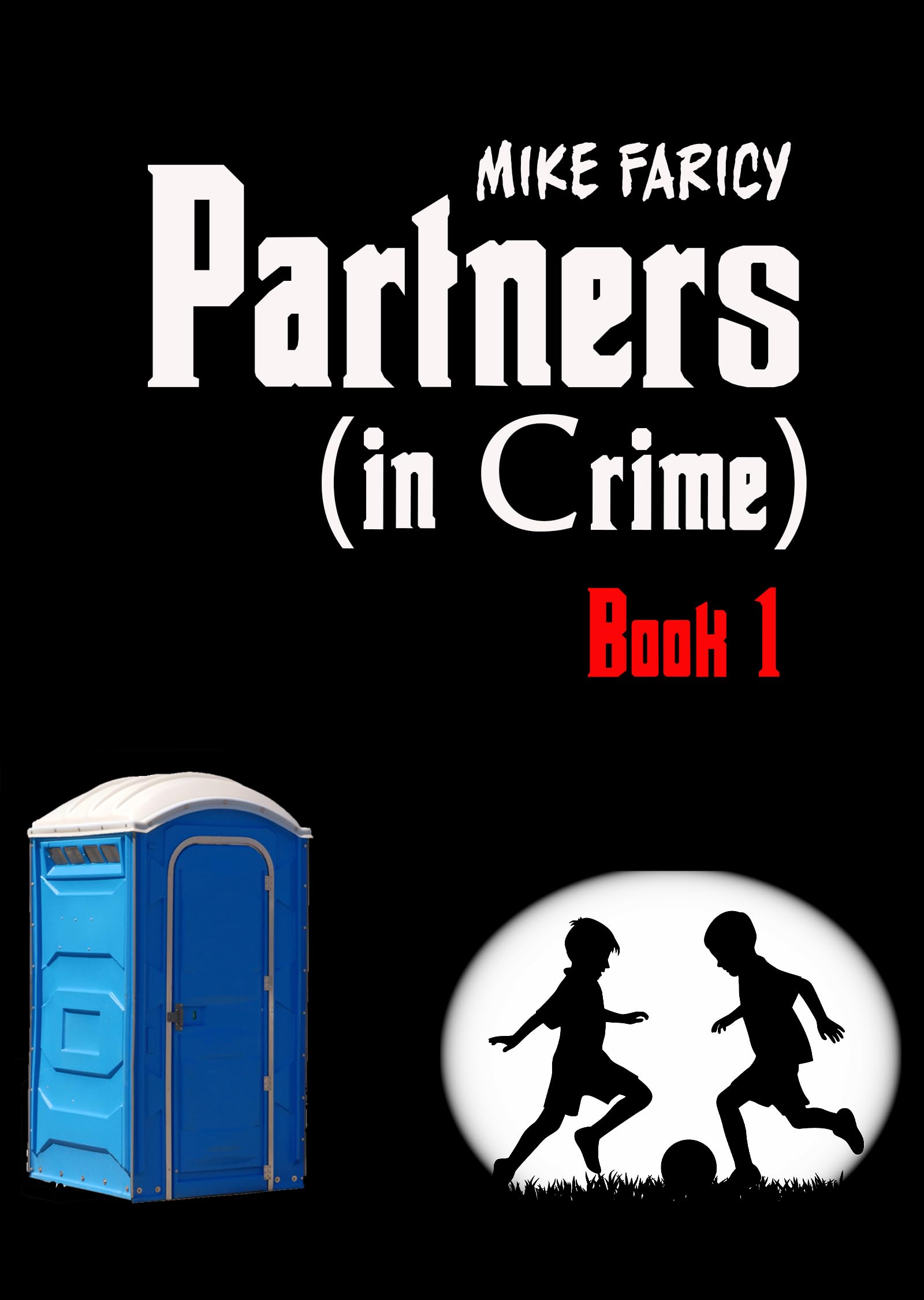
Interview with Mike Faricy, Author of Partners (In Crime)

What's the story behind the story? What inspired you to write this book?

The story is about a group of boys, headed by Finn Mullaney, who end up running a ‘business’ in school, selling hall and restroom passes and answers to test questions.

What's your favorite genre to read? Is it the same as your favorite genre to write?

Most of the works I read are crime fiction. The same genre that I write.

What books are on your TBR pile right now?

Dark Harbor by Bruce Robert Coffin
Dragon Cartel by Carmen Amato
The Fatal Saving Grace by Jim Nesbitt

What scene in your book was your favorite to write?

My favorite scene is when Alan Kelly and his pals attempt to attack Finn and his pals in the cafeteria. That turns out to be a big mistake, and Kelly and his pals end up in the principal’s office with their parents. While Kelly is in the office, Finn uses a passkey to get into Kelly’s locker. He takes all sorts of files with test answers, along with a set of keys to all the school offices, basically taking over Kelly’s criminal organization.

Do you have any quirky writing habits? (lucky mugs, cats on laps, etc.)

A lesson I learned from a high school English teacher: “At some point, you have to sit down in the chair and get the work done.”

Do you have a motto, quote or philosophy you live by?

A lesson I learned from a high school English teacher: “At some point, you have to sit down in the chair and get the work done.”

If you could choose one thing for readers to remember after reading your book, what would it be?

Finn Mullaney is a very nice person, and the basis of all four books in the series is that Finn stepped in to help Kenji, the new kid in school, when Alan Kelly and his gang threatened him. That led to a wonderful friendship and the start of the ‘business’.


Mike Faricy is the author of the new book Partners (In Crime) Book 1

Connect with Mike Faricy

Author Site

Facebook

Partners (In Crime) Book 1

Interview with Diane Weiner, Author of Death on the Isle

What's the story behind the story? What inspired you to write this book?

I was inspired by my love of atmospheric, closed-setting mysteries, as in books by Robert Thurgood (Death in Paradise, The Marlowe Mysteries), modern-set shows such as Man on the Inside or The Residence, and by my absolute obsession with the reality show The Traitors!

If you had to pick theme songs for the main characters of your book, what would they be?

If I had to pick a theme song for my main character, Jenny Hawthorne, it would be “The Climb” by Miley Cyrus, and for her husband Kyle, Bruno Mars’s “Count on Me.”

What's your favorite genre to read? Is it the same as your favorite genre to write?

My favorite genres to read are mysteries, legal thrillers, and domestic suspense.

What books are on your TBR pile right now?

On my TBR pile are Riley Sager’s The Unknown, The Mystery Writer by Sulari Gentill, and You’ll Be Sorry by Lisa Gardner. I recently finished and loved Mad Mabel by Sally Hepworth.

What scene in your book was your favorite to write?

I liked writing the final reveal scene and the chase.

Do you have a motto, quote or philosophy you live by?

Motto or Philosophy: Always have something on the horizon to look forward to.

If you could choose one thing for readers to remember after reading your book, what would it be?

It’s never too late to acquire your dream even if you’ve been following a different path.


Diane Weiner is the author of the new book Death on the Isle (A Storm Island Mystery Book 1)

Connect with Diane Weiner

Author Site

Facebook

Twitter / X

Death on the Isle (A Storm Island Mystery Book 1)

Interview with L.T. Farrell, Author of The Reality Gun

What's the story behind the story? What inspired you to write this book?

I was watching a documentary about polar bears, not that there are any in the book; sorry if you love the cute brutes. Suddenly, the idea sprang into my head about ice. What better than very cold ice, and what would be even better was if the ice wasn’t on Earth, but just hanging around Jupiter. Of course, I then had to imagine all sorts of things happening on this extremely cold moon. It just so happens that after the nature programme, I saw the local news about an unexploded WW2 bomb on a beach in the UK, near where I live. Naturally, the bomb led me to a gun, and the rest is history, or rather the future.

If you had to pick theme songs for the main characters of your book, what would they be?

Reggie and Wilson would probably appreciate “I Will Survive” by Gloria Gaynor. Marie is more classical in private, but would be best summed up by “I Gotta Feeling” by The Black Eyed Peas. As for Matt, he would love anything as his theme tune, but he would really enjoy “Hey Ya!” by Outkast.

What's your favorite genre to read? Is it the same as your favorite genre to write?

I read anything and everything, but my go-to is science fiction, and for non-fiction it is about myths, legends, and history. I write the same as I read, mainly sci-fi or speculative fiction, but I am a multi-genre author; I write what I’m interested in. I’m in the process of publishing a new book of Silly Rhymes and Verse. After that, I’m writing another sci-fi, but maybe in poetic form. I’m undecided, but I do like the idea, which means it is likely to happen in the near future.

What books are on your TBR pile right now?

There are a lot of essays from ancient Greeks and Romans; I seem to add one whenever I buy a fiction book. I’m about to start reading a series from A.G. Riddle. You see, when I like an author, I end up buying everything they have written and then engrossing myself in their worlds for a few months—that is what I am about to do reading-wise.

What scene in your book was your favorite to write?

It’s not so much a scene; I enjoy writing the banter between characters and how they interact. I love writing dialogue; it can get a little spicy. But people in real life swear when things get tough, or when they experience highly unexpected things. I like my characters to be real, salt-of-the-earth types.

Do you have any quirky writing habits? (lucky mugs, cats on laps, etc.)

I can’t write in my dressing gown; it seems to sap my imagination, and I’m more likely to have a nap after lunch.

Do you have a motto, quote or philosophy you live by?

I have several mottos: my first is “Go for it,” the second is “Be kind to all life,” and the third is “laugh as often as possible.” I could go on, but you can see they are about being in the moment.

If you could choose one thing for readers to remember after reading your book, what would it be?

That they giggled, or, even better, they guffawed while on the train or a bus to work, and other passengers looked at them and wondered what was so funny.


L.T. Farrell is the author of the new book The Reality Gun

Connect with L.T. Farrell

Author Site

Twitter / X

The Reality Gun

Interview with Ivy Davis, Author of His to Claim

What's the story behind the story? What inspired you to write this book?

My niche is writing mafia romance books. I wanted to write one that really dived into the dominant and submissive parts of a relationship. The romance between my main characters is intense, dark, and passionate. I also really wanted to explore the complex, dark emotions of being in a competitive dance world like ballet, since the main character is a ballerina.

If you had to pick theme songs for the main characters of your book, what would they be?

The theme song of this book would be Honeymoon by Lana Del Rey. The song is both beautiful and melancholy. I think it fits my book very well.

What's your favorite genre to read? Is it the same as your favorite genre to write?

I really love to read all different types of genres since I get bored if I read the same genre over and over again. Some days I want a good romance, and other times I want a good thriller, and other times I want a good historical epic novel. I prefer to write romance, though. There’s just something so fun about it.

What books are on your TBR pile right now?

I have so many books I need to read. I’ve gotten a little behind. I have a romantasy book I want to check out called The Poison Daughter by Shelia Masterson, but there are still so many other books I want to read in the future.

What scene in your book was your favorite to write?

My favorite scenes were any of the dance scenes. It’s hard to convey dance in text since it’s such a visual form, but I loved writing them for the challenge and the sexy darkness of them.

Do you have any quirky writing habits? (lucky mugs, cats on laps, etc.)

My writing habit is writing in my bed. I can’t really write anywhere else. I need to be leaning against my pillows with my legs crossed and my computer on a pillow in front of me. It’s the most comfortable way to write. I hate writing at a desk. It makes me feel so cold and stiff.

Do you have a motto, quote or philosophy you live by?

My motto in life is taking things one day at a time. One page at a time. One sentence at a time. It makes it easier to write books for me that way.

If you could choose one thing for readers to remember after reading your book, what would it be?

I would want readers to remember that the dark and light can mix together. I think I did that in this book. I wanted to combine the dark romance of a mafia boss and a ballerina while also showing the soft sides to it.


Ivy Davis is the author of the new book His to Claim (Ruthless Union Book 1)

Connect with Ivy Davis

Facebook

His to Claim (Ruthless Union Book 1)

Interview with Michelle Miles, Author of Dark Night of the Soul

What's the story behind the story? What inspired you to write this book?

Dark Night of the Soul grew out of my Dream Walker series and, more specifically, out of my fascination with Kincade. He has always been one of those characters who carries far more beneath the surface than he lets anyone see. He’s ancient, dangerous, fiercely controlled, and shaped by centuries of violence, loss, and betrayal. I wanted to explore what would happen when a man like that finally had something—and someone—he could not simply walk away from.

At its heart, this book is about devotion. Kincade has spent his life surviving by keeping people at a distance, but Anna changes that. Loving her gives him something worth protecting, and it also gives his enemies a way to hurt him. That tension became the emotional core of the story: what happens when the most dangerous man in the room discovers that love is both his greatest strength and his greatest vulnerability?

I was also drawn to the idea of taking the larger supernatural conflict of the Dream Walker universe and making it deeply personal. The Brotherhood isn’t simply an enemy organization to Kincade—they are tied to his past, his trauma, and the man he was forced to become. Dark Night of the Soul gave me the chance to dig into those wounds while pushing Kincade and Anna into a conflict where survival, trust, love, and vengeance are all tangled together.

Ultimately, I wanted to write a dark paranormal romance about two people choosing each other completely, even when that choice comes with consequences.

If you had to pick theme songs for the main characters of your book, what would they be?

For Kincade, I’d pick “Hells Bells” by AC/DC. It has that dark, dangerous, inevitable energy that fits him perfectly.

For Anna, I’d choose “Sweet Dreams (Are Made of This)” by Eurythmics. It has that sharp, confident, slightly dangerous edge that feels very Anna.

And for Anna and Kincade together? “Highway to Hell” by AC/DC. Because, frankly, that feels entirely appropriate for the two of them.

What's your favorite genre to read? Is it the same as your favorite genre to write?

My favorite is fantasy—any subgenre, adult or young adult. Everything from epic to sword and sorcery. Of course, I also love romantasy and paranormal romance. And yes, definitely the same genre I write.

What books are on your TBR pile right now?

Too many! I have a very long list of things I want to read and not nearly enough time. Waiting patiently: Assassin’s Apprentice by Robin Hobb; The Last Harbinger by Jeff Wheeler; Uprooted by Naomi Novik; One Kind Heart by Christine DePetrillo; Warrior Princess Assassin by Bridge Kemmerer, and the list goes on!

What scene in your book was your favorite to write?

My favorite scene to write was the hair-dye scene between Anna and Kincade. There’s a scene in the book where Anna has to change her hair color to blend in while they’re on the run. They’re in Munich, standing in the aisle of boxed hair color, and she starts needling Kincade about changing her hair to red. The problem? He doesn’t like redheads. That whole exchange was so much fun to write because it let their banter come through in the middle of a very dangerous situation. It’s playful, intimate, and completely them. I love giving characters those small, ordinary moments amid chaos, because sometimes those are the scenes that reveal the relationship best. I still giggle when I read it.

Do you have any quirky writing habits? (lucky mugs, cats on laps, etc.)

I like to chew gum while I write—Extra Spearmint. OR sometimes I have a glass of wine.

Do you have a motto, quote or philosophy you live by?

“Remember your why.” It’s something I come back to often, especially when things get difficult, or I start questioning what I’m doing. Writing and building a creative career can be challenging, and it’s easy to get distracted by numbers, setbacks, comparison, or all the things you think you “should” be doing. Remembering why I started—and why telling stories matters to me—helps me refocus. Your “why” is what keeps you moving forward when motivation disappears, or the road gets hard.

If you could choose one thing for readers to remember after reading your book, what would it be?

The emotional rollercoaster. I want readers to remember how the book made them feel—the tension, the fear, the romance, the heartbreak, the humor, and those moments when they weren’t quite sure whether to laugh, cry, or yell at the characters. For me, the best stories are the ones that make you feel like you’ve lived through something with the characters. If readers finish Dark Night of the Soul feeling a little wrung out, a little breathless, and completely invested in Anna and Kincade, then I’ve done my job.


Michelle Miles is the author of the new book Dark Night of the Soul: War of the Brotherhood

Connect with Michelle Miles

Author Site

Facebook

Dark Night of the Soul: War of the Brotherhood

Interview with S.A. Morris, Author of The Weight of the Dead

What's the story behind the story? What inspired you to write this book?

The idea started with the old claim that a body loses twenty-one grams at the moment of death, as if the soul itself had weight. I kept turning that over. What if what actually leaves isn’t the soul, but everything a person spent a lifetime trying not to carry?

That idea found its match in Parker’s Gore, where a two-hundred-year-old sealed casket doesn’t hold what it should. Along with the eighteenth-century woman buried there, the casket also contains the body of a modern-day toddler. The woman herself has a documented history: her own child was taken from her at birth. Nate Briggs is called in to make sense of a discovery that shouldn’t exist, and the longer he stays with it, the more he realizes that Parker’s Gore has been carrying that woman’s stolen child for two hundred years without ever calling it what it is.

The question the book keeps asking is: what do we truly owe to history, and what happens when the living try to rewrite the debt rather than pay it?

What's your favorite genre to read? Is it the same as your favorite genre to write?

I read everything, and whenever I find an author I like, I keep coming back for more. That includes everything from Stephen King to Dan Brown, and from Louise Penny to Nora Roberts.

What books are on your TBR pile right now?

Too many to list, but at the top of the pile is Open Season by C. J. Box. A friend suggested I’d like the mystery series, and I can’t wait to dive in. I also have Water Witches by Chris Bohjalian at the top of my pile. The whole idea of divination for water is so darn traditional Vermont that I almost feel like reading it will be like reading an old friend. Funny, neither of these books is a new release. Isn’t that the best thing about the written word? It’s there when you’re ready for it!

What scene in your book was your favorite to write?

The scenes with details about what was found in the 18th-century caskets were really interesting to research, but the writing itself? Without a doubt, if you had any of the locals congregating for coffee, or Abigail being Abigail, or Joe and Frank vying to be Nate’s ‘go-to’ for direction, you know I had fun writing that chapter!

Do you have any quirky writing habits? (lucky mugs, cats on laps, etc.)

No quirky habits, but I write in my head a lot! Stacking wood, raking leaves- that’s when the imagination runs loose. By the time I sit down at the laptop, I’m just transcribing and refining what is already there.

Do you have a motto, quote or philosophy you live by?

Not one. Maybe a hundred. If Pooh said it, it’s golden. If John Muir said it, it’s gospel. And if it’s Van Morrison, I’m already nodding along with my eyes half closed.

If you could choose one thing for readers to remember after reading your book, what would it be?

If readers remember one thing after reading The Weight of the Dead, I hope it's that we never truly know what another person is carrying. Grief and regret have a weight that often can't be seen. People’s lives are shaped by experiences, both wonderful and tragic. We can’t change or correct the past, for others or for ourselves; we can only learn from it and move forward. I hope the novel leaves readers a little more willing to look beneath the surface and withhold judgment, recognizing that sometimes the heaviest burdens are the ones carried in silence.


S.A Morris is the author of the new book The Weight of the Dead (The Nate Briggs Mysteries)

Connect with S.A Morris

Author Site

The Weight of the Dead (The Nate Briggs Mysteries)