Blog

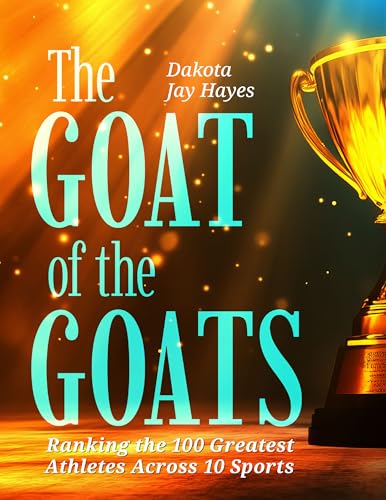
Interview with Dakota Jay Hayes, Author of The GOAT of the GOATS

What's the story behind the story? What inspired you to write The GOAT of the GOATS: The Ultimate Ranking of the 100 Greatest Athletes of All Time?

The idea for The GOAT of the GOATS came from countless debates I’ve had with friends, family, and fellow sports fans over the years. Every sport has its legends, every generation has its heroes — but the question always came back: Who truly stands above all others? I wanted to move that debate beyond gut feelings and nostalgia. This book was inspired by the challenge of comparing greatness across different sports, eras, and playing styles — something fans argue about endlessly but rarely see explored in a structured, thoughtful way. What motivated me most was the idea of honoring athletic excellence itself. From dominance and longevity to cultural impact and mental toughness, I wanted to create a ranking that sparks discussion, disagreement, and reflection — while celebrating what makes sports so powerful and universal.

If you had to pick theme songs for the main characters of The GOAT of the GOATS: The Ultimate Ranking of the 100 Greatest Athletes of All Time, what would they be?

Since this is a non-fiction book, the “characters” are the athletes themselves — and the soundtrack reflects the culture and energy of sport rather than traditional character themes. Songs like “Seven Nation Army” by The White Stripes perfectly capture the atmosphere of stadiums, rivalries, and iconic sporting moments, especially in football culture. “Basketball” by Kurtis Blow represents the roots of sports storytelling, where competition, identity, and culture collide. Together, these tracks reflect the passion, intensity, and legacy that define greatness across sports — the same elements that drive the rankings in this book

What's your favorite genre to read? Is it the same as your favorite genre to write?

My favorite genre to read is non-fiction, especially books that explore sports, history, psychology, and culture. I enjoy reading work that goes beyond surface-level storytelling and looks at why people excel, dominate, or leave a lasting impact. Yes, it’s very much the same genre I love to write. Writing non-fiction allows me to combine research, analysis, and storytelling — and to turn complex debates into something engaging and accessible for readers.

What books are on your TBR pile right now?

Right now, my TBR pile is a mix of fiction, biography, and short-form storytelling. I’m reading 4 3 2 1 by Paul Auster, a biography of LeBron James, and a collection of short stories by Benedict Wells. I enjoy switching between different genres — it keeps the way I think and write fresh.

What scene in your book was your favorite to write?

My favorite part to write was the actual ranking process — weighing athletes from completely different sports, eras, and contexts against each other. That’s where the book really came alive for me, because every decision forced me to question assumptions, challenge my own biases, and make tough calls that not everyone will agree with.

Do you have any quirky writing habits? (lucky mugs, cats on laps, etc.)

I don’t have many quirky rituals, but I do most of my writing late at night, when everything is quiet, and distractions disappear. That’s when I can focus, think clearly, and really challenge my own arguments without outside noise.

Do you have a motto, quote, or philosophy you live by?

I try to stay curious — open to change, new ideas, and new people. That approach influences both how I think and how I write.

If you could choose one thing for readers to remember after reading your book, what would it be?

I hope readers come away with a deeper appreciation for how complex and subjective greatness really is — and with the curiosity to question their own assumptions about who deserves the title of “greatest of all time.


Buy The Book

Sign up for our email and we’ll send you the best new books in your favorite genres weekly.

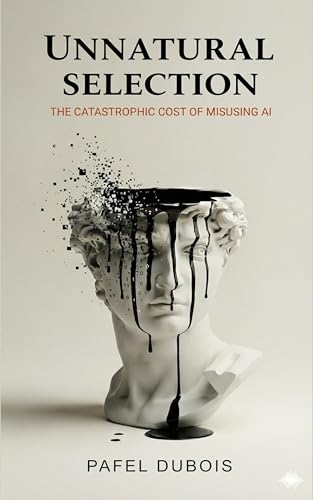
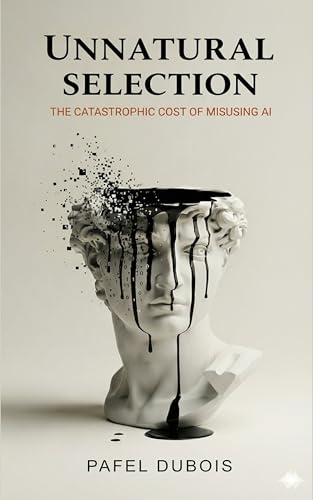
Interview with Pafel Dubois, Author of Unnatural Selection

What's the story behind the story? What inspired you to write Unnatural Selection: The Catastrophic Cost of Misusing AI?

The inspiration came from a place of observation and necessary warning. With my background in International Business, I have spent years analyzing how complex systems operate and fail. When the current wave of generative AI arrived, I noticed a disturbing trend in the corporate world: companies weren't using these tools to enhance human capability; they were using them to delete the human element entirely. I realized we were sleepwalking into a massive "brain drain" where we surrender our critical thinking and operational resilience to algorithms we barely understand. I wrote this book not to be anti-technology, but to be pro-humanity. I wanted to map out exactly what we lose when we choose convenience over competence, and how we can stop that slide before the cost becomes catastrophic.

If you had to pick theme songs for the main characters of Unnatural Selection: The Catastrophic Cost of Misusing AI, what would they be?

Since this is non-fiction, my "characters" are concepts, but they certainly drive the narrative:
• For the Villain (Unchecked AI Integration): "Radioactive" by Imagine Dragons. It feels powerful, systemic, and dangerous if not contained.
• For the Hero (Human Critical Thinking): "Under Pressure" by Queen and David Bowie. It represents the immense stress we are under to compete, but also the undeniable beauty of human resilience and collaboration.
• For the Resolution: "Human" by Rag'n'Bone Man. It serves as a gritty reminder that our imperfections and our ability to feel are actually what make us valuable.

What's your favorite genre to read? Is it the same as your favorite genre to write?

I am a contradiction in this regard. While Unnatural Selection is serious non-fiction, I rarely stay in that lane as a reader. I have a deep love for science fiction because it allows us to simulate future ethical dilemmas, and I enjoy upmarket romance because it explores the complexities of human emotion—something AI cannot replicate. I find that reading fiction makes me a better non-fiction writer because it teaches me how to tell a story and maintain a narrative arc, rather than just lecturing the reader with data.

What books are on your TBR pile right now?

My "To Be Read" pile is actually a "To Be Listened To" queue. I am a huge proponent of audiobooks because they allow me to consume complex information efficiently while I am moving. Currently, I am listening to Co-Intelligence by Ethan Mollick to analyze the AI debate from a different angle. I also keep a few classic French novels in the rotation to reset my brain—listening in my native language helps me decompress after a long day of working in English.

What scene in your book was your favorite to write?

In non-fiction, we don't have scenes so much as breakthroughs. My favorite section to write was the chapter on "The Human Moat." Up until that point in the book, I spent a lot of time outlining the catastrophic risks. But "The Human Moat" is the pivot where I explain why humans remain relevant. It felt necessary to stop diagnosing the illness and finally write the prescription. Writing about empathy, nuance, and intuition—skills machines cannot authentically replicate—felt like a reclamation of our value.

Do you have any quirky writing habits? (lucky mugs, cats on laps, etc.)

I am probably the only writer I know who absolutely hates coffee, so I function entirely without caffeine. My "office" is also unconventional; my best inspiration usually hits me in the shower. There is something about the isolation that puts me in a creative trance where plot holes just seem to fix themselves. To clear my head, I love hiking, but I avoid popular trails. I have a touch of claustrophobia regarding big crowds, so I need open, solitary spaces to really recharge.

Do you have a motto, quote, or philosophy you live by?

"We are what we repeatedly do. Excellence, then, is not an act, but a habit." This quote, attributed to Aristotle, is the core philosophy of my life and this book. If we repeatedly outsource our thinking to AI, we lose the habit of excellence. We become what we do, so I try to ensure that what I am doing is deliberate and human.

If you could choose one thing for readers to remember after reading your book, what would it be?

I want them to remember that they have agency. The future isn't something that happens to us; it is something we build. You can use AI to handle the drudgery so you have more time to be creative, or you can let it replace your creativity. I want readers to close the book feeling empowered to set boundaries with technology, rather than feeling inevitable defeat.


Pafel Dubois is the author of the new book Unnatural Selection: The Catastrophic Cost of Misusing AI

Connect with Pafel Dubois

Author Site

Instagram

Buy The Book


Buy The Book

Sign up for our email and we’ll send you the best new books in your favorite genres weekly.

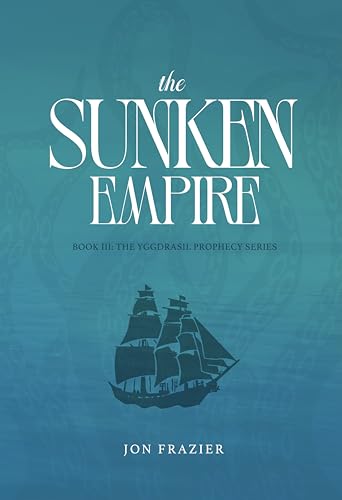
Interview with Jon Frazier, Author of The Sunken Empire

What's the story behind the story? What inspired you to write The Sunken Empire?

The story behind The Sunken Empire really begins with my oldest son. He is a voracious reader as well, and he had watched me devour fantasy series. He finally asked me a simple question: Why have you never written one of these? That question immediately ignited a fire that lit up a shared idea. The spark came while we were walking through the Christmas markets in Strasbourg. Between the lights, the old stone streets, the cold air, and the sense of history pressing in from every direction, we started talking books. Not about publishing or outlines, but about worlds. What kind of hero would I like to write? What kind of darkness would hide beneath beauty? What kind of magic systems would I use? Those conversations became the backbone of the series. The Sunken Empire grew out of that shared imagining. It is a story born from curiosity, family, and the feeling that ideas do not stay hidden. They are things we still carry with us, waiting for the right moment to surface. In many ways, this series is my answer to my son’s question. It is me finally stepping into the kind of story I loved as a reader and building a world that feels ancient, dangerous, and alive.

If you had to pick theme songs for the main characters of The Sunken Empire, what would they be?

I love this question because music and character growth live in the same emotional space for me. For Ylva, I would pick Barracuda by Heart. It has that raw, driving energy of someone realizing who they are and refusing to be controlled anymore. Ylva starts the series powerful but untested. In The Sunken Empire, she steps fully into her own. That song feels like confidence being forged under pressure. It is defiant, relentless, and unapologetic. She really is a rock star coming into her power. For Alrik, I would go with The Man Who Sold the World by David Bowie. His arc is quieter but heavier. He is wrestling with loyalty, love, and the fear of losing himself while standing beside someone who is becoming something mythic. That song carries tension, introspection, and a sense of identity slipping just out of reach. For Halvar, I would choose Immigrant Song by Led Zeppelin. That song is pure fire and thunder. It feels like a war cry carried on the wind. Halvar is a king forged by battle, loss, and responsibility. He is not subtle, and he was never meant to be. There is an inevitability to him, the sense that when he moves, the world answers. The pounding rhythm and raw vocals mirror who he is at his core. He is a power barely restrained by duty, a ruler who understands violence but uses it only when necessary. More importantly, the song carries legacy. Halvar is not just fighting his own wars. He is standing at the edge of what his daughter will inherit, whether he wants her to or not. If Ylva is the rising rock star, Halvar is the legend whose shadow still shapes the stage.

What's your favorite genre to read? Is it the same as your favorite genre to write?

My favorite genre to read for the last few years has been fantasy. I have read several authors obsessively. Epic worlds, dangerous myths, flawed heroes, and the sense that something ancient is stirring just beneath the surface. Those stories are the ones that stay with me long after the last page. While I love thrillers and action, the return to fantasy has been my passion for the last few years. For a long time, though, it was not the genre I wrote. I came to fantasy writing later, after working in thrillers and darker, more grounded stories. In hindsight, that mattered. Writing outside the genre taught me restraint, pacing, and how to keep stakes personal and consequences sharp. When I finally stepped into fantasy with The Sunken Empire and the larger series, I brought all of that with me. So now, yes, they finally match. Fantasy is my favorite genre to read, and it has become my most challenging, but favorite genre to write. The difference is that I approach it less like escapism and more like mythology with teeth. I want to wonder, but I also want weight. I want magic that costs something and heroes who do not walk away unchanged. In a way, The Sunken Empire is me coming full circle as a reader and a writer, and letting those two parts finally speak the same language.

What books are on your TBR pile right now?

Right now, my TBR pile is split between two very different kinds of obsession, and I love that contrast. I am deep into The Stormlight Archive by Brandon Sanderson. That series is a masterclass in epic scale: layered magic systems, massive worldbuilding, and characters who carry real psychological weight. It is the kind of fantasy that reminds you how big the genre can be when it is done well. At the same time, I am also working through Red Rising by Pierce Brown. That series is pure momentum. It is brutal, fast, emotionally ruthless, and constantly escalating. Every book feels like it is daring you to keep up. Reading those two side by side probably explains a lot about The Sunken Empire. I am drawn to stories that balance mythic scope with sharp, personal consequences. Big worlds, but characters who bleed. Systems of power, but at a human cost. That is the sweet spot for me as a reader, and it is the same place I aim for as a writer.

What scene in your book was your favorite to write?

My favorite scenes to write are always the ones where Ylva surprises herself. Those moments when she stops reacting and chooses to step forward. When fear is still there, but it no longer gets the final say. In Crown of Smoke and Shadow, it was the cave scene with the bear. She goes in thinking she is simply trying to survive, and comes out realizing that survival is no longer the ceiling for who she might be. That scene is raw, animal, and intimate. It is the first time she feels the truth of her own strength rather than just hearing others talk about it. In Thorns of Sethrakar, it was the moment she threw herself into the scorpion fight. There is no prophecy guiding her, no careful plan. It is instinct and resolve colliding. She chooses to act, even knowing the cost, and that decision reshapes how she sees herself moving forward. And in The Sunken Empire, facing down Dagon was my favorite by far. That scene is not just about power. It is about acceptance. Ylva understands what she is capable of, what it might turn her into, and she steps forward anyway. Writing that moment felt like watching her cross an invisible line she can never fully return from. Those scenes matter to me because they are not about winning fights. They are about identity. Each one marks a point where Ylva becomes more herself, even as the cost grows heavier.

Do you have any quirky writing habits? (lucky mugs, cats on laps, etc.)

Absolutely. My writing process probably looks a little chaotic from the outside, but it works for me.

I always start with an outline. I need to know where the story is going, even if the path changes along the way. Once that framework is in place, the real chaos begins. I use Post-it notes everywhere: scenes, emotional beats, character turns. They end up spread across my desk, my wall, and sometimes places they definitely do not belong. It’s how I keep the story visual and flexible at the same time. And then there’s the coffee. A lot of it. Coffee is less a habit and more a supporting character in the process. It fuels the long sessions where the world starts to feel more real than the room I’m sitting in.

No lucky mug, no cat on my lap, just outlines, Post-it notes, and enough coffee to keep the world turning while I figure out what my characters are brave enough to do next.

Do you have a motto, quote, or philosophy you live by?

Yes. It is simple, but it governs everything I do as a writer. I believe you have to be honest before you can be successful. Being true to yourself means accepting that not everyone will like what you create, and deciding to create it anyway. The moment you start writing to please an audience, chase trends, or soften your edges, you lose the thing that made the work worth doing in the first place. I write for me. I write the stories I would want to read, with the themes that matter to me, in the voice that feels true. If the work resonates, that is a gift. If it does not, I can still stand behind it without apology. My philosophy is this: authenticity is louder than approval. When you honor your own voice, the right readers will find it, and they will recognize the truth in it.

If you could choose one thing for readers to remember after reading your book, what would it be?

If there’s one thing I hope readers carry with them after finishing the book, it’s this: the power to rise has always been inside you. Every story I write, regardless of genre, circles back to that idea. Growth is rarely easy; most of the time, it’s uncomfortable, frightening, or feels outright impossible. But the moment that matters most is when you realize you’re stronger than the version of yourself who first faced the challenge.

Ylva’s journey isn’t about discovering some external gift or being chosen because she’s special. It’s about choosing to stand, again and again, even when the cost is high and the outcome uncertain. That struggle is universal. We all face moments of doubt, moments when rising feels beyond reach. If readers finish the book believing, even a little more than before, that they’re capable of becoming stronger, braver, or truer to themselves, then the story has done exactly what it was meant to do.
 

Jon Frazier is the author of the new book The Sunken Empire

Connect with Jon Frazier

Author Site

Instagram

Buy The Book


Buy The Book

Sign up for our email and we’ll send you the best new books in your favorite genres weekly.
New Mystery and Thriller Books to Read | December 23

Hold on to the edge of your seat as we hunt for clues and solve the case with these exciting new mystery and thriller books for the week! There are so many bestselling authors with new novels for you to dive into this week including Mike Lupica, David Korson, Nicole Korson, and more. Enjoy your new mystery, thriller, and suspense novels. Happy reading!


Sign up for our email and we'll send you the best new books in your favorite genres weekly.

New Books to Read in Literary Fiction | December 23

Literary fiction readers are in for a treat. This week’s latest releases list is full of intriguing reads you won’t want to miss! The new releases list includes so many bestselling authors like Lamar D. Vine, Tiffany Baton, Reg Quist, and more. Enjoy your new literary fiction books. Happy reading!


Sign up for our email and we'll send you the best new books in your favorite genres weekly.

New Science Fiction and Fantasy Books | December 23

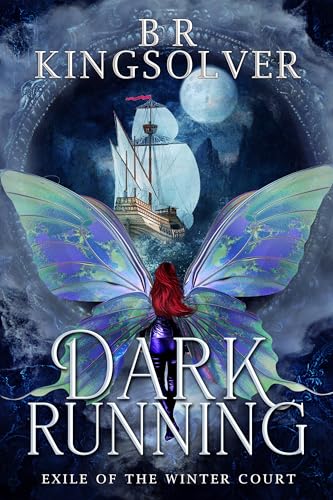
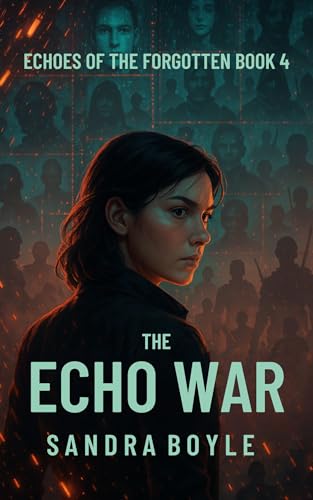
Set off on an adventure to new worlds this week! This selection of new science fiction and fantasy books will surely please! Science Fiction fans should be excited about the latest from bestselling authors Sandra Boyle, Joseph Young, Ruby Dixon, and more. If Fantasy is what your library needs, you’ll be able to pick up the latest from BR Kingsolver, Jon Frazier, Amelia Spencer, and more. Enjoy your new science fiction and fantasy books. Happy reading!


Fantasy


Science Fiction


Sign up for our email and we'll send you the best new books in your favorite genres weekly.

New Biography and Memoir Books to Read | December 23

Looking for some new biography and memoir books for your library? There are so many new releases this week that you’re bound to find a new favorite. You can pick up new books from Dakota Jay Hayes, Bobi Beverly, Gareth Russell, and more. Enjoy your new biography and memoir books. Happy reading!


Sign up for our email and we'll send you the best new books in your favorite genres weekly.

New Young Adult Books to Read | December 23

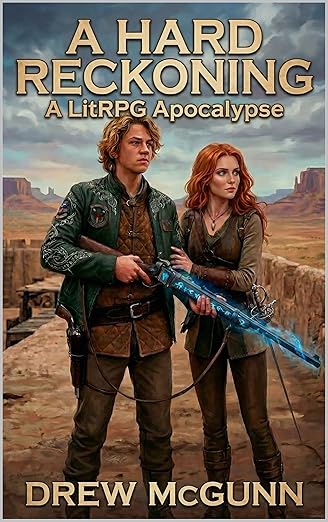
Are you an avid reader of Young Adult books? This week you are in luck! With all of these new novels, you’re bound to find a new favorite book to add to your reading list. This week includes new novels from bestselling authors Sarah Beran, Sever Bronny, Drew McGunn, and more. Enjoy your new young adult books. Happy reading!


Sign up for our email and we'll send you the best new books in your favorite genres weekly.