
Blog

Interview with C. V. Wooster, Author of Searching for Bowlby

What's the story behind the story? What inspired you to write Searching for Bowlby?

I began "Searching for Bowlby" as both an intellectual and a personal journey. I had long been fascinated by the psychology of human connection and how our earliest bonds shape the rest of our lives. Yet, on a deeper level, I was searching for an understanding of my own upbringing, my parents, and the patterns that echo through generations. John Bowlby’s life and work illuminated that search. He was a man who turned his own wounds into wisdom, transforming personal pain into a framework that has helped millions. I wanted to tell his story not as a sterile academic, but as a human being—someone trying to make sense of love, loss, and belonging.

If you had to pick theme songs for the main characters of Searching for Bowlby, what would they be?

If I had to choose a single song for Searching for Bowlby, it would be Charlie Chaplin’s “Smile.” It's bittersweet optimism captures both the pain and perseverance at the heart of Bowlby’s life and work. The song’s quiet message—to keep faith in love even when the heart aches—mirrors Bowlby’s belief that healing begins in connection and that hope can endure even after loss.

What's your favorite genre to read? Is it the same as your favorite genre to write?

I read across genres but am most drawn to narrative nonfiction and historical biography—books that balance intellectual rigor with human depth. It’s the same kind of writing I love to create. Whether I’m exploring a desert eccentric in Mrs. Orcutt’s Driveway or a psychological pioneer in Searching for Bowlby, I’m always chasing that intersection between history and humanity, where fact meets feeling.

What books are on your TBR pile right now?

My current TBR stack leans toward history and biography with depth and moral weight. I’m reading The Wager by David Grann for its exploration of endurance and leadership under pressure, and Erik Larson’s The Demon of Unrest for its meticulous storytelling about a nation on the brink. Next up are The Avoidable War by Kevin Rudd, River of the Gods by Candice Millard, and The Splendid and the Vile, also by Larson, for their portraits of human courage and complexity in turbulent times.

What scene in your book was your favorite to write?

My favorite scene was Bowlby’s moment of clarity during the wartime evacuations of London, when he began connecting children’s trauma to lifelong emotional patterns. Writing that passage felt like standing beside him as he pieced together the puzzle of human attachment, realizing that what we lose as children becomes the map we follow as adults.

Do you have any quirky writing habits? (lucky mugs, cats on laps, etc.)

My writing days begin before sunrise, coffee in my same chipped graduate-school mug in hand. Music is always playing—instrumental soundtracks only—and my dog usually takes up most of the chair beside me. I draft first lines by hand in a notebook before moving to the keyboard; the feel of ink on paper slows my thoughts just enough to make them honest. I don’t believe in writer’s block. If one project stalls, I shift to another, often working on several books at once, letting one rest while another takes shape. For me, momentum is everything—the act of writing itself clears the path forward.

Do you have a motto, quote, or philosophy you live by?

“Respect the thought, structure the delivery.” I use this line often with students and in my own work. It reminds me that passion and clarity must coexist—feel deeply, but express with discipline. Another guiding line comes from Marcus Aurelius: “What stands in the way becomes the way.”

If you could choose one thing for readers to remember after reading your book, what would it be?

That our early experiences don’t define us—they inform us. Understanding where we came from can help us grow beyond it. Bowlby’s life shows that even from emotional distance, we can learn empathy, and even from loss, we can learn to love more deeply.
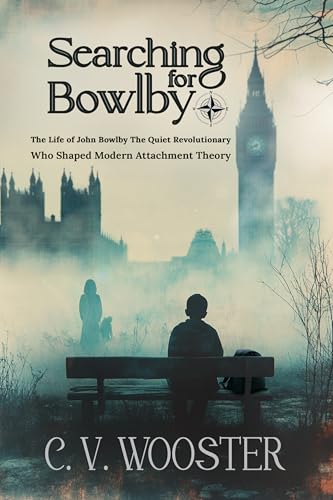
 

C. V. Wooster is the author of the new book Searching for Bowlby

Connect with C. V. Wooster

Author Site

Facebook

Twitter

Buy The Book


Buy The Book

Sign up for our email and we’ll send you the best new books in your favorite genres weekly.
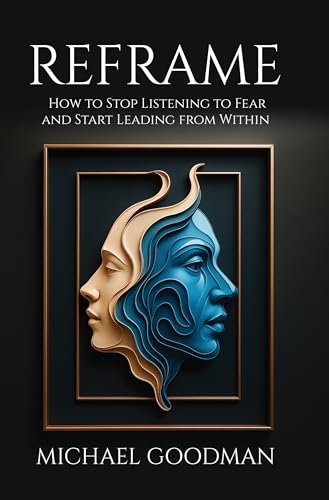
Interview with Michael Goodman, Author of Reframe

What's the story behind the story? What inspired you to write Reframe: How to Stop Listening to Fear and Start Leading from Within?

The first time I learned to reframe fear, I didn’t even know that’s what I was doing. I was in my early twenties, waiting tables and barely keeping my head above water. A regular customer saw something in me I couldn’t yet see in myself and asked if I’d ever considered working in an office. That simple question changed the entire trajectory of my life. Looking back, that was my first reframe—shifting from “What if I fail?” to “What if I don’t?” But I didn’t yet understand what that really meant.

The lessons of reframing didn’t fully take shape until years later, when I was deep into my corporate career and began coaching others. That’s when I saw fear show up in its quieter, more sophisticated forms: imposter syndrome, perfectionism, comparison, the fear of success. Not the kind of fear that keeps you safe, but the kind that keeps you small. As a coach, I started recognizing patterns—brilliant, capable professionals who had every reason to believe in themselves but couldn’t hear their own potential over the noise of self-doubt. I’d been there too. I’d lived it. And I knew that “just be confident” wasn’t the answer. What worked was reframing—learning to interpret fear as information, not identity.

I wrote Reframe because I wanted to normalize fear, to remind people that it doesn’t mean you’re broken or unqualified—it means you care. And to share the same tools I use with my clients (and still with myself) to move through fear with honesty and courage. This isn’t a book about becoming fearless. It’s about becoming free—free to lead, grow, and live from a place of self-trust rather than self-doubt. My hope is that readers see themselves in these pages and walk away knowing they’re not alone, and that one small reframe can truly change everything.

If you had to pick theme songs for the main characters of Reframe: How to Stop Listening to Fear and Start Leading from Within, what would they be?

“Brave” by Sara Bareilles.

What's your favorite genre to read? Is it the same as your favorite genre to write?

I’m drawn to books that explore human behavior—what drives us, what holds us back, and how we find purpose in our daily lives. I naturally gravitate toward philosophy, psychology, and personal development, especially when they’re written through a deeply human lens. Every morning, I start my day with The Daily Stoic and The Daily Dad by Ryan Holiday, along with The Daily Laws by Robert Greene. They ground me in reflection before the day even begins and have shaped how I think about leadership, parenting, and presence.

What books are on your TBR pile right now?

I just finished Shadow Cell by Andrew and Jihi Bustamante—it’s a brilliant mix of intellect, intrigue, and insight—and Keep Going by Austin Kleon, which is such a powerful reminder that creativity is a discipline, not a spark. On my current to-be-read stack are The Next Conversation by Jefferson Fisher, The Barn by Wright Thompson, and Happy Sexy Millionaire by Steven Bartlett. Each one touches on communication, reflection, or purpose in a way that connects back to how we lead and live. At the end of each day, I’ve been winding down with Poems & Prayers by Matthew McConaughey—it’s grounding and reflective, a nice balance to how my mornings begin.

What scene in your book was your favorite to write?

My favorite scene to write was the story in the introduction, when I was a waiter, and a regular customer asked if I’d ever thought about working in an office. It was such an ordinary moment, but it completely changed the direction of my life. Writing that scene brought me back to the uncertainty, the self-doubt, and the quiet spark of hope that started everything.

What made it so powerful to write wasn’t just reliving that moment, but realizing how much meaning it carried in hindsight. That simple question, “Have you ever thought about…” was the first time I reframed fear without knowing it. It’s where the whole concept of the book was born. Putting it on the page reminded me that transformation doesn’t always happen in dramatic, cinematic moments. Sometimes it happens in the smallest exchanges, in the pause between doubt and possibility. That scene captured the heartbeat of Reframe: that one new way of seeing yourself can change everything.

Do you have any quirky writing habits? (lucky mugs, cats on laps, etc.)

If waking up at 4 a.m. counts as quirky, then absolutely. I start every single day that early—weekends, holidays, travel days, all of it. It’s the only time my house is completely still, before my husband and son wake up and before the world starts asking for anything.

Those quiet hours are my investment in creativity. I spend about three hours every morning reading, writing, and thinking, with uninterrupted focus. No distractions, no noise—just space to explore ideas and follow where my thoughts want to go. People sometimes think 4 a.m. is about discipline, but for me, it’s really about peace. It’s the one part of my day that belongs entirely to me, and it’s how I stay connected to the work, the words, and the purpose behind them.

Do you have a motto, quote, or philosophy you live by?

I used to think I was late to getting my college degree, to having a child, to starting my writing career—but writing, and specifically writing Reframe, helped me see that it’s never being late; it’s arriving in your own season. And when you do, the joy is unexpected and unforgettable.

If you could choose one thing for readers to remember after reading your book, what would it be?

If there’s one thing I’d want readers to take from Reframe, it’s that perspective is everything. How you choose to see a situation—your challenges, your timing, even your “failures”—can completely change your experience of it. Life rarely unfolds according to plan, but when you shift your frame, you can find joy, growth, and opportunity exactly where you are.


Michael Goodman is the author of the new book Reframe: How to Stop Listening to Fear and Start Leading from Within

Connect with Michael Goodman

Author Site

Buy The Book


Buy The Book

Sign up for our email and we’ll send you the best new books in your favorite genres weekly.
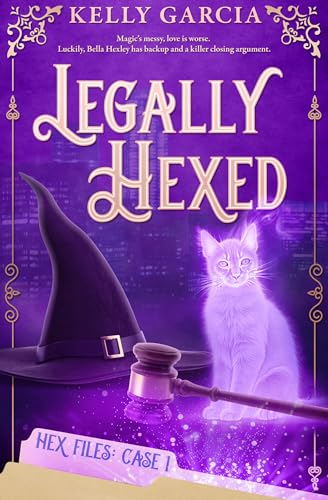
Interview with Kelly Garcia, Author of Legally Hexed

What's the story behind the story? What inspired you to write Legally Hexed?

The inspiration for Legally Hexed came from two ideas. First, I wanted to write about the most ridiculous and impossible court case imaginable. Second, I wanted my main character to take after my aunt. Back in the ’80s, my aunt went through a tough divorce, yet she managed to fight for herself, care for her kids, build a career—and she always looked great doing it. That energy became Bella Hexley: a witch, a mother, and a lawyer who refuses to back down.

In Legally Hexed, she’s handed a case that tests her sense of justice, her identity, and her heart. Magic makes it fun, but at its core, the story is about power, integrity, and a woman who refuses to be underestimated.

If you had to pick theme songs for the main characters of Legally Hexed, what would they be?

Bejeweled by Taylor Swift and Witchy Woman by the Eagles.

What's your favorite genre to read? Is it the same as your favorite genre to write?

I’ve always loved reading across genres, and that definitely shows in my writing. Legally Hexed weaves together elements of cozy fantasy, urban fiction, mystery, and romance.

What books are on your TBR pile right now?

The Modern Girl's Guide to Magic by Hall, The Wedding Witch by Sterling, and The Wisteria Society of Lady Scoundrels by Holton.

What scene in your book was your favorite to write?

I loved writing any scene that featured Reginald.

Do you have any quirky writing habits? (lucky mugs, cats on laps, etc.)

Most of my writing happens before dawn, when it’s just me, my thoughts, and no one around to tease me for talking to myself.

Do you have a motto, quote, or philosophy you live by?

If it won’t matter in a year, it doesn’t matter now. It’s just another way of saying don’t sweat the small stuff.

If you could choose one thing for readers to remember after reading your book, what would it be?

A woman can be powerful without giving up her softness, style, or humor.


Kelly Garcia is the author of the new book Legally Hexed

Connect with Kelly Garcia

Author Site

Facebook

Instagram

Buy The Book


Buy The Book

Sign up for our email and we’ll send you the best new books in your favorite genres weekly.
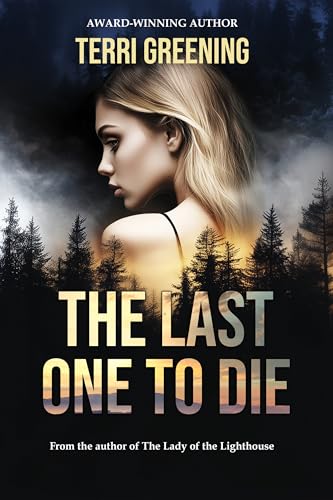
Interview with Terri Greening, Author of The Last One to Die

What's the story behind the story? What inspired you to write The Last One To Die?

I wanted to write a story with an unreliable narrator, like Faron Chevalier, who tells the story from her own point of view, which sometimes differs from the perspectives of others in an unsettling way. Faron’s demeanor is vulnerable but also mysterious, making her enigmatic and difficult to figure out.

What's your favorite genre to read? Is it the same as your favorite genre to write?

I like to read mysteries and thrillers, and I also enjoy writing them.

What books are on your TBR pile right now?

Under the Sea-Wind by Rachel Carson.

What scene in your book was your favorite to write?

My favorite scene to write was the one around the campfire at night, with noises coming from the bog and the woods.

Do you have any quirky writing habits? (lucky mugs, cats on laps, etc.)

I like a quiet atmosphere where I can write for a few hours without interruption.

If you could choose one thing for readers to remember after reading your book, what would it be?

I think I would like readers to take away the idea that reality could be subjective.


Terri Greening is the author of the new book The Last One To Die

Connect with Terri Greening

Author Site

Buy The Book


Buy The Book

Sign up for our email and we’ll send you the best new books in your favorite genres weekly.
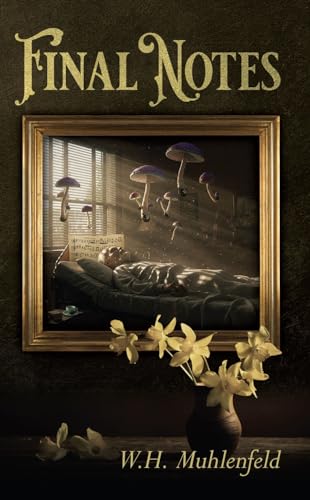
Interview with W.H. Muhlenfeld, Author of Final Notes

What's the story behind the story? What inspired you to write Final Notes?

I was inspired by my own psilocybin journey.

What's your favorite genre to read? Is it the same as your favorite genre to write?

Historical Fiction.

What books are on your TBR pile right now?

The Historian and Killers of the Flower Moon.

What scene in your book was your favorite to write?

Ah… I loved the opportunity to revisit Kubrick’s 2001: A Space Odyssey, where the boundary between life and death is presented so skillfully.

Do you have a motto, quote, or philosophy you live by?

Carpe Diem! Of course.

If you could choose one thing for readers to remember after reading your book, what would it be?

That the mystery of death can be understood and appreciated.


W. H. Muhlenfeld is the author of the new book Final Notes

Buy The Book


Buy The Book

Sign up for our email and we’ll send you the best new books in your favorite genres weekly.
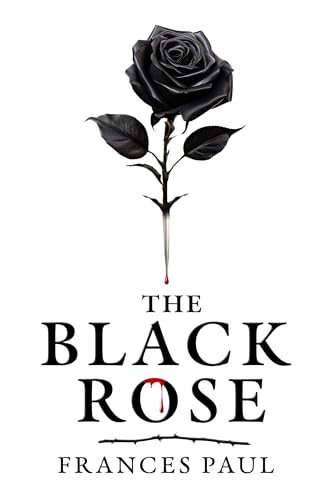
Interview with Frances Paul, Author of The Black Rose

What's the story behind the story? What inspired you to write The Black Rose?

I’ve always been fascinated by spy thrillers—the intensity of training, the precision of missions, and the rare moments of humanity that surface in the most unlikely characters. Stories like Hitman with Timothy Olyphant, Killing Eve, and Hanna completely captivated me. There’s something about watching a character shaped by violence and secrecy still struggle with emotion, morality, and connection that I find deeply intriguing.

I wanted to create my own take on that world, one that blends the adrenaline of espionage with the vulnerability of forbidden romance. The Black Rose was born from that desire—a story that makes your pulse race but also makes you feel. I wanted readers to not only follow the missions but to care about the people behind them, to think about these characters long after the last page is turned.

If you had to pick theme songs for the main characters of The Black Rose, what would they be?

For Elara, I’d pick “Control” by Halsey because it perfectly captures her inner conflict between strength and vulnerability and the darkness she constantly battles within herself. For Axel, it would have to be “Heathens” by Twenty One Pilots, since it mirrors his dangerous charm and the world of secrets he lives in. And if I had to choose a song that represents them together, it would be “Enemy” by Imagine Dragons. Their connection is magnetic but deadly, and that song embodies the tension between love, betrayal, and survival that defines their story.

What's your favorite genre to read? Is it the same as your favorite genre to write?

My favorite genres to read have always been romantic suspense and thrillers. I love stories that keep me guessing while still pulling at my emotions. There’s something irresistible about danger and desire colliding on the page. It’s also the genre I love to write because it allows me to explore both intensity and intimacy—the adrenaline of high-stakes moments mixed with the vulnerability of human connection.

What books are on your TBR pile right now?

My TBR pile is always growing, but right now it includes The Boyfriend by Freida McFadden, The Proving Ground by Michael Connelly, Ella by Mike Lawson, and The Huntress by Kate Quinn. I love a mix of psychological tension, investigative grit, and complex characters who stay with you long after the story ends.

What scene in your book was your favorite to write?

There are so many scenes I loved writing, but my favorite is when Elara looks into the eyes of her prey, expecting to feel nothing but focus on the mission ahead. For her, it should have been just another assignment. But in that moment, what she sees in his eyes completely knocks the breath out of her. It’s the turning point where the line between duty and desire begins to blur, and everything changes.

Do you have any quirky writing habits? (lucky mugs, cats on laps, etc.)

Music is my biggest writing habit. I listen to the genre that matches the characters I’m building or the emotions I need to capture in a scene. It helps me connect more deeply with their mindset and feelings. The right song can make me see the scene more vividly, almost as if I’m inside it.

Do you have a motto, quote, or philosophy you live by?

I believe in perseverance above all else. Standing still is never an option. Keep moving, even when the path feels uncertain, and when doors refuse to open, knock them down. Every step forward, no matter how small, brings you closer to the life you are meant to create.

If you could choose one thing for readers to remember after reading your book, what would it be?

I want readers to remember that strength often comes from the moments when we feel the most broken. Even in darkness, there is always a choice—to rise, to fight, and to feel. The Black Rose is about resilience, love, and the cost of redemption, and I hope readers carry those emotions with them long after the final page.


Frances Paul is the author of the new book The Black Rose

Connect with Frances Paul

Author Site

Facebook

Buy The Book


Buy The Book

Sign up for our email and we’ll send you the best new books in your favorite genres weekly.
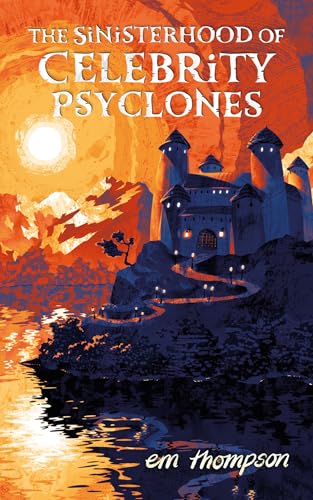
Interview with Em Thompson, Author of The Sinisterhood of Celebrity Psyclones

What's the story behind the story? What inspired you to write The Sinisterhood of Celebrity Psyclones - The Curious Case of the Swish Swiss Finishing School?

Some way into my scribbling obsession, I came up with the idea for a dark psychological thriller. Challenging. After several months of thinking, plotting, and researching, I finally put virtual ink to cyber-paper.

To set the scene, I had a detective visit the wife of the victim of a knife attack to break the grim news of her husband’s death. He was accompanied by an insignificant junior woman PC—a family liaison, I guess. She was just going to be part of the furniture: stand to attention, doff her cap, nod, commiserate… that kind of thing. However, she was having none of it. Within a dozen sentences, she had hijacked the entire novel.

And so Heather Prendergast entered my life… and stuck. A pretty, naïve, ambitious, strait-laced, archetypal English upper-crust wannabe detective, with a tendency to cause mayhem and an endearing ability to always land on her feet when she (frequently) stumbles, young Heather has amassed a sizeable following around the world. But Heather wasn’t satisfied with being the main event. She wanted a stylistic footprint commensurate with her humorously humourless character.

A penny dropped when I was searching for a word to describe Baby Caspar, one of the central characters in that first Prendergast novel, Elliefant’s Graveyard. After scrubbing out a dozen adjectives, I accidentally merged two words and came up with “a plumpenormous baby.” Perfect. And that was the genesis of the wordplay employed throughout the Prendergast of the Yard Casebooks—one reason why so many readers have compared the style to Lewis Carroll of Alice in Wonderland fame.

The other stylistic device I employed was to develop two parallel narratives in alternating chapters, colliding in the final chapter. So we have two protagonists, unaware of one another, pursuing the same or similar goals. It worked well. I enjoyed it, and readers were enthusiastic, many saying that Elliefant’s Graveyard was unique and they had never read anything like it. A cry went up… “more, more, more.”

Lockdown was stressful for us all. Now running my business from home, I was struck by a thought—what if Heather were called upon to negotiate the release of a kidnapped relative? Her inevitable, clumsy, and accident-prone efforts would be compounded if, unbeknownst to her and them, the kidnappers had snatched the wrong hostage. And so was born The Happy Thistle—maybe the most bonkers in the Prendergast series.

Lockdown one soon gave way to lockdown two. The Happy Thistle had ended on a cliffhanger, and to be quite honest, I had no idea what happened next. So, to find out, I wrote Murder on the Ordinary Express—pure Agatha Christie. I love this book. No matter how many times I read it, it makes me laugh out loud.

But hey—I’m taking a liberty. I was asked to explain how The Sinisterhood of Celebrity Psyclones came into being. Well, I decided to write a series of short stories charting Heather’s adventures before becoming a detective. Collectively entitled The Making of Prendergast of the Yard, I posted the first two (“The Curious Case of the Prawnographic Nibbles” and “The Curious Case of the Kidnapped Cat”) on Kindle and various other eBook resellers. Readers loved them—five stars throughout, without exception.

The next short story was to recount Heather’s adventures at a Swiss finishing school after being expelled from boarding school. The plot grew and grew and grew. Wacky characters invaded page after page. Before long, the story wasn’t so short, and before I knew it, I was plotting a fully-blown prequel to Elliefant’s Graveyard.

Mad, bad, and dangerous to read, Sinisterhood of Celebrity Psyclones is at once a demented romp and a satire on an age of social media influencing, body-shaming, and the objectification of girls and women. Of course, ultimately, the girls revolt against an authoritarian regime intent upon indoctrinating them as servile, sexual objects and defeat the forces of sexual darkness. Yes, indeed—a story with a moral, even if it is buried beneath the surface, like Professor Hans Beiderbecke’s celebrity psychoning laboratory.

So, as several readers have said, roll on Heather. Unique in the annals of detective fiction? Maybe. Maybe not. But definitely one of a kind.

If you had to pick theme songs for the main characters of The SInisterhood of Celebrity Psyclones - The Curious Case of the Swish Swiss Finishing School, what would they be?

I spent most of my working life at the sharp end of the music industry. Of all those I met and worked with, Kate Bush stands head and shoulders above the rest. Years ago, she recorded a duet with Peter Gabriel entitled “Don’t Give Up.” It inspired and comforted me during a very dark period of my life. I think the sentiment would resonate with my young protagonist, Heather Prendergast. Accident-prone and naïve, her dogged determination always sees her through.

What's your favorite genre to read? Is it the same as your favorite genre to write?

I read extremely widely, both non-fiction and fiction. Sure, I like humor and enjoy whodunits, but I also love diving into dramatic mysteries, adventures, biographies, and cliffhangers about cats.

What books are on your TBR pile right now?

Tough. Too many half-read novels. But I recently came across a writer called Brian T. Marshall and was blown away by his imagination and writing skills. In particular, his short novel A Stone Bled Dry is a remarkable work. I read it twice—something I NEVER do.

Why he isn’t a household name is beyond me.
https://www.briantmarshallauthor.com/

What scene in your book was your favorite to write?

Heather’s psychoning into Audrey Hepburn is pure Frankenstein on steroids. But I probably had the most fun with the aristocratic young ladies fighting off an attack from a Balkan horde—pure Saint Trinians.

Do you have any quirky writing habits? (lucky mugs, cats on laps, etc.)

I tend to work late into the night, with my two cats – Fusscat and Piglet – beside me.

Do you have a motto, quote, or philosophy you live by?

Everything happens for a reason, no matter how difficult or painful.

If you could choose one thing for readers to remember after reading your book, what would it be?

Laughing out loud. And trying to remember what the devil the book was all about.


Buy The Book

Sign up for our email and we’ll send you the best new books in your favorite genres weekly.
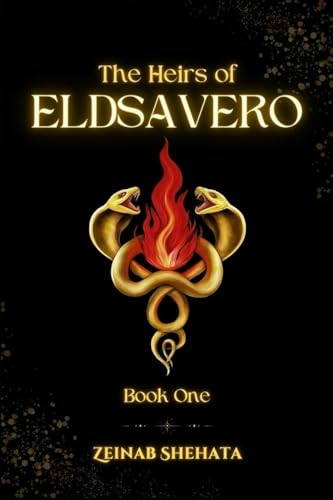
Interview with Zeinab Shehata, Author of The Heirs of Eldsavero

What's the story behind the story? What inspired you to write The Heirs of Eldsavero (Book 1)?

I grew up in a very conservative household. Typical teenage adventures—like going to parties, socializing with boys, or even hanging out with friends—weren’t really an option. Between family tensions and strict rules, I found my escape in stories: Harry Potter, Japanese manga, and fantasy animated series like Naruto, Avatar: The Last Airbender, and Bleach. These worlds became my refuge and sparked a lifelong love for character-driven fantasy, epic adventure, and emotionally rich storytelling.

As a teenager, I began writing my own stories—sometimes original, sometimes fanfiction—always drawn to themes of friendship, family, and romance that resonated deeply with me. Fast forward a couple of decades, and that passion has evolved into The Heirs of Eldsavero series. This saga is a culmination of everything I’ve loved: a mature, emotionally intense reimagining that centers on two brothers within a royal family, navigating a rigid, hierarchical society. It explores family trauma, forbidden and unrequited love, friendship, and the weight of legacy. Layered into this are elemental powers tied to bloodlines, a shadowed figure from the clan’s past, and the lure of a forbidden power.

It’s fantasy with heart, romance, grit, and a touch of darkness—crafted for readers who crave depth in their adventure.

If you had to pick theme songs for the main characters of The Heirs of Eldsavero (Book 1), what would they be?

For Eirik, definitely "Numb" by Linkin Park!

What's your favorite genre to read? Is it the same as your favorite genre to write?

Funnily enough, I enjoy reading non-fiction—self-help, health, biographies—but I always write fiction!

What books are on your TBR pile right now?

I’m so deep in the writing cave that my TBR is empty! Happy to take some recommendations, though.

What scene in your book was your favorite to write?

The closing scene. It's epic in the best way!

Do you have any quirky writing habits? (lucky mugs, cats on laps, etc.)

Yes, I sit on the ground with my laptop, leaning against the couch! I can never write at a desk or even on the couch itself.

Do you have a motto, quote, or philosophy you live by?

Never give up on your dreams! That’s why I’m still writing.

If you could choose one thing for readers to remember after reading your book, what would it be?

Forge your own destiny. Follow your dreams, not the footsteps others expect you to take.


Zeinab Shehata is the author of the new book The Heirs of Eldsavero (Book 1)

Connect with Zeinab Shehata

Author Site

Buy The Book


Buy The Book

Sign up for our email and we’ll send you the best new books in your favorite genres weekly.
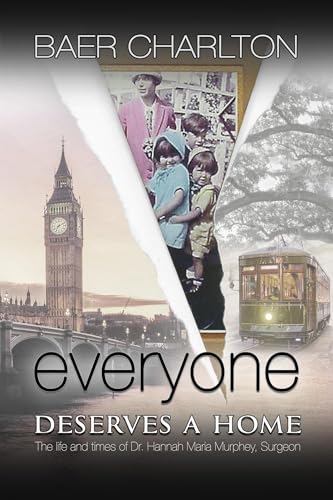
Interview with Baer Charlton, Author of Everyone Deserves a Home

What's the story behind the story? What inspired you to write Everyone Deserves a Home?

"Passing" is nothing new, but for much of society, it’s as new as Gen Z slang. I dated a woman I thought was white, but she wasn’t. Writing about passing isn’t the same as normalizing people going about their lives.

If you had to pick theme songs for the main characters of Everyone Deserves a Home, what would they be?

"Our House" by Crosby, Stills & Nash.

What's your favorite genre to read? Is it the same as your favorite genre to write?

I read a wide variety of genres, from spy thrillers to the craft of writing non-fiction.

What books are on your TBR pile right now?

Mostly about writing.

What scene in your book was your favorite to write?

A play that is given on the front lawn of a deaf orphanage and narrated by the students of Gallaudet College for the deaf.

Do you have any quirky writing habits? (lucky mugs, cats on laps, etc.)

In the fall, when my wife starts yelling at the TV (football), I go down to the basement and write. I’ve written more books during football season than at any other time of year.

If you could choose one thing for readers to remember after reading your book, what would it be?

Family is what you make it.


Baer Charlton is the author of the new book Everyone Deserves a Home

Connect with Baer Charlton

Author Site

Buy The Book


Buy The Book

Sign up for our email and we’ll send you the best new books in your favorite genres weekly.
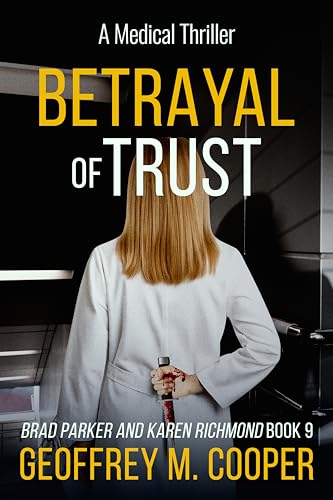
Interview with Geoffrey M Cooper, Author of Betrayal of Trust

What's the story behind the story? What inspired you to write Betrayal of Trust?

Betrayal of Trust, like my other novels, is a medical thriller drawn from my career as a cancer researcher, professor, department chair, and dean. Those years gave me ample exposure to academic misconduct—including sexual harassment, fraud, sabotage, and plagiarism—which served as the backdrop for a nearly endless array of murder mysteries. While academic misconduct plays a prominent role, Betrayal of Trust has a different backstory. Two dear friends were diagnosed with advanced cancers, and I became involved in looking into the treatments and clinical trials available to them. My own work was in basic laboratory research, so during the process, I learned about the use of control groups in clinical research. Tragically, I also experienced the anger that survivors can feel toward physicians when treatment fails. Betrayal of Trust is dedicated to Debby and Ulla.

What's your favorite genre to read? Is it the same as your favorite genre to write?

I most enjoy reading mysteries and thrillers, especially medical thrillers—the genre I write.

What books are on your TBR pile right now?

Kiss Her Goodbye by Lisa Gardner.

What scene in your book was your favorite to write?

I’d have to say my favorite scene was near the end, when Karen berates Brad for setting a trap for the killer and putting himself at risk without bringing her in to help. It reveals a new side to their relationship.

If you could choose one thing for readers to remember after reading your book, what would it be?

The critical role that multiple levels play in different relationships: student/teacher, patient/physician, husband/wife.


Geoffrey M Cooper is the author of the new book Betrayal of Trust

Connect with Geoffrey M Cooper

Author Site

Facebook

Buy The Book


Buy The Book

Sign up for our email and we’ll send you the best new books in your favorite genres weekly.