

What's the story behind the story? What inspired you to write The Veritas Clause?
That’s a great question. It gets right to the heart of why I write. The truth is, the story behind the story is my day job. I’m a lawyer—that’s what I do from nine to five, and often much later. I spend my days navigating complex systems, dealing with large, powerful institutions—corporations, trusts, and sometimes even government bodies. And what you learn very quickly in that world is that every institution has two identities. There’s the public mission statement, the noble motto carved in stone over the entrance… and then there’s the way things actually work in the boardroom when the doors are closed.
I see it all the time: the immense pressure to protect the institution, to manage a narrative, to make a problem—or a person—quietly go away. The official story is rarely the whole story.
So, The Veritas Clause really started there. It was a way for me to explore those same dynamics, but to heighten them, to push them to their most dramatic conclusion. Creating Blackwood University was like building a laboratory. I took all these themes I see in my legal practice—the power plays, the secret histories, the way people’s ideals are compromised by their ambition—and I put them under a microscope.
The three professors—Isobel, Anand, and Ken—are really just different arguments, aren’t they? Isobel is like a barrister arguing from precedent and history. Anand is the solicitor building a case from context and narrative. And Ken is the forensics expert who believes the data is the only thing that’s real.
The murder is the catalyst, of course. It’s the event that puts the whole system under stress and forces the truth, in all its messy and contradictory forms, to the surface.
For me, writing is a spare time, an escape. But the material… the material comes from the office every single day.
If you had to pick theme songs for the main characters of The Veritas Clause, what would they be?
For Isobel Reed, it would have to be something dramatic and literary, with a slow-burning intensity that finally explodes. I think “Seven Devils” by Florence + The Machine is perfect. It has that epic, almost biblical feel of righteousness and vengeance, with lines about “a thousand armies” and “hell upon your doorstep.” It captures her transformation from a quiet academic into this formidable force.
For Anand Sharma, my heart breaks for him. He’s under such immense, suffocating pressure. His theme song is definitely “Fake Empire” by The National. The whole song is about trying to keep up appearances—“tiptoeing through our shiny city with our diamond slippers on”—while you know the entire structure is hollow and about to collapse. It’s the perfect anthem for his quiet, intellectual desperation.
Ken Leung... he’s all about cold logic and the terror of becoming obsolete. It has to be “Losing My Edge” by LCD Soundsystem. It’s the ultimate song for an arrogant genius who is secretly terrified that he’s a fraud and that all the kids are coming up from behind him with better, newer ideas. It’s anxious, it’s funny, and it’s deeply insecure—which is exactly what Ken is under all that data.
For Detective Maeve O’Connell, she’s the grounded, relentless heart of the story. She’s on this long, lonely journey. I’d give her something by The War on Drugs—maybe “Red Eyes.” It has that constant, driving beat that feels like a long car ride through the night, the feeling of being weary but still pushing forward, trying to find a single point of truth in all the darkness.
And finally, Gary Reed. The tragic monster. He needs something that sounds beautiful and poetic on the surface but is deeply menacing underneath. Without a doubt, his theme is “Red Right Hand” by Nick Cave & The Bad Seeds. It’s this grand, gothic ballad about a tall, handsome man who appears in your town to solve all your problems—but he’s a ghost, a god, a guru, and a whisper... and he’s not what he seems. It perfectly captures Gary’s role as the secret, vengeful priest of his own dark little story.
What's your favorite genre to read? Is it the same as your favorite genre to write?
That’s an interesting question. I think for most writers, the two are tangled up together, but not always identical. My absolute favorite genre to read is what I’d call a “literary thriller.” I’m not talking about airport paperbacks, but something with real intellectual and psychological depth. I love a book that respects my intelligence but also keeps me turning the pages. Think Donna Tartt’s The Secret History, which was obviously a huge influence on this book, or anything by Tana French. I love a slow-burn mystery that’s really an excuse to do a deep dive into a closed-off world and the complex psychologies of the people inside it.
As for writing, I suppose it ends up being the same genre, but I don’t think I set out with that intention. I start with a question or a theme—in this case, the nature of truth within a powerful institution—and the thriller plot becomes the engine to explore that question in the most dramatic way possible. The suspense, the murder, the conspiracy… they’re all tools to put the characters under immense pressure, to strip them down to their essential selves.
So, I guess I write what I love to read: a story with a puzzle at its heart, but one where the solution reveals as much about the characters and the world they inhabit as it does about “who did it.”
What books are on your TBR pile right now?
Oh, the TBR pile. It’s a dangerous, ever-growing creature, isn’t it? It lives on my nightstand and mocks me.
Let’s see what’s at the very top right now? First is Tana French’s new book, The Hunter. I pre-ordered it the second it was announced. For me, she’s the absolute master of the literary thriller. No one is better at creating that sense of creeping dread and exploring the dark, messy psychologies of a small community. I’ll drop everything for one of her books.
Then I have Paul Murray’s The Bee Sting. Everyone has been talking about it, and it won the Booker Prize, so I feel like I’m late to the party. I’m drawn to these big, sprawling family sagas where secrets from the past come back to haunt the present. It feels like it’s right in my thematic wheelhouse.
On the nonfiction side, I’ve been meaning to read Patrick Radden Keefe’s Empire of Pain. As a lawyer, I’m fascinated by the legal architecture of impunity—how powerful people and corporations build systems to protect themselves from consequences. His work is just phenomenal investigative journalism that reads like a thriller.
And finally, I have a copy of Zadie Smith’s The Fraud. I love her work, and the idea of her tackling a historical novel based on a real, famous legal trial is just too intriguing to pass up. It feels like the perfect blend of high literature and courtroom drama.
So... I should probably get off this interview and get to reading!
What scene in your book was your favorite to write?
Hands down, my favorite scene to write was Anand’s first visit to Stephen Tyler’s house—the chapter where he knocks on the door of The Croft. For a writer, there are moments when a character or a setting just arrives fully formed in your head, and that was Stephen Tyler and his house. I had so much fun creating that space—the “tomb of books,” the teetering geological stacks, the air thick with pipe tobacco and righteous bitterness. The house isn't just a setting; it's a physical manifestation of Tyler's mind, a fortress he built against a world that had betrayed him.
But the real joy was the dialogue. You have Anand, this modern, desperate man, stepping across the threshold into the past. And then you have Tyler, this brilliant, broken “king in exile.” He doesn't speak—he pronounces. He's this oracle, this ghost, who sees the whole sordid history of the university not as politics, but as a Greek tragedy. Writing his voice—that mix of classical erudition and pure, uncut rage—was just exhilarating.
That scene is the fulcrum on which the whole book pivots. It’s the moment the reader, along with Anand, realizes that this isn't just a campus murder mystery. The story cracks open, and we see the forty-year-old conspiracy beneath it. It was the scene where I got to stop laying the groundwork and really start digging into the thematic heart of the book. It was an absolute gift to write.
Do you have any quirky writing habits? (lucky mugs, cats on laps, etc.)
I don’t know if it’s quirky or just a side effect of my day job, but I have a very rigid, two-stage process. I absolutely cannot write prose directly onto a computer screen—it feels too permanent, too final. So, every single scene starts its life on a yellow legal pad. And it has to be a yellow legal pad, not a white one.
I use a very specific fine-tipped fountain pen, and I essentially brief the scene, almost like a legal argument. I use a color-coded system—blue ink for plot points and dialogue, red for character motivations or internal thoughts, and green for thematic connections or bits of imagery I want to include. It’s the lawyer in me. I need to build the case for the story on paper first, to see the structure and make sure all the evidence is there before I write the closing argument, so to speak.
Only after a scene is fully mapped out and “briefed” on the legal pad do I turn to the laptop. That’s when I actually write. The transcription process becomes the first real draft, where the structured notes get translated into prose and the characters are allowed to breathe.
So my office is usually littered with these color-coded legal pads. It probably looks like madness, but it’s a madness with a system. It’s the only way I can bridge the gap between my two brains.
Do you have a motto, quote, or philosophy you live by?
That’s a deep question. I don’t know if I have a single motto, but I do have a guiding principle that comes from living in these two different worlds of law and fiction. It’s a quote from Joan Didion: “We tell ourselves stories in order to live.” I think about that line constantly.
As a lawyer, my entire job is to work with competing narratives. You have a set of facts—the evidence, the timeline, the testimony—and both sides construct a story around those facts. The story that is the most coherent, the most persuasive, the one that best explains the messy data of human behavior, is the one that usually wins. It’s a powerful reminder that the “truth,” in a legal sense, is often just the most compelling version of the story that can be proven.
Then, as a writer, I do the exact opposite. I start with a human truth—a feeling of betrayal, a moment of moral compromise, the weight of a secret—and I build the facts of a fictional world around it to make that truth feel real and resonant for the reader.
So, my philosophy is to always be interrogating the story. Whether it’s the official story from a corporation’s press release, the narrative a witness is telling on the stand, or the story a character is telling themselves about their own motivations. The facts are the bricks, but the story is the architecture. I live by the idea that if you can understand the story someone is telling, you can understand everything about them. And if you can find the cracks in that story... that’s where the real truth is hiding.
If you could choose one thing for readers to remember after reading your book, what would it be?
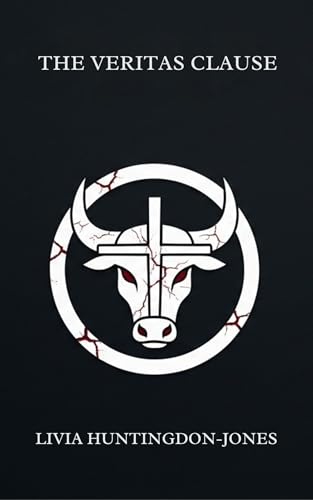
If I could choose just one thing, it would be the idea that Isobel arrives at in the final pages. The university’s motto is Veritas vos liberabit—The truth will set you free. We see that carved in stone, we hear it in speeches. It’s the promise of every great institution, every legal system, every religion.
But the one thing I hope readers remember is that the truth doesn’t set you free—not in the way we think. The truth is a fire. It’s a brutal, indiscriminate, and terrifyingly powerful force. It doesn’t gently unlock your chains; it burns down the entire prison. It burns away the lies, the compromises, the career you built, the person you thought you were, the marriage you thought you had. And once the fire has passed, you’re left standing in the ashes.
You might be free, but you’re also standing in a ruin. The question then becomes: what do you build now? What can grow in that scorched earth? That, to me, is the real, difficult, and often unbearable work of the truth. It’s not a destination; it’s the aftermath.
Sign up for our email and we’ll send you the best new books in your favorite genres weekly.