

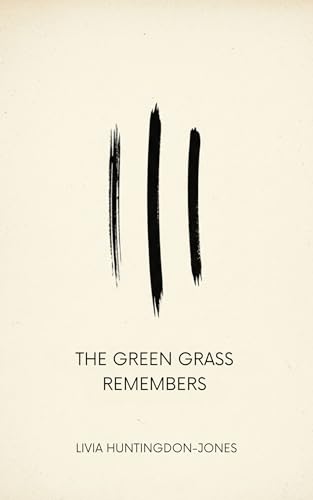
What's the story behind the story? What inspired you to write The Green Grass Remembers?
At its heart, the novel is an exploration of memory—not just the memories people hold, but the memories held by the land itself. I've always been fascinated by the English countryside, particularly around a place as ancient as Cambridge, where every lane and field feels like a palimpsest, with centuries of forgotten stories lying just beneath the surface.
I wanted to write a mystery where the central motive wasn't something as fleeting as money or revenge, but something far more profound: a sacred obligation to protect one of those forgotten stories from being erased forever. This idea gave birth to the two opposing forces of the novel.
On one side, you have Marcus Tyne, a man who embodies a certain kind of brutal modernity. To him, the land is a blank canvas, a commodity, and even history is just another "nice little bonus" to be leveraged for profit. He is the disease, the blight that threatens to pave over the past.
On the other side, you have Julian Theis. He is the book’s tragic heart. He is a man who speaks the language of trees better than the language of men, a quiet scholar whose church is a cathedral of wood and leaf. When Tyne threatens to destroy the one place that holds the memory of a century-old injustice, Julian’s act of murder, in his mind, isn't a crime but a duty. It is a piece of necessary, dispassionate surgery to remove the blight. He is the book's central moral question: can a killer also be a hero?
Caught between these two is DCI Eleanor Blackwell. She is, in many ways, my ideal protagonist. She is a woman of immense intellect and integrity, navigating a professional world that often dismisses her. Her passion for antique maps is her sanctuary, but it is also her greatest investigative tool. For Ellie, a map isn't just a drawing; it's a narrative, a text that reveals the truth of a place. She understands the impulse to impose order on chaos, which is what drives her as a detective. Her past with her condescending ex-husband, Alistair, has sharpened her resolve and made her fiercely independent. She is the only person who could possibly understand Julian, because on some level, they are both guardians of a silent, paper world.
The investigation itself is a journey through a pageant of masks. You have the grieving widow, Isabelle Tyne, whose icy composure hides a desperate secret of her own. You have the theatrical activist, Alistair Finley, whose righteous anger is not quite as pure as it seems. Even Julian himself wears the mask of a simple, easily overwhelmed tree surgeon. Ellie’s task is to peel back these layers of performance to find the truth, which turns out to be older and sadder than anyone could have imagined.
The haiku left at the scene is the key to it all. It is not, as the other police officers and the arrogant Professor Blackwell believe, a simple clue or a misdirection. It is a memorial, a title card for the entire tragedy, a signpost pointing not to a person, but to a place and a time. It is the voice of the ghost at the center of the story: Kenji Tanaka, the gentle Japanese poet and pacifist, whose only grave is the meadow Tyne plans to destroy. Ultimately, The Green Grass Remembers is about the stories we choose to tell and the ones we choose to forget. It’s about the violence that can be born from a love of history and the question of what we owe to the ghosts who whisper to us from the soil.
If you had to pick theme songs for the main characters of The Green Grass Remembers, what would they be?
Of course. I love this question because music is such a powerful way to get to the emotional heart of a character. If I were creating a soundtrack for the novel, here’s what I would choose:
DCI Eleanor Blackwell — “Spiegel im Spiegel” by Arvo Pärt
For Ellie, it has to be this. The title means “Mirror in the Mirror,” and the music itself is a stunning piece of minimalist precision. It builds slowly, methodically, layering simple, clear notes to create something of profound beauty and clarity. It’s the perfect sonic parallel to how Ellie uses her antique maps to find order in the chaos of a crime. It’s not loud or emotional; it’s the quiet, focused, and deeply intelligent sound of her map room, a reflection of a mind that finds truth in structure.
Julian Theis — “The Unquiet Grave” (Traditional Folk Ballad)
Julian is the book’s tragic, grieving heart. His actions are driven by a duty to a memory, a love for a story that he refuses to let die. This ancient folk ballad, which tells of a love that transcends death and a grief that will not let a soul rest, captures his motive perfectly. He is the living mourner for Kenji Tanaka’s “only grave,” and his crime is a terrible, violent extension of the ballad’s plea. The music is unsettling, sorrowful, and beautiful—just like Julian’s quiet, tectonic rage.
DS Ben Carter — “The Boxer” by Simon & Garfunkel
Ben is the story’s conscience, its steadfast and reliable anchor. He’s a good man haunted by past professional failures and now facing the collapse of his personal life because of his dedication to the job. This song is about perseverance in the face of struggle and disappointment. He gets knocked down, but he “still remains.” He learns to fight the easy narrative and the pressures from his superiors to find the real truth. The song captures his quiet integrity and his profound, bone-deep weariness perfectly.
Professor Alistair Blackwell — “You’re So Vain” by Carly Simon
I admit this choice is a little playful, but it is inescapably perfect for Alistair. His entire character is built on a foundation of intellectual vanity and polished condescension. He deliberately misleads a murder investigation, not for any grand reason, but out of the petty, corrosive fear that his ex-wife might be more brilliant than himself. The central lyric, “You probably think this song is about you,” is the absolute essence of Alistair. His world is so self-referential that he would risk everything simply to protect his own ego.
What's your favorite genre to read? Is it the same as your favorite genre to write?
That’s an excellent question, and it gets to the heart of why I wrote this book. My favourite genre to read is, without a doubt, intelligent, literary crime fiction. I adore writers who use the framework of a mystery to explore deeper questions about character, society, and place. Authors like P.D. James, who was a master of the form, or more contemporary writers like Tana French or Kate Atkinson, create such a profound sense of atmosphere and psychological depth.
I love a good puzzle, but I’m less interested in a simple whodunnit and more in the why—the complex web of history and motive that leads to a crime. I also have a great love for historical non-fiction, for those stories that uncover the hidden lives of the past.
So, to answer your second question, yes, it is absolutely my favourite genre to write as well. In many ways, writing a mystery feels like a natural extension of my legal work. Both professions are about constructing a narrative from evidence, about understanding motive, and about finding the truth within a complex, often contradictory, set of facts.
Writing in this genre allows me to be both an architect and an archaeologist. I get to build the intricate puzzle of the plot, which satisfies the logical, analytical side of my brain. But I also get to dig into the past, to unearth these forgotten stories and explore the emotional lives of my characters, which is where the real heart of the novel lies for me. It’s the perfect marriage of a rigorous intellectual challenge and a deep, empathetic exploration of the human condition.
I truly can’t imagine writing anything else.
What books are on your TBR pile right now?
My "To Be Read" pile is a rather ambitious, slightly precarious tower on my bedside table, I must confess. It never seems to get any smaller, but that’s the wonderful curse of a book lover, isn’t it?
Let’s see what’s at the very top right now… I’m incredibly eager to start The Wager by David Grann. I adore historical non-fiction that reads like a thriller, and from everything I’ve heard, he is a master at unearthing these incredible true stories of survival and human drama. It feels like the perfect book to get lost in.
For my crime fiction fix, I have The Raging Storm by Ann Cleeves. I find her sense of place so immersive, and I’m always in awe of how she weaves such intricate plots with such compelling, down-to-earth characters. She’s a giant of the genre for a reason.
Then there’s The Bee Sting by Paul Murray. It was shortlisted for the Booker Prize, and I’m a complete sucker for those big, sprawling family sagas that are both heartbreaking and darkly funny. It feels like the kind of book you live inside for a week.
And finally, one that feels a bit like a busman’s holiday is The Murder Rule by Dervla McTiernan. A law student working with the Innocence Project who suspects her client is guilty… it touches on so many of my own professional interests. I have a feeling I won’t be able to put that one down.
Of course, that’s just the top layer! The real challenge is finding the time to read them all. It’s a lovely problem to have.
What scene in your book was your favorite to write?
That is a wonderful question, and a surprisingly difficult one to answer, as different scenes feel like favourites for different reasons. Some are thrilling because the plot clicks into place, while others are satisfying because a character’s emotional arc resolves.
However, if I have to choose just one, it would be the scene in Chapter 2 where we are first introduced to DCI Eleanor Blackwell in her map room. That was the moment the character truly came alive for me. I wanted to create a protagonist who wasn’t just a brilliant detective, but whose methods were deeply rooted in her personality.
Her map room isn’t just a hobby; it’s her sanctuary, a physical manifestation of her mind. It’s a place of quiet, meticulous order, where she can impose a rational grid upon a chaotic world. As a lawyer, I feel a great affinity for that impulse.
Writing that scene allowed me to establish the central theme of the novel: the search for meaning and truth in the layers of the past. Ellie does it with her antique maps, these beautiful, empirical documents. It sets her up as the perfect intellectual foil, and yet a kindred spirit, to Julian Theis, who reads the history of the land itself—the shape of a burial mound, the line of an ancient track. They are both guardians, just of different kinds of texts.
It was also a joy to introduce the ghost of her past, Professor Alistair Blackwell, through her memory in that room. His condescending dismissal of her passion—calling her maps “just topography”—lays the groundwork for their entire dynamic and her journey towards intellectual and emotional freedom.
That scene is the quiet heart of the book for me. It’s where we learn that Ellie isn’t just investigating a crime; she’s a scholar, a cartographer of human nature, and the only person in the world equipped to understand a killer who leaves a poem as a map.
Do you have any quirky writing habits? (lucky mugs, cats on laps, etc.)
I suppose from the outside, they might seem a bit quirky, but to me, they feel absolutely essential. My life is a constant juggling act between the very logical, structured world of law and the rather more chaotic, imaginative world of fiction, so I have a few rituals to help me shift gears.
Firstly, I am a ridiculously early riser. My writing is almost always done between 5 and 7 a.m. The house is completely silent, the city hasn’t woken up yet, and my legal mind hasn’t had a chance to start dissecting contracts for the day. It’s the only time I feel I have a completely clean slate.
There must be tea. Specifically, Earl Grey, in a very fine bone china cup that belonged to my grandmother. It’s absurdly delicate and completely impractical, but there’s something about the ritual of it that signals it’s time to create, not to litigate.
Do you have a motto, quote, or philosophy you live by?
I don’t know if it’s a formal motto, but there is a philosophy that guides both my legal work and my writing. It’s simply this: “Find the pattern, tell the truth.”
In my life as a lawyer, I’m presented with a chaos of facts, evidence, and conflicting testimony. My job is to find the underlying pattern, the logical thread that connects everything and reveals a coherent, truthful narrative. It’s about imposing order on a mess to get to the heart of what really happened.
It’s precisely the same in my writing. A crime, like the one in my novel, is an act of chaos. But the story isn’t in the chaos itself; it’s in the structure beneath it. My protagonist, Ellie Blackwell, does this with her maps. I do it with plot and character.
I believe that even in the most complex and tragic human situations, there is a pattern, a “geometry” to it all, as one of my characters says. My job, whether I’m in a courtroom or at my writing desk, is to find that pattern and then have the integrity to tell its story as truthfully as I can. It’s the belief that truth exists, even when it’s buried, and that our most important work is to bring it to light.
If you could choose one thing for readers to remember after reading your book, what would it be?
If there is one single thing I would hope readers carry with them after they close the final page, it is the idea that the ground beneath our feet is never just empty space. We move through a world of roads and buildings, of property lines and development sites, and it’s so easy to see the landscape as a commodity, a thing to be used. But what I hoped to explore in the novel is that every field, every quiet lane, every ancient tree is a library of forgotten stories. It holds the memory of grief, of love, of injustice.
I would want a reader to finish the book and, the next time they walk through a park or drive down a country lane, to look at a gentle rise in the land and wonder if it’s a grave. To see an old oak and wonder if it was planted as a memorial.
I want them to remember that there is a quiet, profound history living just beneath our feet, and that it is a fragile thing, easily erased by those who cannot, or will not, see it.
The book is called The Green Grass Remembers because that’s the central truth I wanted to explore: that nature is a silent witness, and that sometimes, the most important stories have no voice but ours.
Sign up for our email and we’ll send you the best new books in your favorite genres weekly.