
What's the story behind the story? What inspired you to write this book?
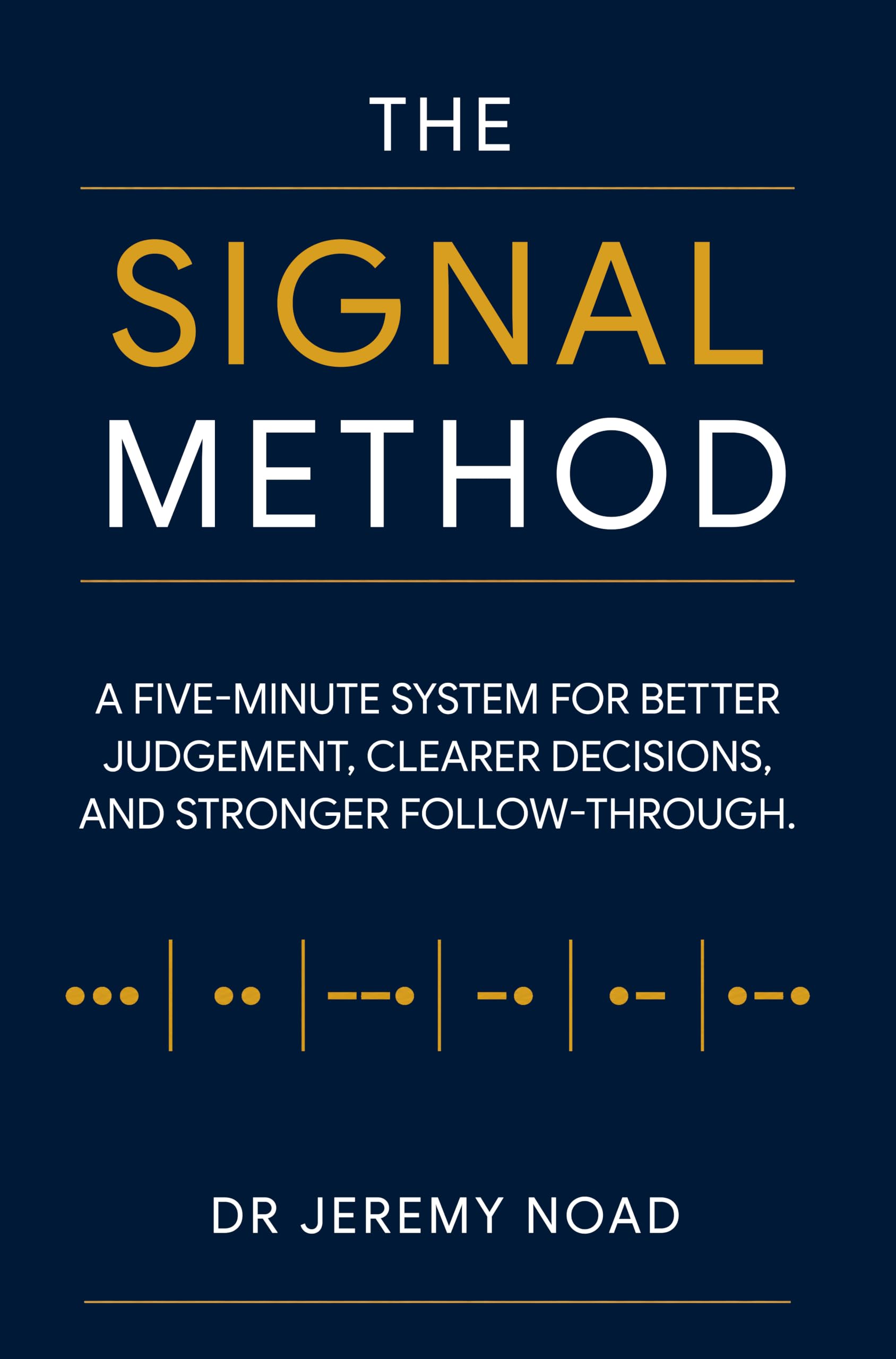
The book came from a pattern I kept seeing in business. We have plenty of experiences, but we do not always learn from them. We finish a meeting, make a decision, deal with a problem, and then move straight on to the next thing. I wanted a way to stop for a few minutes and ask better questions without turning reflection into a major exercise. SIGNAL grew from that idea. It is six questions that help you look at what happened, what effect it had, what you assumed, what you learned, what is still unclear, and what you will do next. The aim is simple: make better decisions from the experience you already have.
If you had to pick theme songs for the main characters of your book, what would they be?
I may have to plead the non-fiction defence here. There are no main characters, although anyone who has walked out of a meeting thinking, “That didn’t go quite as planned,” may recognise themselves. Some meetings finish on the Star Wars music when Darth Vader first appears.
What's your favorite genre to read? Is it the same as your favorite genre to write?
For fiction, I tend to read complex spy thrillers. I like books where motives aren't obvious, people make imperfect choices, and you have to pay attention. My non-fiction reading is often about how people behave and why they make the decisions they do, so psychology tends to appear somewhere in the mix. That overlaps with what I write, but not completely. I write both fiction and non-fiction, and in both I seem to keep coming back to the same question: why did somebody make that particular choice?
What books are on your TBR pile right now?
At this time of year, The Lord of the Rings always finds its way back onto the pile. The story begins on 22 September, so an autumn reread has become something of a habit. I also have Malcolm Guite’s book on Galahad and the Grail waiting for me, along with the latest Slow Horses novel from Mick Herron. That is a series I keep returning to.
What scene in your book was your favorite to write?
There is not really a favourite scene in a book like this, but I enjoyed getting to the final SIGNAL question: “What will I do next?” Reflection only matters if something happens afterwards. That last question turns what you have learned into a decision or action. For me, it is the point where the whole method earns its keep.
Do you have any quirky writing habits? (lucky mugs, cats on laps, etc.)
I normally write in silence, but editing is different. I choose one playlist or album and put it on repeat. I have done this with all my books and with academic work as well. It does three things. First, it tells my brain that it is editing time. Second, the length of the album gives me a natural work period, which helps me stay focused. Third, after a while I stop hearing the music, but it still blocks out other distractions. I use the same approach for any work that needs long periods of concentration. My guilty secret is that The SIGNAL Method was edited to the soundtrack of the musical & Juliet. By the end of the book, I was quite ready not to hear it again for a while.
Do you have a motto, quote or philosophy you live by?
I do not really have a motto. What I tend to encourage is making your own decision about whatever you are facing. It does not have to be the perfect decision, but it should be a conscious one. Make the decision, then act on it. That probably explains quite a lot about why I wrote The SIGNAL Method.
If you could choose one thing for readers to remember after reading your book, what would it be?
Experience does not automatically become learning. Sometimes you have to stop and question what you think happened. If readers remember one thing, I hope it is that better decisions often start with better questions and that, eventually, you have to decide what you are going to do next.