

What's the story behind the story? What inspired you to write Up in Flames?
Like most poets, I seem to be afflicted with the problem of having too many thoughts in my head and emotions in my heart, needing to get them out by writing them down. That’s really where it all started. In my first poetry collection, In the Deluge, a running theme was how experiencing rampant emotions can feel like drowning. They feel like fighting against the current. They feel like rain, and tears, and bottomless oceans.
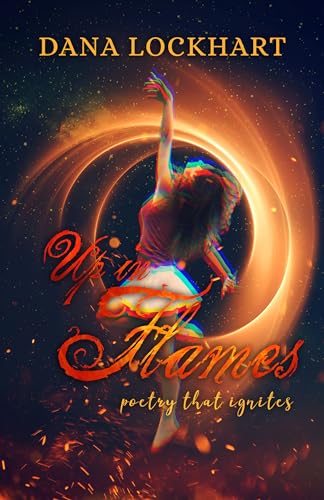
In this collection, Up in Flames, I follow a similar through-line: emotions can sometimes consume us, burn us up, and leave us charred. But there’s always the other side of things. The good emotions are like rain in a desert or a fireplace in winter. Water creates life, and fire brings warmth. Such is the way of nature—and of human nature.
If you had to pick theme songs for the main characters of Up in Flames, what would they be?
As the poet, I suppose you can call me the main character! For Up in Flames, I think the vibe is a lot like Line Without a Hook by Ricky Montgomery.
What's your favorite genre to read? Is it the same as your favorite genre to write?
I am a sucker for middle-grade to young adult light fantasy novels—stuff like Percy Jackson and Mortal Instruments, stories dripping with adventure and mythology. But I will generally enjoy any fantasy-adjacent work. I use reading as an escape from reality, so I don’t usually read “realistic” fiction or nonfiction much (aside from interesting scientific articles). Mostly, what I write is what I like consuming. You’ll never see me pick up a crime thriller to read, and you won’t see me write one.
What books are on your TBR pile right now?
The Buffalo Hunter Hunter, The Edge of Sleep, Iron & Velvet, and I’m still slowly working through House of Leaves.
What scene in your book was your favorite to write?
My favorite poem in this collection is an outlier: The Poem Where I Apologize. While most of my poetry is short and punchy, my Apologize poem is not short at all, but I still like to think it is punchy. This poem stemmed from a challenge to myself to write something stream-of-consciousness without a care about what it looks like, how I format it, what the point is, or where it might end. I think some of the most visceral and raw lines I’ve written so far as a poet spawned because of this poem. It also helped me work out some complicated feelings I have about being a poet, and I feel more assured of myself now because of it.
Do you have any quirky writing habits? (lucky mugs, cats on laps, etc.)
I will sometimes write poetry by hand in a notebook in a version of Anglo-Saxon runes. I find it a fun way to keep myself from forgetting how to write like that, and I also get some joy out of knowing no one else can read it!
Do you have a motto, quote, or philosophy you live by?
"No one can drive you crazy unless you give them the keys." I learned some of that effect pretty young in life, when I was dealing with a lot of bullies and negativity. It helped me a lot. No one has control over me except me. No one can make me do anything or feel anything unless I let them. For example, no one can "make me mad"—I choose when I want to be mad. It's such a burden to carry other people's weights and expectations, and so freeing once you realize you don't have to.
If you could choose one thing for readers to remember after reading your book, what would it be?
We all have floods to overcome and fires to keep alive. We are human and experience a wide range of emotions, and all of them are natural. Don’t block them out, don’t bury them, don’t hold them back. Feel them, understand them, grow with them, and when you are done with them, let them go.
Sign up for our email and we’ll send you the best new books in your favorite genres weekly.