Blog

Interview with Gary Colton, Author of How It Falls Apart

What's the story behind the story? What inspired you to write How It Falls Apart?

With so much division in the world right now, I believe How It Falls Apart allows readers to see the horrors that lie ahead if people continue to view the world with an “us versus them” mentality.

If you had to pick theme songs for the main characters of How It Falls Apart, what would they be?

Purple Rain by Prince is featured in the book, and if you read it, you’ll understand why I chose it

What's your favorite genre to read? Is it the same as your favorite genre to write?

I love literary fiction, but I prefer to write thrillers with a literary feel to the prose.

What books are on your TBR pile right now?

Last Chance by Greg Hurwitz, Red River Seven by Anthony Ryan, and All the Light We Cannot See by Anthony Doerr.

What scene in your book was your favorite to write?

The big test at the end!

Do you have any quirky writing habits? (lucky mugs, cats on laps, etc.)

Just lots of coffee!

Do you have a motto, quote, or philosophy you live by?

Successful people are just those who never gave up.

If you could choose one thing for readers to remember after reading your book, what would it be?

The potentially catastrophic consequences of artificial intelligence evolving beyond our control.


Gary Colton is the author of the new book How It Falls Apart

Connect with Gary Colton

Author Site

Buy The Book


Buy The Book

Sign up for our email and we’ll send you the best new books in your favorite genres weekly.

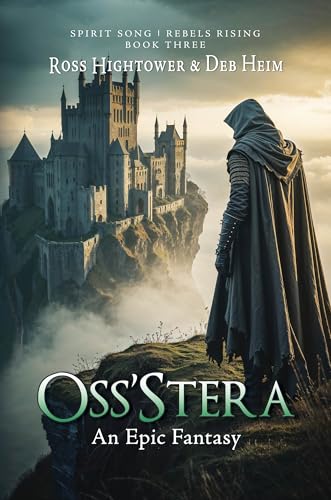
Interview with Ross Hightower and Deb Heim, Authors of Oss'stera

What's the story behind the story? What inspired you to write Oss'stera (Spirit Song: Rebels Rising Book 3)?

This is the third book in the Rebels Rising series, a prequel to the Spirit Song Saga. Ross began the prequel series to explore how the peaceful Alle’oss people learned to fight back against the colonizing Vollen Empire.

If you had to pick theme songs for the main characters of Oss'stera (Spirit Song: Rebels Rising Book 3), what would they be?

Don't Stop Me Now by Queen – Alar is a force of nature, determined to overcome all obstacles.

What's your favorite genre to read? Is it the same as your favorite genre to write?

Epic fantasy - which is what we write.

What books are on your TBR pile right now?

Just started Black Sun by Rebecca Roanhorse for our next Firkins and Fantasy book club.

What scene in your book was your favorite to write?

Probably the discussion between Alar and Siofra; the conversation was laden with subtext.

Do you have any quirky writing habits? (lucky mugs, cats on laps, etc.)

We usually leave the house to write, whether it’s a coffee shop, a library, or an empty room at the nearby campus.

Do you have a motto, quote, or philosophy you live by?

"Ertsi kalaola." This is an Alle'oss phrase that means "life's colors." Life is full of sorrow, but also love, joy, and warmth. Whatever life gives you, it’s up to you to make of it what you can.

If you could choose one thing for readers to remember after reading your book, what would it be?

Kindness, decency, and community can triumph over greed and oppression. At least in fantasy.


Ross Hightower and Deb Heim are the authors of the new book Oss'stera (Spirit Song: Rebels Rising Book 3)

Connect with Ross Hightower and Deb Heim

Author Site

Facebook

Buy The Book


Buy The Book

Sign up for our email and we’ll send you the best new books in your favorite genres weekly.

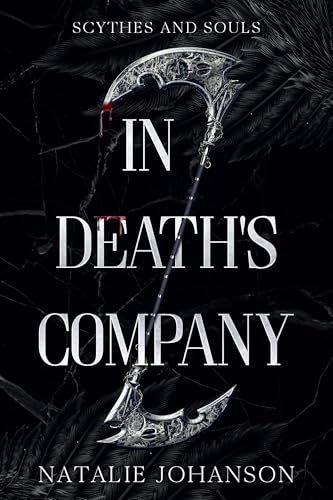
Interview with Natalie Johanson, Author of In Death's Company

What's the story behind the story? What inspired you to write In Death's Company?

I was listening to Johnny Cash's song A Man Comes Around and had the thought to tell the story of Death. I love the vibe of the opening verse, and I wanted to write a story with the same kind of ominous tone.

If you had to pick theme songs for the main characters of In Death's Company, what would they be?

Obviously, for Lady Death, it would be A Man Comes Around. May Haines would probably be Toscana by Alessandra.

What's your favorite genre to read? Is it the same as your favorite genre to write?

I love to read fantasy, but I've started branching out into more mystery/thrillers. I'm into dark romantasy stuff currently. I just finished This Monster of Mine, and I loved it!

What books are on your TBR pile right now?

I'm currently reading Ghostwriter by Julie Clark and The Thursday Murder Club by Richard Osman (I just watched the movie, and I loved it). I also really need to finish the Drowning Empire series by Andrea Stewart, but I just don't want that series to end.

What scene in your book was your favorite to write?

I loved writing the scene where Lady Death returns to the Underworld and encounters an angel interloper. I had the most fun writing that scene, channeling Death’s anger at the audacity of the angel. I also really hated—and loved—writing a scene toward the end… but spoilers.

Do you have any quirky writing habits? (lucky mugs, cats on laps, etc.)

I wouldn’t say it’s a habit… more like something forced upon me. My cats will NOT leave my desk alone. Holmes will inevitably demand to sit above my keyboard and get annoyed when I constantly touch his tail, and Watson will insist on his spot on my lap.

Do you have a motto, quote, or philosophy you live by?

“Well-behaved women rarely make history.” It’s such a poignant quote, made by a fantastic woman. Make your mark and be unapologetic about it.

If you could choose one thing for readers to remember after reading your book, what would it be?

Don't worry, there's a second one coming!


Natalie Johanson is the author of the new book In Death's Company

Connect with Natalie Johanson

Author Site

Facebook

Buy The Book


Buy The Book

Sign up for our email and we’ll send you the best new books in your favorite genres weekly.

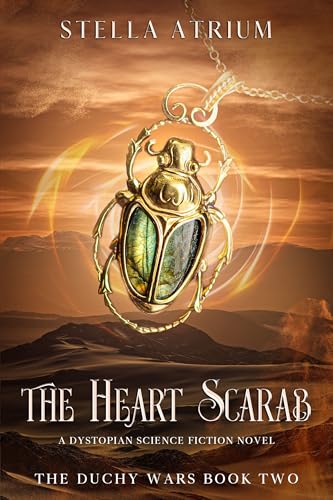
Interview with Stella Atrium, Author of The Heart Scarab

What's the story behind the story? What inspired you to write The Heart Scarab?

The Heart Scarab is Book 2 of a second series that follows the same characters into adulthood and nation-building. For this series, I added characters who wield hedge magic, charms, wards, and hexes, as well as higher magic, such as a glamour that renders one invisible. We revisit favorite characters like Bybiis the beastmaster, while Kore emerges as a teen testing her privileges as the heiress of the treasure of Kyle Rula. She gains allies in her half-brother Karisma and her adoptive father, Rufus el Arrivi. Kore’s worldview is shaped by her unwavering confidence, and I vividly remember those years of bravado and taking unnecessary risks.

What's your favorite genre to read? Is it the same as your favorite genre to write?

I like to read history and biography. I feel that trends in history are influenced by the personalities making decisions in the moment, decisions that can impact entire populations. I find inspiration for plotlines by observing how nation-building unfolds in our world.

What books are on your TBR pile right now?

The TBR pile is so high! I’ve been digging into Victor Davis Hanson and Gordon Chang, exploring topics like migration and the tech wars with China. I’m always interested in projecting what may happen in five years, and I often find ways to incorporate the urgency of managing change into my plotlines.

What scene in your book was your favorite to write?

Stuben is a secondary character in previous books. In The Heart Scarab, Stuben grows into his adult roles and butts heads with his boss, Rufus el Arrivi. He strikes out on his own but, of course, gets into trouble and wonders why he ever thought to leave his earlier job. We often have regrets after quitting a job or leaving a place, thinking kindly about that situation while seeing it in the rearview mirror.

Do you have any quirky writing habits? (lucky mugs, cats on laps, etc.)

I read my own books for entertainment. That’s weird, right?

Do you have a motto, quote, or philosophy you live by?

To write well, one must get up early, brew some coffee, and turn on the computer.

If you could choose one thing for readers to remember after reading your book, what would it be?

Characters speak in their own voices, and the sections work together to present a unified story. Rather than following a hero who sees only his own path, the reader is treated to the perspectives of many characters, even some animals.


Stella Atrium is the author of the new book The Heart Scarab

Connect with Stella Atrium

Author Site

Twitter

Buy The Book


Buy The Book

Sign up for our email and we’ll send you the best new books in your favorite genres weekly.

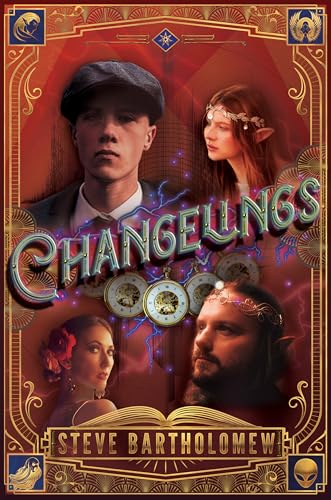
Interview with Steve Bartholomew, Author of Changelings

What's the story behind the story? What inspired you to write Changelings?

Story behind the story: I am always fascinated by ancient tales, whether myths, folk tales, or holy writ. I often speculate on how they may have been based on real events and how they have come down to us. For example, could the story of Humbaba in the Epic of Gilgamesh be based on a memory of the last Neanderthal? Or Grendel in Beowulf? Perhaps not, but it would make for a great story. I began to examine what are called fairy tales. The oldest stories are not about tiny people with wings and magic wands. They often appear as ordinary humans until revealed to be otherwise. They are said to have numerous magical powers. But what if their magic is mostly a form of hypnosis? What if they are really a slightly separate species of human? Perhaps not, but it would make for a great story.

If you had to pick theme songs for the main characters of Changelings, what would they be?

Theme song for the main characters: There are two main characters. The only song I can think of is What Will I Do Without You?

What's your favorite genre to read? Is it the same as your favorite genre to write?

My favorite genre to read is historical fiction, which I also write. However, I also read some fantasy and mythology, which sometimes finds its way into my writing. My stories of the Fae I would have to call “historical-paranormal.” My current series takes place in the early twentieth century. A line from one of my previous books: “San Francisco was infested with fortune tellers and spirit mediums, all fake, of course.”

What books are on your TBR pile right now?

I don’t usually plan far ahead. I’m currently reading The Lacuna by Barbara Kingsolver, who has rapidly become one of my favorite writers. I must confess I will also read anything by Stephen King, a fine craftsman. I often read actual history books between novels.

What scene in your book was your favorite to write?

What scene was my favorite? I would have to say the last chapter. The two protagonists are destined and commanded to kill each other. They do so, but not in the way you think.

Do you have any quirky writing habits? (lucky mugs, cats on laps, etc.)

I can only write after sunset, if that’s quirky. It seems quieter, with fewer distractions. Of course, I have the advantage of not owning a TV.

Do you have a motto, quote, or philosophy you live by?

I am more or less a Taoist. The Way that is called the Way is not the Way (one possible translation of “Tao”). That means that a painting of a pipe is not a pipe. When we name a thing, an event, or an idea, we have only the name, not the essence itself, not the reality. A Buddhist would say reality itself is an illusion. I try to keep this in mind.

If you could choose one thing for readers to remember after reading your book, what would it be?

This has been a story. I hope it entertained you. It was all made up; any reality it has is an illusion. But it was made up out of real bits and pieces. I hope it may help you make up your own story from your own real pieces.


Steve Bartholomew is the author of the new book Changelings

Connect with Steve Bartholomew

Author Site

Facebook

Buy The Book


Buy The Book

Sign up for our email and we’ll send you the best new books in your favorite genres weekly.

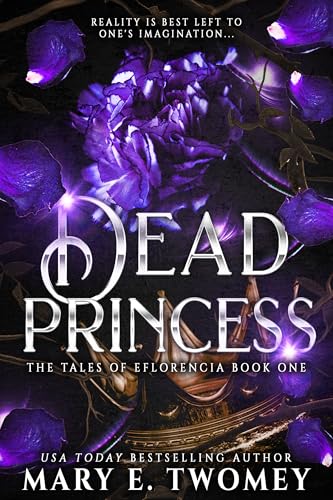
Interview with Mary E. Twomey, Author of Dead Princess

What's the story behind the story? What inspired you to write Dead Princess?

I wanted to write a fantasy adventure starring a young adult with ADHD who is also on the spectrum. I don’t see many main characters like Bea, and I had a lot of fun going on this adventure with her.

If you had to pick theme songs for the main characters of Dead Princess, what would they be?

What's your favorite genre to read? Is it the same as your favorite genre to write?

I constantly read nonfiction, but I also always have a classic going, along with a fiction book from pretty much any genre. Right now, I’m reading Growing Up Urkel by Jaleel White, The Secret Garden by Frances Hodgson Burnett, and The Man in the Brown Suit by Agatha Christie. I’m a little all over the place!

What books are on your TBR pile right now?

Next on my list to read is The Secret History of Bigfoot by John O’Connor.

What scene in your book was your favorite to write?

The main character, Bea, has an imaginary friend named Ginger, who dares her to do things that are sometimes a little unwise and overly daring. I really enjoy seeing Ginger and Bea cause trouble together.

Do you have any quirky writing habits? (lucky mugs, cats on laps, etc.)

I write with my Pomeranian warming my feet. Is there any other way to write?

Do you have a motto, quote, or philosophy you live by?

In our house, we live by the "Two Rogers Rule." If Fred Rogers (Mister Rogers) or Steve Rogers (Captain America) wouldn’t do or say something, it’s probably a good idea not to either.

If you could choose one thing for readers to remember after reading your book, what would it be?

I want them to be okay with themselves, no matter their limitations or the things they wish they could change. You have a unique perspective on the world, and the world needs your voice and your insight.


Mary E. Twomey is the author of the new book Dead Princess

Connect with Mary E. Twomey

Author Site

Facebook

Buy The Book


Buy The Book

Sign up for our email and we’ll send you the best new books in your favorite genres weekly.

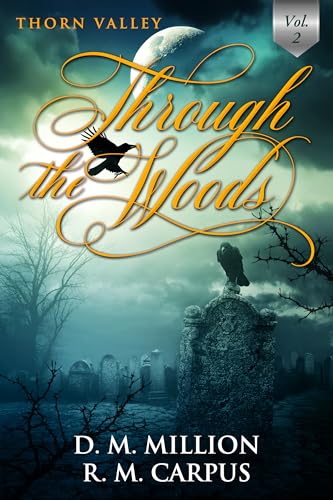
Interview with D. M. Million and R. M. Carpus, Authors of Through the Woods (Volume 2)

What's the story behind the story? What inspired you to write Through the Woods (Volume 2)?

For me, it started as a short story for a workshop class in my undergrad program. The story, Loomies, was the one. I sat on it for years until R. M. Carpus and I decided to write a horror anthology, and I dusted it off. I was in a really dark place at the time I wrote it. I had been watching a ton of horror, and I was surprised at myself for how disturbing my imagination could become. I don’t think I could write another like it.

If you had to pick theme songs for the main characters of Through the Woods (Volume 2), what would they be?

For all of my stories, I’d say Rockwell’s “Somebody’s Watching Me.”
Cole from Glitch 24: Billie Eilish’s “Bury a Friend.”
Billy from Loomies: Talking Heads’ “Psycho Killer.”
The kids from The Gravedigger: Bobby Pickett’s “Monster Mash.”

What's your favorite genre to read? Is it the same as your favorite genre to write?

My favorite genre to read is contemporary fantasy, though it’s not my favorite to write. My favorite genre to write is Gothic literature.

What books are on your TBR pile right now?

Dark Matter by Blake Shelton, Dracula by Bram Stoker, Wuthering Heights by Emily Brontë, and A Deadly Education by Naomi Novik.

What scene in your book was your favorite to write?

My favorite scene to write was the first scene of Glitch 24, when Cole is driving into Thorn Valley. I enjoyed exploring the visceral sensation of anxiety, and I feel it comes across exactly how I wanted it to.

Do you have any quirky writing habits? (lucky mugs, cats on laps, etc.)

One must-do in every writing session is putting on instrumental music that matches the mood of my story. It’s like giving the scene its own soundtrack.

Do you have a motto, quote, or philosophy you live by?

A motto I live by is: “My success is inevitable, and I’m always on the right path.” Those two reminders carry me through even the most difficult times.

If you could choose one thing for readers to remember after reading your book, what would it be?

There’s something for every horror fan in this collection. I recommend giving yourself a palette cleanse with something funny or light between stories—horror can be intense, and you don’t want to slip into a negative headspace from consuming too much at once. Personally, I only dive into horror during spooky season because it helps keep my mind and spirit balanced. So enjoy—but also be careful and kind to yourself.


D. M. Million and R. M. Carpus are the authors of the new book Through the Woods (Volume 2)

Buy The Book


Buy The Book

Sign up for our email and we’ll send you the best new books in your favorite genres weekly.

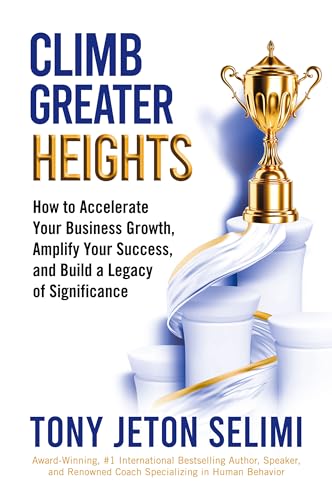
Interview with Tony Jeton Selimi, Author of Climb Greater Heights

What's the story behind the story? What inspired you to write Climb Greater Heights?

The story behind the story is my life. I didn’t write Climb Greater Heights because it was a clever business move. I wrote it because life demanded it of me—and so did my clients. I was born in Gostivar, a small town in the Republic of North Macedonia, where I grew up amidst illness, bullying, and uncertainty. Then came war. At nineteen, I was conscripted into the Yugoslav army to fight in a conflict I despised. Fourteen months later, I was alive—but broken. My mother, desperate to save me, borrowed money to put me on a one-way flight to London.

By the age of twenty, I was homeless, sleeping on the streets of a city that felt both merciless and full of possibility. I had to rebuild myself from the ground up. I worked three, sometimes five jobs, to pay for university. I graduated with honours, built a successful career in information technology, and managed multi-billion-pound transformation programmes. But in 2009, after redundancy shook my foundation, I knew it was time to climb a different mountain. I kept working in tech while building my coaching, training, and speaking business. In 2014, I published my first book, A Path to Wisdom, which became an instant bestseller and award-winner.

That journey was full of impossible mountains to climb—but each ascent prepared me to guide others up their own. What inspired me wasn’t only my battles—going from nothing to building a seven-figure, purpose-driven business, creating a vision to inspire a billion people, and helping others start, grow, and scale their businesses. It was also the people I’ve served along the way: the lawyers and doctors, the CEOs on the brink of burnout, the scientists and financiers, the entrepreneurs chasing success but losing themselves, and the countless men and women yearning to live extraordinary lives.

Publishing my ideas gave me a platform: over 1,000 TV, radio, podcast, and magazine interviews; global stages like TEDx, the United Nations, Cranfield University, Rotary International, and the London Business Show; and recognition with international awards for both my books and my work. It led to co-creating and featuring in the award-winning documentary Living My Illusion and serving as executive producer of The Truth About Reading. It allowed me to go from zero to building a global brand, profile, and partnerships, and generating millions doing what I love. And it proved to me that business can be a force for good. After more than 28,000 hours of coaching, training, consulting, and mentoring, I’ve witnessed breakthroughs that defy logic. I’ve come to see that we all share the same hidden summit: the need to rise above fear, doubt, and limitation—and to discover who we truly are.

This book is not a theory. It is a lived truth. It contains the frameworks, philosophies, and hard-won lessons that transformed my life and the lives of my clients—from billionaires and CEOs to struggling entrepreneurs and aspiring visionaries who once thought they were broken beyond repair. I know what it feels like to be lost. I also know what it takes to find yourself again.

At its heart, Climb Greater Heights is a love letter to human and business potential. It’s a roadmap for those who dare to rise higher: to become authorities in their field, to build influence, credibility, and trust, to publish their work, to create prosperous and sustainable businesses, to navigate the disruption of AI, and to avoid becoming just another statistic of entrepreneurs who gave up too soon.

And if I’m honest, it’s also a promise I made to my younger self—the boy who felt invisible, the young man who slept on the streets, the dreamer who refused to quit—that his struggles would one day become a light for others. That is the story behind the story.

If you had to pick theme songs for the main characters of Climb Greater Heights, what would they be?

“Man in the Mirror” – Michael Jackson
Because real transformation begins not with the world but with the self. Legacy Builders—those who look beyond profit to lasting impact—know that changing the reflection in the mirror is how you change the world.

“Eye of the Tiger” – Survivor
Yes, it’s iconic. Yes, it’s cliché. And yes, it’s perfect. This is the anthem of the Warrior in all of us—the client pushing through fear, doubt, and resistance. The fight is real, but so is the victory.

“Don’t Stop Believin’” – Journey
Visionaries are sustained by faith in what others cannot yet see. For the dreamers, entrepreneurs, and leaders ready to expand, this is the soundtrack that reminds them: hold on to that vision—it will carry you through.

“It’s My Life” – Bon Jovi
Unapologetic. Defiant. Alive. This is for the Climber—the archetype of resilience and mastery—who dares to take ownership of their destiny and live it on their terms.

“Boulevard of Broken Dreams” – Green Day
Raw, haunting, and honest. This is for the Seeker—my younger self, the boy who walked through war, homelessness, and despair only to find hope and create a global mission. Sometimes the loneliest roads lead to the most extraordinary destinations.

“Fix You” – Coldplay
Tender yet powerful. This belongs to the Healer within us all—the one who turns wounds into wisdom, pain into forgiveness, and brokenness into growth. It’s the quiet force of transformation that underpins every story I share.

“Stronger” – Kanye West
Because every fall, every scar, every setback sharpens the blade. This is the heartbeat of Climb Greater Heights: the unshakable truth that what doesn’t break you makes you unstoppable.

What's your favorite genre to read? Is it the same as your favorite genre to write?

For me, reading is not random—it’s a toolkit. Every book sharpens my intellect, expands my leadership lens, deepens my wealth consciousness, or strengthens my ability to help others climb their own greater heights.

Now, is it the same as my favourite genre to write? Not exactly. My reading stretches wide: psychology, neuroscience, business, leadership, philosophy, wealth building, and explorations into AI, consciousness, and the future of humanity. But my writing is focused on creating transformational non-fiction that blends science, philosophy, spirituality, and practical frameworks to help people rise above limitations and thrive in the eight key areas of life.

That said, I also love writing poetry, and I’m passionate about developing scripts for future documentaries and films, where I can tackle bigger questions—how AI is reshaping human behaviour, consciousness, leadership, and entrepreneurship; how loneliness, authenticity, relationships, and healing are evolving in our modern age; and how philosophy and spirituality can guide growth in a disruptive world.

At the core, inspiration, growth, and solutions are the heartbeat of my writing—whether it’s a business framework, a meditation on consciousness, or a poem meant to stir the soul. And yes, fiction is on the horizon, too. Because for me, writing isn’t about sticking to one genre—it’s about giving shape to ideas and solutions that transform lives, businesses, and the future we’re building together.

What books are on your TBR pile right now?

My TBR pile is always eclectic because my work lives at the intersection of human behaviour, business, leadership, wealth, and technology. Right now, I’m diving into:

- Homo Deus by Yuval Noah Harari – a re-read that challenges me to think about how AI, robotics, and biotech are reshaping work, identity, and the future of leadership.
- The Gene by Siddhartha Mukherjee – because to help people heal and perform at their highest, I want to understand human potential at its deepest level.
- Principles by Ray Dalio – a masterclass in systems thinking, decision-making, and wealth building.
- AI Superpowers by Kai-Fu Lee – essential reading to stay ahead of how AI is disrupting industries and redefining human value.
- The Daily Stoic by Ryan Holiday – timeless wisdom that keeps me grounded, especially when coaching leaders under immense pressure.
- Climb Greater Heights (my own) – I revisit it often, because each time I teach or coach, I uncover new dimensions within the frameworks I created: the 12-Step Growth Accelerator Method®, the Octagon of Excellence®, and the Values Clarification & Alignment Process®.
- The Power of Now by Eckhart Tolle – because presence isn’t just a spiritual practice, it’s the ultimate leadership tool.
- Good to Great by Jim Collins – a classic reminder that enduring greatness requires timeless leadership principles.

And truthfully, my TBR is never just about my personal reading—it often includes manuscripts from my clients, many of whom are leaders and entrepreneurs writing their own books. Helping them shape their message is as inspiring as anything I’ll find on a bestseller list.

What scene in your book was your favorite to write?

Each chapter of Climb Greater Heights is a world of its own. But if I had to choose one that was the most profound to write, it would be Chapter 1: “Your Voids Determine Your Values, Value, and the Size of Your Vision.”

Why? Because it reveals a timeless truth at the very heart of human behaviour. Neuroscience tells us our brains are wired to seek equilibrium—where there is a void, the mind creates a drive to fill it. Psychology shows us that our greatest longings and unmet needs don’t just wound us; they sculpt our values and set the direction of our vision. And philosophy, from Aristotle to Nietzsche, whispers the same lesson across the centuries: greatness is often born from the wound.

I know this not as theory, but as lived reality. At twenty, homeless on the streets of London, my life was an ocean of voids: no safety, no belonging, no stability, no sense of worth. Yet those very voids became the fuel that ignited my hunger to learn, to grow, and to serve. Without them, I would not have clawed my way from despair to managing billion-pound technology programmes—and eventually to my true calling as a teacher, author, and coach.

I see this same pattern reflected in my clients. A cardiologist once confided that his true void wasn’t financial—it was freedom and impact. Once he owned that, he broke free from hospital bureaucracy, built a thriving private practice, and rebalanced his life. A billionaire client discovered that despite his wealth, his greatest void was love and connection. Facing that truth gave him permission to rebuild his marriage and deepen the relationships that money could never buy.

That’s why Chapter 1 is both deeply personal and universally human. It’s not a clever idea—it’s a fact of life. Our voids are not curses; they are compasses. They don’t just show us what is missing—they point us to what matters most. They define our contribution, expand the size of our vision, and ultimately shape the legacy we leave behind. For me, writing that chapter was like charting the genesis of every breakthrough I’ve ever witnessed—whether in myself or in those I’ve served. It’s the place where pain turns to purpose, where wounds give birth to wisdom, and where the climb truly begins.

Do you have any quirky writing habits? (lucky mugs, cats on laps, etc.)

Yes, I absolutely have quirky writing habits. My desk is less of a workspace and more of an altar—a sacred space where science, soul, and symbolism meet.

I always begin by lighting a candle. It’s not just for ambience; it’s my way of reminding myself that every word I write must be a light for someone who may be sitting in darkness. Beside it sits my lucky solar-powered Chinese waving cat, surrounded by golden coins and the Tree of Life. Its steady, endless wave reminds me that abundance flows when we open ourselves to receive—that growth is eternal, and that energy, like sunlight, never runs out.

I keep a favourite mug of mountain tea nearby, along with freshly made juices that change with my mood and needs: sometimes celery, lemon, mint, and ginger for clarity and cleansing; other days beetroot, lemon, and ginger for grounding and strength. These juices are like liquid creativity—alive, vibrant, and nourishing. Just as I blend raw ingredients into something healing, I also blend life’s raw experiences—joys, traumas, triumphs—into words that I hope can inspire, transform, and endure.

And here’s the most intimate part: when I write, I imagine conversations with the people who shaped me. With my mother, who always knew I would one day be a writer. With my father, who believed I would excel whether I remained in my senior technology career or chose the path of entrepreneurship. And with my younger self—the boy who felt invisible, the young man who slept homeless on London’s streets, the dreamer who once wondered if he’d ever climb his way up.

Writing to them keeps me honest, compassionate, and practical, so that every page can meet someone else where they are.

So yes, my writing process is a ritual of light, symbols, and nourishment: a candle flickers, a golden cat waves, a fresh juice fuels me, and the voices of my past listen as I write words meant to help others climb their own greater heights.

Do you have a motto, quote, or philosophy you live by?

I believe our deepest voids are not curses, but callings. They reveal what we value most and give birth to the size of our vision. My philosophy is simple: transform your pain into purpose, your setbacks into stepping stones, and your vision into a legacy. When I lost everything and found myself homeless in London, I realised I had two choices: let the voids consume me, or use them as fuel. Those very voids became the reason I valued education, resilience, contribution, and ultimately service to others.

Science, psychology, and ancient wisdom all echo the same truth: energy never disappears, it transforms; pain shapes our values; the wound is where the light enters. Every challenge is also an invitation. Every perceived weakness hides the seed of greatness. And every void points us toward the vision we are meant to create. That’s the backbone of Climb Greater Heights—and of my life. Mastery doesn’t come from avoiding pain, but from transforming it into purpose, impact, and legacy.

If you could choose one thing for readers to remember after reading your book, what would it be?

If readers remember one thing after reading Climb Greater Heights, I want it to be this: life is not random—it’s designed. And when you align your voids, your values, your vision, and your actions, you can consciously design the life, business, and legacy you long for.

Every chapter is a step on that climb:

In Chapter 1, you discover how your deepest voids shape your values.
In Chapter 2, you learn to reprogram your mind so you stop recycling the same patterns.
By Chapter 3, you have the 12-Step Growth Accelerator Method —a map for scaling both life and business.

From there, you define your philosophy, clarify your purpose, learn to transform pain into solutions, publish your ideas, build partnerships, master sales, publicity, and even unleash philanthropy. What I want readers to feel is possibility—that even if they’re standing where I once stood, homeless, lost, or simply unfulfilled, they can follow these steps and create a future bigger than anything they’ve imagined. I want them to realise that the same process I’ve used to help billionaires, cardiologists, entrepreneurs, and leaders transform their lives is accessible to them too.

So if there’s just one thing to remember, let it be this: you already have within you the raw material—your pain, your talents, your questions, your longings. This book is your toolkit for turning it all into prosperity, purpose, and a legacy worth leaving.

 

Tony Jeton Selimi is the author of the new book Climb Greater Heights

Connect with Tony Jeton Selimi

Author Site

Facebook

Twitter

Buy The Book


Buy The Book

Sign up for our email and we’ll send you the best new books in your favorite genres weekly.

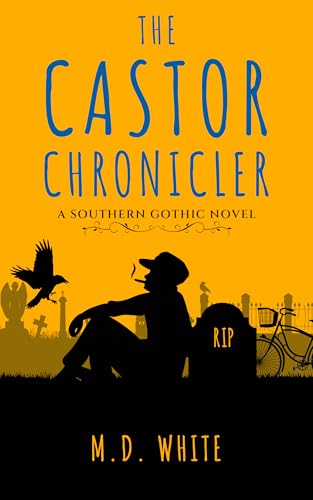
Interview with Marilyn D. White, Author of The Castor Chronicler

What's the story behind the story? What inspired you to write The Castor Chronicler?

My family members, as well as growing up in the sixties.

If you had to pick theme songs for the main characters of The Castor Chronicler, what would they be?

IDA — Count Your Blessings (Baptist gospel song)
CAL — Hear That Lonesome Whippoorwill by Hank Williams, Sr.

What's your favorite genre to read? Is it the same as your favorite genre to write?

Southern Gothic and Biography.

What books are on your TBR pile right now?

Other Voices, Other Rooms by Truman Capote; Lust for Life by Irving Stone; Marilyn Monroe - the Biography by Donald Spoto; Stonewall Jackson by James Robertson, Jr.; Mary Magdalene: Bride in Exile By Margaret Starbird.

What scene in your book was your favorite to write?

All of the graveyard scenes.

Do you have any quirky writing habits? (lucky mugs, cats on laps, etc.)

Must write with favorite pens that have just the "right feel," and they’re all kind of skinny.

Do you have a motto, quote, or philosophy you live by?

The Golden Rule - my mother's lasting legacy to me.

If you could choose one thing for readers to remember after reading your book, what would it be?

That no one is beyond redemption, no matter how far they have slid.


Marilyn D. White is the author of the new book The Castor Chronicler

Buy The Book


Buy The Book

Sign up for our email and we’ll send you the best new books in your favorite genres weekly.

Interview with Gary Bolick, Author of River Talk

What's the story behind the story? What inspired you to write River Talk?

Man’s alienation and isolation on his home planet. As a species, we are brand new, barely out of infancy. Yet, we have done our level best to destroy this incredibly fertile and life-sustaining orb. So, I wondered if there was ever a time that the human species was connected as intimately to the planet as all the other inhabitants. Of course, we were. So, I looked back to when the human mind began to consciously record its thoughts or paint its internal images and thoughts onto a surface. I ended up with ancient mythology and cave paintings, and imagined a tribe of Indians who maintained that perfect balance of a waking conscious mind that was still intimately connected to the planet.

To create the conflict and tension needed to tell the story, I have two modern “exiles,” if you will. A sort of Adam and Eve who are completely out of place in modern society but profoundly connected to the rhythms and movement of the earth. The lone tribe that has survived is actually drawn out to search for them because the water, the earth’s blood, has begun to whisper. I try to make it easier to slide into the story by incorporating myths from Western literature. If you will, I set out to write a new mythology using the same tools as the ancients: my unconscious. Carl Jung postulated that all of the collective unconscious of Man can be found in mythology.

If you had to pick theme songs for the main characters of River Talk, what would they be?

- For Marchon Baptiste: Beethoven’s 6th: The Pastoral Symphony.
- For Debbie Dorchester, aka The Lady in the Lake: Prelude to The Afternoon of the Faun by Debussy.
- For Mendenhall and Kudlow, the two Memphis doctors: Voodoo Child by Jimi Hendrix.

What's your favorite genre to read? Is it the same as your favorite genre to write?

Literary fiction: William Faulkner, Marcel Proust, Franz Kafka, Günter Grass, Albert Camus. Yes, I would say that even when I write visionary or science fiction, it still finds its heart and soul rooted in literary fiction.

What books are on your TBR pile right now?

The Nickel Boys and The Overstory: a novel.

What scene in your book was your favorite to write?

In the chapter “Lady in the Lake,” when Marchon sees Debbie standing by the shore nude. She waves and smiles and proclaims, “Not too bad for an old girl, why don’t you join me!” She then dives into the lake. Soon after, Marchon has peeled his clothes off and is swimming in her wake. It is during this interlude that Marchon and Debbie seal their bond through the water. Without touching, their minds, bodies, and spirits become a single entity through the whispering, caressing water. It is the first time that the reader experiences the earth through the water‒speaking.

Do you have any quirky writing habits? (lucky mugs, cats on laps, etc.)

No. Very old school. I sit down at my laptop and start pounding away.

Do you have a motto, quote, or philosophy you live by?

Yes, it comes from writing an earlier novel: A Walking Shadow. Whether we like it or not, our lives, thoughts, actions, and selves are all in constant motion, expanding outward along with the universe. We attempt to create symmetry, coherence, and truth that will envelop and inform our lives. The trouble is, it all starts over and over again in each moment we are alive. So, the best one can do is to thread him/herself into that ever-changing movement. By doing so, it renders you profoundly humble and questioning. Looking at the person next to you, your family, loved ones and the rest of humanity, you realize that not a single one of us is the same person‒ever‒as we stumble through our brief existence. Or as Sisyphus once concluded as he watched the stone roll off the edge of the cliff, “Sentenced to push this rock, I have liberated myself.”

If you could choose one thing for readers to remember after reading your book, what would it be?

That human consciousness is the long and short of our existence. That, as microscopic specks in the universe, a human consciousness can actually reach out and fold itself into the light and expanse of a universe so profoundly immense that it is impossible to comprehend, yet we can participate and evolve into it if we simply surrender to what is here, all around us. The human consciousness is the thin thread that ties our existence to something much larger and more profound than the individual who is thinking or dreaming. Don’t wait for a payoff. Don’t wish for an afterlife, or dream of a utopia‒jump in! Take a long walk in the woods, pull in several long, deep breaths, then surrender, let go.


Gary Bolick is the author of the new book River Talk

Connect with Gary Bolick

Author Site

Buy The Book


Buy The Book

Sign up for our email and we’ll send you the best new books in your favorite genres weekly.