Blog

Interview with Kris Jayne, Author of Cross My Heart (Lone Star Crossed Saga Book 1)

What's the story behind the story? What inspired you to write Cross My Heart?

I’m a big fan of old-school soap operas, and I loved the idea of the fun, wild family drama and money and romance all rolled into one. Cross My Heart started out as book five in my previous series with a hero who finds out he’s the secret heir to an oil billionaire’s fortune.

As I started trying to connect the book into the world of my first series, it didn’t work. The landscape and backstory expanded beyond what I could fit into my previous series. I gave Carter Cross, my hero, siblings and newfound cousins. The heroine’s story arc kept getting deeper because Nisha Donovan starts off as a woman who is up to no good. She’s a tabloid reporter digging up dirt on Carter’s family and lying about it.

I realized what I had wasn't book five, but book one in a soapy family saga entirely about the billionaire’s grandchildren—half from his family with his wife and half from the children of the son he never knew.

From there, I knew one of the families—the Crosses—would be black and the other family—the Stars—would be white. I wanted to create a multiracial world from the start, which I didn’t do in my previous series because it began with a book I was going to submit to a traditional category romance publisher.

I fell in love with the idea of creating romances for the grandchildren woven into the unfolding secrets of their parents and grandparents. I wanted to create the kind of series that needs a family tree.

What's your favorite scene from your new release, Cross My Heart?

If I had to choose one (and the other scenes won’t get their feelings hurt), I’d pick a scene in the last third of the book where Carter and Nisha connect after a crisis.

Carter’s father died when he was seven, and he’s the oldest. He feels responsible for his brother and sister. Nisha is the younger sibling, but she’s the responsible one. She’s had to raise herself in many ways, and now she’s taking care of her teenage niece. Neither one gives themselves room for crying or falling apart.

Carter gives Nisha something super sweet that shows he listens and that he’s learning to forgive her for what she does in the first half of the book. They have a moment that allows her to accept his forgiveness and give in to her attraction. The sweet leads to heat, which is my favorite thing. I also like the last scene of the book, which is naughty and fun. That’s all I’ll say

If you had to write a blurb for the last book you read, what would it say? 

It’s hard enough to write blurbs for my own books. But I can write a logline for the last book I read: A billionaire London playboy convinces a financially struggling interior designer to be his fake date at her ex-boyfriend’s wedding to her (now) ex-best friend in Scotland. Romantic hijinks and spicy sex ensue.

I hadn’t read any Louise Bay books before Mr. Mayfair, and I really enjoyed it.

What romantic couple from literature makes you swoon? Which one is over-hyped?

This is where I incur waves of wrath. I’m not a Jane Austen fan. Elizabeth Bennet and Mr. Darcy are by far the most over-hyped romantic couple. Maybe ever. I’ll stop before I get thrashed.

As far as a couple that makes me swoon, there are so many. One couple that stands out is in Stacy Reid’s Accidentally Compromising the Duke. I loved Edmond and Adeline’s journey.

What's your favorite genre to read? Is it the same as your favorite genre to write?

These days, I read mostly steamy historical romance and cozy mystery even though I write steamy contemporary romance. I find it hard to read my own genre when I’m writing, and I’m nearly always working on my next book. I have an idea for a cozy mystery series that I’ll start in the next year or two, so I may read less cozy mystery and more contemporary.  

Do you have any quirky writing habits? Where did you write Cross My Heart?

Like everyone, I’ve been stuck at home for most of the last two years. I usually travel several times per year for my other freelance writing work and meeting with writing friends at retreats or conferences. I got very sick of my house.

So I bought a giant tent and set it up in my backyard. Until it got too hot to be outside all day, which it definitely does in the summer in Texas, I would head to the backyard and write in my tent. Now that it’s fall, I’m doing that again. I love it. There’s nothing out there but my writing and a tumbler of tea or coffee. I’ll even sleep outside. There’s something about being in the fresh air that helps you follow the sun—getting to bed early and waking up to chirping birds. I feel more rested when I do that

What's the best advice you've ever received?

I don’t think this counts as advice, but I saw a saying from George Bernard Shaw, “Life isn’t about finding yourself. Life is about creating yourself.” That has stuck with me ever since. I love the idea that you can reinvent yourself and live different lives. We’re not locked into one way of being because of our circumstances or personality traits. We can evolve. Also, I think as authors, we do some of that through our writing.

Kris Jayne is the author of the new book Cross My Heart (Lone Star Crossed Saga Book 1)

Connect with Kris Jayne

Author Site

Facebook

Buy The Book


Buy The Book

Sign up for our email and we’ll send you the best new books in your favorite genres weekly.
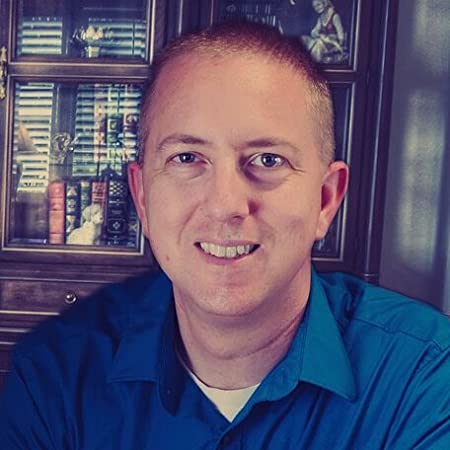
Interview with Andrew Rylands, Author of The Forgotten God

What’s the story behind the story? What inspired you to write The Forgotten God?

From a young age, I wanted to write, but I could never find a subject or theme that was sufficiently powerful or convincing enough to hold a story together, or which could hold my interest over a sustained period. Time and again ideas came to naught but half a dozen pages of notes or feeble early drafts, so after a while I gave up and got on with a different kind of life. In retrospect, I don’t think I’d experienced enough of the things that life throws at you to be able to feel or develop an authentic voice. I have now.

In the past decade, my life has changed profoundly, and now, writing is my respite, my relief, and in some ways the only thing that helps me keep ahead of the demons. So, what happened? Death happened, and loss and a mountain of grief that almost overwhelmed me and still periodically buries me under its crushing weight. In early 2014 my wife first detected a lump in her breast. Thirty months later she was dead, and the truly happy family life that we’d shared was lost forever.

I am grateful, in retrospect, that we had twelve months of respite in the middle of that period. Twelve precious months where hope briefly reigned and we dared to look forward. But the shadow hanging over us descended all too quickly, and the ending was awful. How can you ever rid yourself of the memory of having to tell a 13-year-old boy to say goodbye to his mother for the last time or the look on his face?

It wasn’t like the movies or TV. Sue’s cancer spread to the hippocampus; the area of the brain that controls speech. For the last week of her life, she was unable to form sentences and she couldn’t get across much of what she wanted, and I struggled to interpret what she was trying to say. Instead, we spoke in gestures – a squeeze of the hand – but she was in too much pain for me to give her a hug. Even that, most basic of human gestures, was denied. So much that we took for granted was lost.

Her last day will remain etched on my memory forever. Sitting by her hospital bed in quiet despair. Unable to get up beside her; there was simply no room. Reduced to holding hands and talking to her, not knowing if any of my words were getting through. Struggling to come up with things to say amid the anguish. All-day she was unconscious, wracked by pain then put under by heavy doses of morphine. The moment it started to wear off she thrashed and moaned until she was submerged by the drug once again: there was no alternative. There was no last loving conversation, no shared recollection of those precious memories like our first kiss, our first date, our special places and what made them so, and all the beautiful things that touched our lives, chief of which was our wonderful boy.

\Instead it was a lonely vigil and monologue, a desperate attempt to give her hope and reassure her that all those she loved would be OK. Bearing witness all day to my heart’s love on her last journey into the dark.

So, I have to write. I have no choice. For a long while, it was the only thing that gave me forward momentum and kept me moving around the edge of the black hole of grief and loss that was always alongside. Writing helped me steer to safe ground. What began as a letter to my lost love as I started to remember all the things I’d wanted to say to her on that last day, but couldn’t because my brain froze, became a grief diary; a daily compendium of miscellanea and messages, thoughts and fears and hopes for our son. Eventually, I dug out an old story, one that started as a children’s bedtime tale, and without any particular plan in place, I began to flesh it out. Finally, I had lived enough and experienced enough to enable me to write. Finally, I had my voice. But what emerged was no longer a children’s tale, but something a little different.

It took me a while to realize. There were many drafts and multiple edits, but coming back to it after a period of doing something else made me realize that The Forgotten God is, in one way, the story of a bereavement journey; a survivor’s tale. At least in part. It is also, hopefully, an enjoyable romp through modern-day Athens in the company of some of mythology’s most enduring and beloved characters in unusual guise, and I believe that the message that comes out of it (without wishing to sound pretentious) is one of hope.

Loss exists. It is part of the human condition. I am well aware that grief is not just my preserve. If ever I needed reminding, this pandemic has reinforced the message. I am also painfully aware that my experience is not particularly special or unique; it has been replicated millions of times over, across the world. How we respond to it is the key. Look forwards and onwards, it is what our loved ones would want. Above all, remember just how special are those who remain.

It can be hard, this life, but our loved ones help us through, and it is my firm belief that in the deep dark waters through which we sometimes move, jewels shine, and hope endures.

What inspired you to write The Forgotten God?

“I want a story,” he was adamant.

“Read a book.”

“I’ve read them. All of them.”

“You can’t have.”

“He’s quick,” admitted his mother, in a distracted way, lying on the bed in our rented room, and leafing through the Rough Guide.

We were in Kalabaka in Greece in 2011, halfway through a whirlwind tour of the central part of the country. It was evening, at the end of a long day of monastery visits, and we were all pretty tired, but our digs were quite spartan, and there was little by way of entertainment for a child. Irritatingly, we had underestimated our youngster’s appetite for reading and had run out of material. But it was bedtime and he should be exhausted, why couldn’t he just go to sleep?

“Tell me a story!” He was insistent in that way only children know.

“Yes, tell us a story,” said his mother, looking up with a mischievous glint in her eye.

That was how it started: from a challenge.

The bedtime story became a recurring theme for the remainder of the trip. When we returned home, encouraged by Sue, I scribbled the tales down as best I could, then over a few months worked on them some more. Looking back, they were wretched, but my wife seemed to see something in them and encouraged me to keep going. However, real-life got in the way, and they became forgotten, residing on a remote corner of a hard drive, never looked at from one month’s end to another, until many years later, after everything else turned my life upside down, and with a three-month gap between work contracts looming and nothing better to fill the days, I dusted them off and had another look. I decided to flesh out the half-remembered storylines and try and weave them toward a satisfying conclusion, in the process starting to learn how to write. Many days were lost in research, but after three months, to my surprise, I had the first draft of a full-length novel.

In the intervening years, my life had changed dramatically, and inevitably the tales evolved and became somewhat darker, and more nuanced. What I now had was no longer a children’s story, and as the cast of characters wandering through my thoughts grew, it was apparent that one book could not contain them all. A series beckoned.

Where, and how will they all end up? I’ve got an inkling, but it’s not all set in stone, and there may be some unexpected twists and turns along the way. I hope you will join me on the journey to find out. It should be fun. Welcome to The Reawakening.

If The Forgotten God is turned into a movie, who would you pick to play Apollo?

Ooh, that’s a tough one! I love the most recent version of The Lion King and the superb animation techniques used, and The Forgotten God would need a similar treatment, so the actor selected would have to be great at voiceovers. Perhaps James Earl Jones, who played Mufasa in The Lion King? Joaquin Phoenix would bring out the complexity in the character, I’ve no doubt, and Keanu Reeves would be nicely understated. But, heck, why not have Brad Pitt!

What books are on your TBR pile right now?

The pile keeps growing - there aren’t enough hours in the day, but I have really enjoyed the recent spate of retellings of Greek and other mythologies. Circe and The Song of Achilles are among my all-time favorite books, and I’ve loved dipping into Mythos and Heroes by Stephen Fry. His most recent, Troy, is definitely on the list. I love delving into Fantasy, and thoroughly enjoyed getting lost in the labyrinth of The Starless Sea by Erin Morgensten, so I need to go back and read The Night Circus. I’m also keen to read The Bone Ships by RJ Barker. I also love anything by Benedict Jacka and Genevieve Cogman, and I need to read more of their respective series. Another writer I’m in awe of is China Mieville, and having read Perdito Street Station and The Scar I need to complete that trilogy by reading Iron Council.

What book should be required reading for all humans?

Winnie-the-Pooh by A A Milne. Funny, brilliant, subtle, deeply insightful … I could go on. It is majestic. Milne was a genius. 

What’s your favorite thing about writing? What’s your least favorite thing about it?

I love getting lost in the flow, where the magic of the story starts to take hold and you’re just clinging on, seeing where it takes you. That sensation isn’t something I can force, and most days are more workmanlike, but those periods where the story takes on a life of its own are wonderful; the plot takes an unexpected turn, a character does something unexpected, an unforeseen event explodes the plot lines completely. At moments like these, writing is special. However, they are far from being the norm, and there are plenty of days where inspiration ceases to flow, and everything becomes forced. At those times it can be a struggle, and you just have to plough on through.  

What’s the best advice you’ve ever received?

It may sound a bit downbeat, but it’s probably a quotation from Churchill: “If you’re going through hell, keep going.”  

Andrew Rylands is the author of the new book The Forgotten God

Connect with Andrew Rylands

Author Site

Facebook

Twitter

Buy The Book


Buy The Book

Sign up for our email and we’ll send you the best new books in your favorite genres weekly.
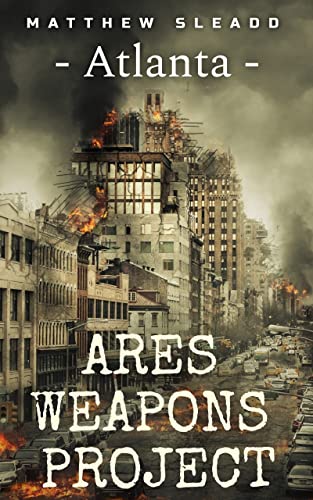
 

Interview with Nadija Mujagic, Author of Immigrated

If you were in an elevator with a stranger and had one minute or less to describe Immigrated before the doors opened, what description would you give?

Immigrated is about coping with post-war trauma while experiencing the culture shock in the new country and ultimately finding the best path to healing.  

What part of Immigrated was the hardest to write? What part was the easiest?

The hardest part was writing about my parents, particularly my mother, never finding peace with all the things that happened to us as a family during and after the Bosnian War. I was a young teenager when the war broke out, and somewhat clueless about what it all meant. I better understand now the toll the war took on all of our parents to attempt to care for their children during the most trying times in life with danger constantly lurking around the corner. I say attempt here, because the war threw a lot of challenges to lead a normal life, as I described in my first memoir, Ten Thousand Shells and Counting.

The easiest part to write was the Afterword, which is the euphoric climax of my story.

What books are on your to-be-read pile right now?

Right now, I am reading a book by Toni Morrison and a more scientific book on butterflies. I have an eclectic taste for books and will read anything to inspire me for my own writing.

What's your favorite genre to read? Is it the same as your favorite genre to write?

My favorite genre is non-fiction, whether it be a memoir or other non-fiction (such as one on butterflies!) My next favorite is literary fiction.

Do you have any quirky writing habits? Where did you write Immigrated

I don’t have any particularly quirky writing habits, but I do need complete silence to concentrate on my writing. I wrote Immigrated at home, and it took less than two months to write it, unlike my first book that took more than twenty years. I was about four months pregnant when I began writing Immigrated. I found writing and editing the most wonderful distraction during the COVID pandemic; it was a good way to beat melancholy and boredom.  

What's the best advice you've ever received?

The best advice I have received (on writing, at least!) was given by Shel Silverstein when I met him in Martha’s Vineyard in the summer of 1998. It’s mentioned in my book!  

If you could choose one thing for readers to remember after reading Immigrated what would it be? 

That there is hope and a path to a better future no matter the amount of hardship and pain a person suffers in life.  

Nadija Mujagic is the author of the new book Immigrated

Connect with Nadija Mujagic

Author Site

Facebook

Twitter

Buy The Book


Buy The Book

Sign up for our email and we’ll send you the best new books in your favorite genres weekly.
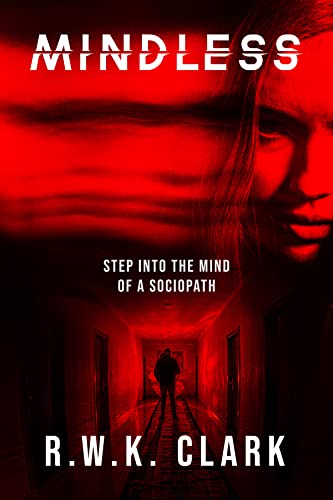
New Mystery and Thriller Books to Read | October 5

Hold on to the edge of your seat as we hunt for clues and solve the case with these exciting new mystery and thriller books for the week! There are so many bestselling authors with new novels for you to dive into this week including S.E. Reynolds, Christian Blaha, James Patterson, Candice Fox, and many more. Enjoy your new mystery, thriller, and suspense novels. Happy reading!


Sign up for our email and we’ll send you the best new books in your favorite genres weekly.
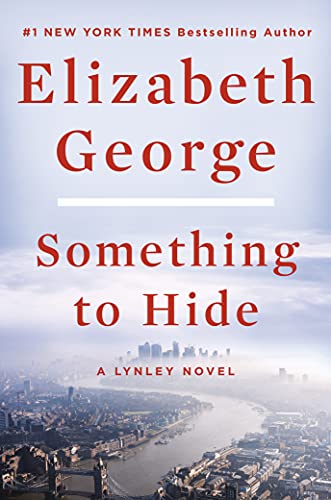
New Romance Books to Read | October 5

Looking to fall in love with some new romance reads? You’ll adore these exciting new novels! This week you can get your hands on books by bestselling authors Willow Winters, Kris Jayne, Olivia Lara, Tracey Jerald, and more. Enjoy your new romance books and happy reading!


Sign up for our email and we’ll send you the best new books in your favorite genres weekly.
New Books to Read in Literary Fiction | October 5

Literary fiction readers are in for a treat. This week’s latest releases list is full of intriguing reads you won’t want to miss! The new releases list includes so many bestselling authors like Thomas Scott, William J. Cook, Chibundu Onuzo, and many more. Enjoy your new literary fiction books. Happy reading!


Sign up for our email and we’ll send you the best new books in your favorite genres weekly.
New Science Fiction and Fantasy Books | October 5

Set off on an adventure to new worlds this week! This selection of new science fiction and fantasy books will surely please! Science Fiction fans should be excited about the latest from bestselling authors David James Warren, David Guymer, Bob Blanton, and more. If Fantasy is what your library needs, you’ll be able to pick up the latest from Theophilus Monroe, Andrew Rylands, Michael Alan Peck, Sarah Noffke, and more. Enjoy your new science fiction and fantasy books. Happy reading!


Fantasy


Science Fiction


Sign up for our email and we’ll send you the best new books in your favorite genres weekly.
New Young Adult Books to Read | October 5

Are you an avid reader of Young Adult books? This week you are in luck! With all of these new novels, you’re bound to find a new favorite book to add to your reading list. This week includes new novels from bestselling authors Brandy Colbert, Mara Rutherford, Hayley Krischer, and many more. Enjoy your new young adult books. Happy reading!


Sign up for our email and we’ll send you the best new books in your favorite genres weekly.
New Biography and Memoir Books to Read | October 5

Looking for some new biography and memoir books for your library? There are so many new releases this week that you’re bound to find a new favorite. You can pick up new books from Nadija Mujagic, Stanley Tucci, David Sedaris, and many more. Enjoy your new biography and memoir books. Happy reading!


Sign up for our email and we’ll send you the best new books in your favorite genres weekly.

Interview with James Fox, Author of Retaliation (The Sol Saga Book 2)

What's the story behind the story? What inspired you to write Retaliation?

Really the story behind The Sol Saga (Revolution and Retaliation) stems from a story I was told while on a film set back in 2010. A friend and colleague served in the US military for a time, and he shared some stories with us occasionally. One of those stories really stuck out to me. It was one of selfishness and greed, which left my colleague and several others just twisting in the wind behind enemy lines. I wanted to write a story about the mixing of politics, corporate greed, and war. The Sol Saga was originally a television series pilot, but I put so much research and backstory into it, that I thought it would make a cool book series too.  

If you had to pick theme songs for the main characters of Retaliation, what would they be?

What an awesome question! I wrote the book to Lindsey Sterling's albums on repeat. Almost exclusively listened to her for both books. So, I'd have to say one of her tracks almost assuredly influenced the characters in some way or other. Brennan was a lot of Artemis and Helena was Between Twilight and Spalding and Colt were Beyond the Veil and McAaron was Heist.  

If you had to write a blurb for the last book you read, what would it say?

Fun fact, I'm terrible at blurb writing. Like, really super bad.  I wouldn't want to diminish my fellow authors by absolutely massacring their stories. However, the last book I read was Fringe Runner by Rachel Aukes, and it is incredible. The characters are deep and complex, flawed and exciting! The plot twists and turns like an eel in your hands, once you think you know exactly what's going on, it writhes out of your grasp. It was very engaging! I hadn't binged a book series that hard since The Lightbringer Series by Brent Weeks!

What's your favorite genre to read? Is it the same as your favorite genre to write?

I'm all about Science-Fiction and Fantasy. I read those two genres almost exclusively. I haven't yet published any fantasy, but I am working on something that I'm pretty excited about. Hopefully, I'll be able to add that to my list of genres here soon. There's just something fascinating about taking contemporary issues and thrusting them into a fantastic world and experimenting with it. 
Do you have any quirky writing habits? Where did you write Retaliation?

My whole life is a quirky habit haha. I exclusively write to music, I almost can't think without it. I type really really fast, and just kind of zone out. I also have very little memory of what I write, so when I go back and review my work for the day - it's almost like reading it for the first time. I'm not entirely sure that's a good thing lol! Other than that, I'm a morning writer. If I haven't started writing by noon, it's almost not worth it. A typical day for me is around 15k words. Then, I have to get up and do something else. The other thing is, I normally have some kind of video game up on my screen while I write. I normally ignore it, or at least I am not actively playing it. Just having it on screen allows me to trick myself into saying "Hey, I played video games all day! It was a great day!" Even though I likely never did anything at all in the game.  

What's the best advice you've ever received?

The best advice I've ever received? To never give up on the things you love. Storytelling is a passion for me. I cannot go a day without working on the craft - trust me, I've tried. So, being able to turn that into a career has been incredible. My Dad told me once, "You can wake up every morning and hate what you do, and spend all day wishing and waiting to do something else. This path yields more enjoyment for half your day. Or, you can love your work, and wake up every morning excited for what the day brings. This path means you'll work your entire life, without rest from the stresses that brings, but you'll look forward to it."  I think that was sound advice. Both have their pros and cons. It's important to figure out which works best for you.  

James Fox is the author of the new book Retaliation (The Sol Saga Book 2)

Connect with James Fox

Author Site

Buy The Book


Buy The Book

Sign up for our email and we’ll send you the best new books in your favorite genres weekly.