Blog

Interview with Davlin, Author of The Luck Thief of Frostfair

What's the story behind the story? What inspired you to write this book?

I kept getting stuck on a simple question: what does a thief do when the universe itself is cheating against him? Most fantasy heist stories let the crew be clever. I wanted to see what happens when cleverness is not enough, when probability is the villain. Then Frostfair showed up: a frozen city, occupied, fished out, crushed under a tyrant who literally cannot lose. And a hometown hero who is really not much of a hero, just stubborn enough to come back anyway. The rest was Leo and his crew refusing to shut up long enough for me to outline. I stopped fighting them and started transcribing. The story first lived on Royal Road, chapter by chapter, with readers who shaped it more than they know. This Kindle edition is the version that came out the other side.

If you had to pick theme songs for the main characters of your book, what would they be?

Leo: “Little Lion Man” by Mumford & Sons. A guy coming home to face what he ran from, knowing he deserves some of what is waiting for him.
Kilniah: “Wolf Like Me” by TV on the Radio. She is running from something she cannot remember and running toward something she refuses to explain. Also, she might actually be a wolf sometimes. It depends on the Seal.
Sam (the bard): “The Lying Song” by anyone who ever wrote one. If you hear it twice, the lyrics will be different.
Sir Gregory: “Take It Easy” by the Eagles. Nobody told him this was a heist. He thought he was here to handle contracts.
The bruiser: “The Sound of Silence” by Disturbed. Not the Simon and Garfunkel one. The Disturbed cover. He did not come here to talk.

What's your favorite genre to read? Is it the same as your favorite genre to write?

Fantasy heist and con-artist fantasy, both to read and to write. Anything where a crew of smart, tired, underqualified people tries to steal something that should not be stealable. I grew up on The Lies of Locke Lamora, Kings of the Wyld, and old Forgotten Realms paperbacks. I write toward the shelf I want to keep pulling books off of. I also read a lot of cozy fantasy when I need a break from my own plotting. Legends & Lattes is basically oxygen.

What books are on your TBR pile right now?

The Tainted Cup, Bookshops and Bonedust, The Jasad Heir, Dungeon Crawler Carl (Book 7—I am behind and ashamed), a stack of Royal Road serials I promised I would finish before starting anything new, which was a lie.

What scene in your book was your favorite to write?

Without spoilers: the scene where Leo, at his lowest, finally understands what the Luck Charm actually does. He is not outmaneuvering it. He is not outsmarting it. He has to do the one thing it cannot predict, and it costs him something he had been holding back the whole book. It is the quietest scene in the novel. No fights, no game notifications, no banter. Just a man in a frozen alley making a decision. I wrote it four times and kept almost all of the fourth version. The other contender is a scene where Sir Gregory, in the middle of a crisis, tries to negotiate with an enchanted artifact using contract law. Reader, the artifact wins on a technicality.

Do you have any quirky writing habits? (lucky mugs, cats on laps, etc.)

I write in cafés that have bad coffee, because good coffee makes me chatty, and I stop writing to talk to the barista. Bad coffee gets me back to the page faster. I also read every scene out loud before I move on. If my voice flattens, the scene is dead, and I rewrite it. Kilniah’s dialogue gets the most rereads. She is hardest to get right and easiest to get wrong. Oh, and I name every draft file something unserious. The working title of this book, for two years, was “Leo Does a Crime.”

Do you have a motto, quote or philosophy you live by?

“Write the book you wanted to find on the shelf when you were fifteen.” Everything else is noise. If the fifteen-year-old version of me had picked this up, hid it under the covers, and read it with a flashlight, I did my job.

If you could choose one thing for readers to remember after reading your book, what would it be?

That loyalty is a form of courage. Leo\'s crew sticks with him not because he is winning. They stick with him when he is clearly losing, when the odds are literally rigged against them, when walking away is the smart move. That is not stubbornness. That is love, dressed up as bad decision-making. If you remember one thing: it is worth showing up for your people, even when the Luck Charm says no.


Davlin is the author of the new book The Luck Thief of Frostfair

Connect with Davlin

Author Site

The Luck Thief of Frostfair

Interview with Janet McNulty, Author of Past Rock Bottom

What's the story behind the story? What inspired you to write this book?

Normally, I write short, cozy mysteries or adventure stories because that is what I prefer to read, but this time around, I decided to write something more down-to-earth and real. I didn’t plan on writing this book. After I finished my novel Entombed, I was going to take a break from writing, but I guess that wasn’t in the cards. Last October, I was feeling down, for whatever reason. Don’t know why. It could just be that a lot is going on, with the economy being depressed, and now we’re at war again. You can feel it. People aren’t hopeful. One way I deal with feeling down is to just write something that I usually throw in the trash.

So, I wrote a poem that matched my current mood and later used Suno to put music to it, mostly out of curiosity. It was a bit of a dark poem about a man who lost everything and had turned to alcohol to drown his sorrows, and where I live, we have a drug-use problem, and the economy in my state is always stagnant at best, it seems. At the time, that was going to be the end of it, but when I listened to the music Suno generated when I fed it my poem, I realized I had a story here, and I couldn’t get the idea out of my head. So, I sat down and started typing out what became chapter one of the book. Since the novel focuses on the themes of grief, loss, alcoholism, and abuse, I decided to turn it into more of a redemption story because I prefer to have a hopeful message, and I think the world needs that right now.

If you had to pick theme songs for the main characters of your book, what would they be?

For Carl, "After I'm Gone," performed by Michael Bennett, fits. Even though Carl is grieving the loss of his daughter, the emotion behind this song matches the inner turmoil within him. I would say that "Hallelujah" would be a good one for Sarah. She is the connecting factor in the story that helps others see what they don't see in themselves. For Kate, Kesha's "Praying" is a good theme song for her, as she embodies someone who suffered through abuse and is now picking up the pieces of her life while learning to trust again. Anne Wilson's "Strong" fits Ray's character because he is the solid foundation that the others rely on for stability and hope. He always puts on that strong face and persona for others, even if he is just as broken inside.

What's your favorite genre to read? Is it the same as your favorite genre to write?

I love reading light-hearted, cozy mysteries, science fiction, fantasy, and all-around adventure stories that focus on character growth and development, and these tend to be the books I write. I’ve written a paranormal mystery series (Mellow Summers), two dystopian series (Dystopia and Enchained), and a science fiction series (Solaris Saga) that is more of an adventure story. I like reading character-driven stories where you travel with the main character as he/she grows and evolves as the story progresses, and that tends to be what I try to write. I’ve read The Lord of the Rings and The Hobbit, and I love those books, especially The Hobbit. I’ve read The Hunger Games when the movies came out and enjoyed them.

And of course, I’ve read The Handmaid’s Tale. These are the sorts of stories I like to read. I love adventure stories—stories that focus on characters facing insurmountable odds, but they push forward anyway; or anything that is character-driven. Since this is what I generally read, this is what I write. However, after Past Rock Bottom, I’m thinking of adding some contemporary fiction to my TBR pile and broadening my tastes.

What books are on your TBR pile right now?

I have a huge TBR list. The Witcher is definitely on it. I’ve watched the Netflix series up through season three. I haven’t watched the latest season because I’m not thrilled that the main actor left, and I don’t like who they replaced him with. But I’m hoping to get the books read by the end of summer. I’m currently reading The Ballad of Songbirds and Snakes. I’m a little late on that one, but after reading Sunrise on the Reaping, I figured that I’d better finish all the books in that series. I also have Personal Memoirs of Ulysses S. Grant on my TBR pile. Someone recommended it to me, so I’m hoping to get to that soon.

What scene in your book was your favorite to write?

I think the favorite scene to write was when Carl meets Sarah. In the scene, Carl is sitting on a public sidewalk, remembering the most tragic day of his life as he openly drinks from a whiskey bottle, when Sarah, who is around nine years old, chances upon him. He chastises her for talking with the town drunk, and she shoots it right back at him with some sass and scolds him for drinking in the first place. There’s some back and forth, but it ends with Sarah pulling out a root beer from her backpack and sitting down with Carl, and him being amused by her behavior. This sets the stage for the dynamic between them and the father-daughter-like relationship that builds between them. Here is the scene below.

The bottle fell from his hand and clunked on the concrete as it rolled down the sidewalk. Carl didn’t remember passing out. Second time that day. It was starting to be the norm. He didn’t mind. When he was sleeping, he wasn’t being tormented by painful memories, not until the dreams came. A small hand scooped up the bottle. “You dropped this,” said a soft voice. Carl looked up to find a girl with a backpack slung over her right shoulder, about the same age as his Emily, maybe a year older, holding the bottle of liquor out to him. “You’re a bit too young to be handling that,” he said, his voice hoarse. “And you’re sauced enough that you don’t need it,” she quipped. Carl chuckled. “Where’d you hear that term?” The girl sat next to him and placed her backpack in her lap. “There’s this thing called the internet.

You might want to look into it sometime.” “Small and sassy.” Carl took another swallow, not caring at all if anyone saw him drinking in front of this kid. The girl opened her backpack and pulled out a glass, brown bottle of her own, unscrewing the cap. “What in the…” “It’s root beer,” the girl cut him off, showing him the label. “Where’s your mother?” “Where’s yours?” “Smart ass.” They both took a sip at the same time, and if one didn’t know better, you’d think they were related. “Go on, kid,” said Carl. “Get out of here.” “My name is Sarah.” The girl eyed Carl with an expectant look. “Well?” “What?” “When someone introduces themselves, it is proper to tell them your name.” “Carl.” “Carl…” “Just Carl.” The girl, named Sarah, held her hand out to him. “Nice to meet you, Carl. My name is Sarah.” Unsure of what to do, Carl wiped his hand on his grungy, still-unbuttoned shirt and shook the girl’s hand.

Do you have any quirky writing habits? (lucky mugs, cats on laps, etc.)

I wear headphones as I write and listen to a playlist called Epic Music on YouTube. Sometimes my cat sits in my lap as I write, and he’ll place his paw on the keyboard as I’m trying to type.

Do you have a motto, quote or philosophy you live by?

I want people to remember that even when things seem bleak, there is hope for a better future, and that sometimes good things come in small packages or in the most unexpected ways.

If you could choose one thing for readers to remember after reading your book, what would it be?

I want people to remember that, even when everything seems lost, that there is still hope left for a better future. I think that\'s a message we need right now.


Janet McNulty is the author of the new book Past Rock Bottom

Connect with Janet McNulty

Author Site

Facebook

Past Rock Bottom

Interview with Colin Alexander, Author of A Small Town on the Planet Called Heaven

What's the story behind the story? What inspired you to write this book?

This book grew out of a question about interstellar colonization that often circulates through my head: what happens after the starships go home? What would it really be like on another world, light-years from Earth—not immediately, but twenty years later, when the glamour of adventure has worn off and equipment starts to wear out?

After twenty years have passed, the children of the original settlers will be in their late teens. The teenage years can be difficult under any circumstances. What would they be like when there is only one town and one school on the entire planet? I saw a simmering stew of resentments, grievances, petty jealousies, feuds, remorse, and schemes for power. Spice that with an unexplained death and a disappearance, turn up the heat, and watch the pot bubble over. Ultimately, this became a story about people and how they cope (or don’t).

If you had to pick theme songs for the main characters of your book, what would they be?

Picking theme songs for characters is a fun exercise. This book does not have a single main character, so I thought I would pick songs for some of the major ones. For the two primary teens:
1) Thorny would be: “Welcome to Wherever You Are” by Bon Jovi.
2) Danijel would be: “When a Man Loves a Woman” by Percy Sledge.

Thorny’s parents: 1) Penny would be: “My Way” by Frank Sinatra. 2) Hiep would be: “Army of One” by Bon Jovi.

And Reality, who stands by herself, would be: “Anti-Hero” by Taylor Swift.

What's your favorite genre to read? Is it the same as your favorite genre to write?

My favorite genre for reading is science fiction, and that is primarily what I write. Behind that comes fantasy, and I write in that genre as well. I do read a lot of history and historical fiction, but I do not write in those areas.

What books are on your TBR pile right now?

My current TBR comprises several piles of books in my office because I enjoy reading from a physical book when I can. The top of the list is Language for Liars by SL Huang. Immediately following that, I have A Memory of Empire by Arkady Martine, Brigands and Breadknives by Travis Baldree, and a non-fiction, Romanovs by Simon Sebag Montefiore.

What scene in your book was your favorite to write?

It is always hard for me to pick a favorite scene, and I need to stay away from ones near the end because that would give away too much. I did particularly enjoy writing the scene where Danijel catches up to Thorny. They have, of course, known each other at school since they were small children, but they have never really spoken or had much to do with each other. Neither one fits into the other’s preconception of them. The way their relationship develops through this scene was a lot of fun to write.

Do you have any quirky writing habits? (lucky mugs, cats on laps, etc.)

I always do my first draft in ink, with a Mont Blanc pen my wife gave me. I write them on fifty-page, wide-ruled pads. And I generally write at the kitchen table with a cup of coffee for inspiration. Is that quirky enough?

Do you have a motto, quote or philosophy you live by?

I am fond of quotes from literature or historical figures. I think the one from John Milton that I picked as an epigraph at the beginning of the book is particularly appropriate: “The mind is its own place, and in itself; Can make a Heav\'n of Hell, a Hell of Heav\'n.” It says to me that it is your choice how you see the world, a challenge that I think is as appropriate to my characters as to myself.

If you could choose one thing for readers to remember after reading your book, what would it be?

If there is one thing I would hope stays in the minds of my readers after finishing this book, it is enjoyment in the time they spent with the characters, and seeing how these characters coped, well or poorly, with the hands they were dealt in the story.


Colin Alexander is the author of the new book A Small Town on the Planet Called Heaven (Leif the Lucky)

Connect with Colin Alexander

Author Site

Facebook

A Small Town on the Planet Called Heaven (Leif the Lucky)

Interview with Savannah Birch, Author of Still On Fire

What's the story behind the story? What inspired you to write this book?

Still On Fire started with a question: what happens when you start over later in life… and feel something you didn’t expect? I wanted to explore that quiet, in-between moment—when life shifts, and you’re not broken, but you’re not who you used to be either.

Trish came from that place, returning to the lake with grief, history, and a hope she’s not sure she believes in yet. And then Bobby shows up. Their connection isn’t supposed to be complicated—but it is.

Because second chances come with more awareness, more risk… and more heat. At its core, this story is about desire that doesn’t fade—and the courage it takes to choose something real.

If you had to pick theme songs for the main characters of your book, what would they be?

For Trish, it’s “Lose You to Love Me” by Selena Gomez—that quiet realization that you had to lose something to find yourself again.

For Bobby, “Starting Over” by Chris Stapleton—steady, grounded, and deeper than he lets on.

And for them together, “Golden Hour” by Kacey Musgraves—that feeling when everything softens, and something real begins.

What's your favorite genre to read? Is it the same as your favorite genre to write?

I’m drawn to emotionally rich contemporary romance—the kind that feels real, a little messy, and deeply human. I love second-chance stories, especially later in life, where the stakes feel higher, and the emotions run deeper. Add a small-town setting near a body of water, strong chemistry, and a little heat, and I’m all in.

What books are on your TBR pile right now?

I’m always drawn to authors like Abby Jimenez and Emily Henry for their mix of humor and emotional depth. And anything in the vein of Robyn Carr—those small-town, character-driven stories—always finds its way onto my list. Lately, I’ve been especially interested in stories about starting over and choosing what comes next.

What scene in your book was your favorite to write?

The sunset swim—no question. That moment is where everything shifts. Trish is suspended between who she was and who she might become… and then Bobby shows up. He pulls her out like she’s in danger, and she kisses him like she’s not. It’s impulsive, a little reckless, and completely honest. That scene carries the spark for the entire story.

Do you have any quirky writing habits? (lucky mugs, cats on laps, etc.)

I tend to write in bursts—once a scene clicks, I stay there until it’s done. I also reread the last page before I start again, just to fall back into the emotional rhythm. And music matters—I’ll play the same song on repeat if it matches the mood of a scene.

Do you have a motto, quote or philosophy you live by?

It’s not too late to want more—and it’s not selfish to go after it. That idea shows up in my stories again and again. I believe in reinvention, second chances (3rd, 4th, 5th…) and the courage it takes to choose something meaningful, even when it’s not easy.


Savannah Birch is the author of the new book Still On Fire (Embers on Nisswa Lake Trilogy Book 1)

Still On Fire (Embers on Nisswa Lake Trilogy Book 1)

Interview with Seth Cohen, Author of Saabrina: Xonel

What's the story behind the story? What inspired you to write this book?

The series was supposed to be a classic hero's journey for Bob Foxen in the form of a space opera. But it's called Saabrina. This book needed to be about Saabrina and bring her journey to a close. Although originally intended to be the completion of Bob's hero arc, I wanted it to be equally about her and how she becomes a mature person. I gave her more voice throughout. Most importantly, I brought out in this book that the series is their love story.

If you had to pick theme songs for the main characters of your book, what would they be?

Given how much time passes in the series (Rebecca is a college student in book 1 and a grandmother in book 4), the characters’ personas and musical tastes change over time. That said, Bob listens to classical and rock, and Saabrina has really gotten into David Bowie.

What's your favorite genre to read? Is it the same as your favorite genre to write?

Fiction. Right now, I’m reading twentieth-century and modern Japanese novels, exploring the nature of the narrator’s personhood and how they portray that, and the impact of the West on Japan. Some Prefer Nettles, Confessions of a Mask, Norwegian Wood, and Convenience Store Woman are amazing.

What books are on your TBR pile right now?

Up next are The Silent Cry, Territory of Light, A Wild Sheep Chase and The City and Its Uncertain Walls, and Butter. But first, I’m taking a break from Japanese fiction to read I Married a Communist to finish his “Newark Trilogy.” I loved both American Pastoral and The Human Stain; his books make an interesting contrast to the writing styles and selves portrayed in the Japanese literature. Roth also brings back family memories, he having been roughly the same age as my parents with similar experiences.

What scene in your book was your favorite to write?

Honestly, I don’t remember! The book went through so many revisions that probably the happiest moment came when I finally cut through the BS of the earlier drafts and came to terms with the story I really had to tell. I have to thank my editor, Lauren Humphries-Brooks, for pushing me.

Do you have any quirky writing habits? (lucky mugs, cats on laps, etc.)

I often do my best thinking on a bike ride. Sometimes I have to stop to write a dialogue or a scene down on my phone.

Do you have a motto, quote or philosophy you live by?

Be good. Start by saying please and thank you.

If you could choose one thing for readers to remember after reading your book, what would it be?

For all the science fiction/space opera elements of the plot, the book is grounded in the moral and ethical behavior of its characters. If you want a society to operate with a utopian outlook, the American dream in space, you have to start with the people who inhabit it.


Seth Cohen is the author of the new book Saabrina: Xonel

Connect with Seth Cohen

Author Site

Facebook

Saabrina: Xonel

Interview with E. Broom, Author of The Vampire and the Barista

What's the story behind the story? What inspired you to write this book?

There was no inspiration for this story. I knew from book one of the Vampire and Series that Jamie and Ivan were mates. I’m not a writer who plans their stories, so I never know what will happen. I tried planning a story once, but the characters took over and did their own thing. I sometimes see or watch something that I think would be good in a story, and then it is up to the characters whether they want it in their story or not.

What's your favorite genre to read? Is it the same as your favorite genre to write?

I love the paranormal, and 99% of the books I write are gay paranormal-related stories. As for reading, I literally read anything except zombie-related. Mind you, saying that, in Cadenbury Town Does Halloween and Black and White is Twice the Might, have zombies on a treadmill. On the whole, though, I normally steer clear of zombies.

What books are on your TBR pile right now?

My TBR pile is quite long. I’m currently catching up on Pandora Pines and the Cold Case series. Also on my list are Charlie Cochet, Morgan Brice, Nora Phoenix, and TJ Green.

What scene in your book was your favorite to write?

I love the scene at the Amphitheatre in Silchester, when Jamie is annoying Derrick. I don’t want to spoil it for those who haven’t yet read the book, but I did enjoy that. Plus, when Raz gives Thomaz a new nickname.

Do you have any quirky writing habits? (lucky mugs, cats on laps, etc.)

I would love to say I have quirky writing habits, but I’m actually quite a boring writer. I can and do write anywhere. Give me somewhere to sit, and I can write, either on my tablet, laptop, or phone. It doesn’t matter if it’s quiet or noisy—words are going to happen.

Do you have a motto, quote or philosophy you live by?

Love is love, and who are we to judge? Also, don’t be a dick.

If you could choose one thing for readers to remember after reading your book, what would it be?

That readers come away with a smile on their face.


E. Broom is the author of the new book The Vampire and the Barista (The Vampire and Series Book 5)

Connect with E. Broom

Facebook

The Vampire and the Barista (The Vampire and Series Book 5)

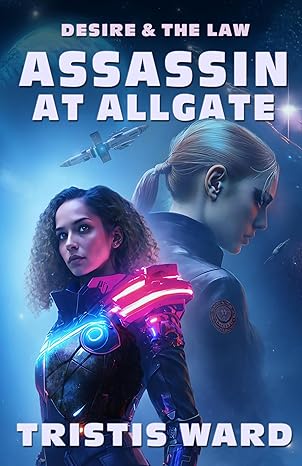
Interview with Tristis Ward, Author of Assassin at Allgate

What's the story behind the story? What inspired you to write this book?

Really, it was Desire. She was an unnamed background character in another story I wrote where a completely unprepared Earthman got lured into a bar so a pair of bad-guy telepaths could pump him for information. In that scene, a tiny table dancer had to step outside the parameters of her programming in order to stop him from misbehaving just before he got dragged off and sold to a debt broker. I wondered who she was and how she did that.

If you had to pick theme songs for the main characters of your book, what would they be?

The thing is, this changes all the time. I’m constantly reminded of a character’s mood by one song or another. When I think about The Law lately, I hear “Unstoppable” by Sia. That might be because, as I’ve been writing the series, she’s been shining through Desi’s egocentric narration more and more. For Desire, I keep thinking about “Lucky Me” by Sarah Slean, because that’s just like her: watching everybody with judgy smugness, but cute about it. Still, I can’t ignore that old song “Brandy (You’re a Fine Girl)” by Looking Glass, because that’s pretty much how she starts the novel.

What's your favorite genre to read? Is it the same as your favorite genre to write?

Both SF and fantasy are my top choices for fiction. I switch back and forth, in fact. In SF, I love everything from the hard science stuff to the character-driven space operas. I’m a bit more fussy with my fantasy, but I really love swashbucklers and stories where the magic is big and wild when it arrives. In the last decade, though, I kind of fell into the opposite of that. Magical realism is great when there’s just a touch of odd magic in a character-driven piece. Oh, and I love both steampunk and cyberpunk. Yes, I write all that, I suppose—except cyberpunk. I might not be intense enough as an individual.

What books are on your TBR pile right now?

Well, for starters, I was poking around on Edge Publishing’s site and came across The Scrolls of Bishop Eubulus, and Other Stories by Rebecca Bradley, so I bought it, and I’m reading through that whenever I get the chance. It’s amazing writing. Over a year ago, I ordered book one of the Mapmaker trilogy by N. E. White and then couldn’t start it until I finished my own work. I love cartography both as an art form and an information interface. A whole section of my personal library is dedicated to mapping and exploring. So here’s a book about cartography by a cartographer. I couldn’t pass that up. I also picked up a copy of The Dictionary of Lost Words by Pip Williams I haven’t been able to start yet, and that’s going to thrill my little book-hoarding self. There’s more from her I want to check out, too (The Bookbinder, for one). Both these writers feel like they speak directly to me.

What scene in your book was your favorite to write?

There are several scenes I really like. Certainly, the first scene was already so familiar as a setting. Head2, the too-seedy-for-the-neighbourhood brothel with its unfortunate and violent clientele, is a neat place for anything to unfold, and Desire is just perfect for it. I almost wish she’d stuck around in there, but alas, she had an adventure to pursue. Another fave is when the girls are aboard the Hardy Jumper, this alien ship with its belly full of weirdos with their obsessive pursuits and turf wars. Things got serious, of course, but while I was at the start of writing it, the whole place felt brimming with all kinds of potential. I think that was four times the length, just in individual little tales, before I trimmed it for the book. All the alien ship surprises, the mysteries and sordid relationships, and a whole mini-colony of travellers set up in the galley—there was a lot going on. I’m pretty sure I’ll be pulling out some of that later in other stories.

Do you have any quirky writing habits? (lucky mugs, cats on laps, etc.)

I used to do this thing where I listened to music for ten to twenty minutes, then wrote for half an hour, then listened to music again. I picked tunes based on what feel or pace I wanted for the story, and there was no genre of music I skipped: classical, country, pop, rock, punk, or metal. If I needed a sound to pump up (or slow down) a section of the story, I jammed to it. Something happened over time, though. I found that I was writing longer and listening less, and I surprised myself a couple of times by looking up from the keyboard to find hours had passed, the sun had set. Sometimes, if I was alone in the house, I’d be hungry or something and realize I’d missed both lunch and supper, and it was late at night. Now I’ve got the computer set to tell me the time on the hour, so I’ll get up and walk around at least. And when I can, I will pick a piece of music to listen to.

Do you have a motto, quote or philosophy you live by?

None of my female characters will ever be rescued by a man. They can be rescued by other girls and women. They can be rescued by teams that include both men and women. There can be men who sincerely try to rescue, and maybe they fail, or she gets herself out, or another woman comes along. There can be groups of both men and women who are rescued by a man—that’s fine, too. Just not the trope of a woman needing rescued by a man. There’s nothing at all wrong with male heroes and good guys. But I have had it up to the eyeballs with women characters—even super-strong heroine types with all the training, weapons, and resources—ending up at one point or another needing rescue, and “along comes the man to save the day!” That circumstance is just not something I’m interested in.

If you could choose one thing for readers to remember after reading your book, what would it be?

I want readers to live in the universe. It entertains the heck out of me. I want that same joy for everyone. So, remember the stations, remember the ships, remember the various life forms. Obviously, they should remember the main characters, because they’re coming back, but seriously, I hope the settings in this series stay with people the way they stay with me. I hope they can tell themselves their own stories from inside those same stations and ships. It’s a lot of fun.


Tristis Ward is the author of the new book Assassin at Allgate (Desire & The Law Book 1)

Connect with Tristis Ward

Author Site

Assassin at Allgate (Desire & The Law Book 1)

Interview with Jon Cronshaw, Author of Ravenglass Legends

What's the story behind the story? What inspired you to write this book?

The idea for the Ravenglass Legends came to me on a flight from Cairo to Luxor. Looking out over the Nile cutting through the desert, I found myself thinking about the rise and fall of civilisations—how cultures clash, how power shifts, and what happens to people caught in the middle of that change. That moment became the seed for Ragnar and Maja’s story. While travelling through Egypt, those ideas deepened. Visiting the Egyptian Museum, I started thinking about cultural ownership—who history belongs to, and how power shapes that narrative. That fed directly into Maja’s storyline, especially her experience in the imperial court, surrounded by artefacts taken from her homeland. The monuments left a big impression, too.

Places like the pyramids and Karnak showed how empires project strength through architecture, and how each generation leaves its mark. That influenced the design and feel of the Ostreich Empire, as well as the sense that this is a world shaped by layers of history rather than a single moment in time. At its core, the series is about cultures in collision. Meerand represents a proud, independent way of life, while Ostreich embodies expansion, control, and assimilation. Ragnar and Maja are caught between those forces, each trying to hold onto their identity while adapting to survive. That tension between who you are and what the world is trying to turn you into became the heart of the story.

If you had to pick theme songs for the main characters of your book, what would they be?

For Ragnar, it would have to be My Own Summer (Shove It) by Deftones. The song captures Ragnar’s controlled aggression, defiance, and that sense of pushing back against something bigger than you. For Maja, I’ll pick All Is Full of Love by Björk. The track combines emotional depth with something slightly otherworldly.

What's your favorite genre to read? Is it the same as your favorite genre to write?

I read widely, but I always come back to fantasy. I love stories with impossible choices, complex characters, and a world where even the most noble actions can have unforeseen consequences. It’s the genre I love writing, as I enjoy everything that goes into it—from historical research and building a magic system to coming up with new ways to make life harder for my characters.

What books are on your TBR pile right now?

My TBR grows with each book I read. I don't think I'll ever be able to keep up. I’m currently working through The Wandering Inn, which is a fun LitRPG with emotional depth.

What scene in your book was your favorite to write?

There are so many! I only write a scene if it excites me, so the whole process is fun for me. The one that was most satisfying to write was the opening chapter of the first book. This came to me fully formed on that flight from Cairo to Luxor, and it was a great feeling to get that down on the page and start Ragnar and Maja’s adventure.

Do you have any quirky writing habits? (lucky mugs, cats on laps, etc.)

I’m a full-time author, but I have the quirk of only working on what excites me most on any given day. This is both for my sanity and so I know I’m writing the best books I can. It also means that I’m very inconsistent. At the moment, I’ve got seven open projects, and this week I’ve gone back to working on a series I haven’t touched in three years. Everything gets finished eventually, and overall, I’m more productive. It’s just not as consistent as a lot of other authors.

Do you have a motto, quote or philosophy you live by?

Story is everything. The rest is padding.

If you could choose one thing for readers to remember after reading your book, what would it be?

That the most dangerous people aren’t the strongest—they’re the ones willing to think differently.


Jon Cronshaw is the author of the new book Ravenglass Legends (Books 1-3)

Connect with Jon Cronshaw

Author Site

Facebook

Ravenglass Legends (Books 1-3)

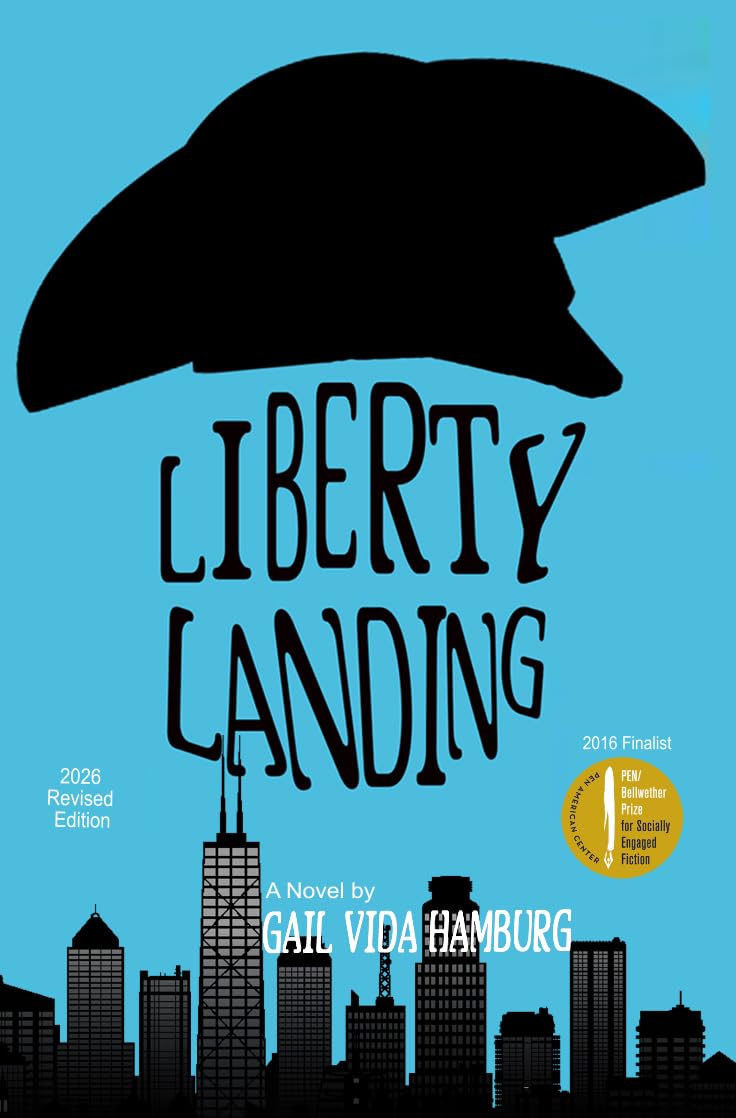
Interview with Gail Vida Hamburg, Author of Liberty Landing

What's the story behind the story? What inspired you to write this book?

I wrote the first edition of my novel as a love letter to the American Experiment—after having lived in cities across three continents, and long after becoming a naturalized American citizen. I was interested in migrancy, acculturation, and identity, and felt moved to write the novel as a love story. But last year, I began to realize that the American Experiment is not a fixed promise but a continuing moral test, and felt compelled to revise the book. The second edition is more clear-eyed, as it reflects on the contemporary experience of those who have chosen America as their home.

What's your favorite genre to read? Is it the same as your favorite genre to write?

I read and write literary fiction, more specifically, socially engaged literary fiction. I admire writers who have used fiction to illuminate social issues, among them Nadine Gordimer, Alice Walker, Toni Morrison, Arundhati Roy, and Barbara Kingsolver.

What books are on your TBR pile right now?

I'm looking forward to reading Go Gentle, The Correspondent, and The Dream Hotel.

What scene in your book was your favorite to write?

The last chapter of the first edition and the new final chapter in the second edition were written ten years apart—the first in 2016, the second in 2026. I enjoyed writing them both, but I have to say that the new ending for my characters astonished me.

Do you have any quirky writing habits? (lucky mugs, cats on laps, etc.)

I cannot write in public. I know writers who write in cafés, libraries, trains, writing groups, writing workshops, and other public areas. I simply cannot. Writing feels private, like prayer to me; thus, I can only write when I'm alone at a desk.

Do you have a motto, quote or philosophy you live by?

I love the quote from Lady Murasaki Shikibu's The Tale of Genji, the world's first novel. "Again and again, something in one's life, or in the life around one, will seem so important that one cannot bear for it to pass into oblivion. There must never come a time, the writer feels, when people do not know about this."

If you could choose one thing for readers to remember after reading your book, what would it be?

I'd like readers to remember that those who have chosen America as their home are no less American than they are.


Gail Vida Hamburg is the author of the new book Liberty Landing

Connect with Gail Vida Hamburg

Author Site

Liberty Landing

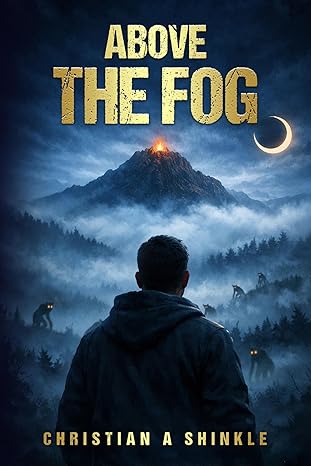
Interview with Christian A Shinkle, Author of Above The Fog

What's the story behind the story? What inspired you to write this book?

I had a single good thought. It grew from there! I wish I could cite some catalyst for the entire story, but I got hooked on an ordinary person in an extraordinary position.

If you had to pick theme songs for the main characters of your book, what would they be?

This is a little off the beaten path, but I listened to Steps Upwards on repeat when writing certain scenes, often with our main character learning about himself. Alexander Litvinovsky's "Steps Upwards." Give it 30 seconds, and you'll agree that it's a great song.

What's your favorite genre to read? Is it the same as your favorite genre to write?

I try to push myself into different genres. I will read horror, thrillers, and fantasy standalones, but I'll also read educational non-fiction, autobiographies of influential people, or the classics I missed in high school.

What books are on your TBR pile right now?

I haven't read The Venue yet, and I'm finishing The Shadow of the Wind. I've discovered I'm a little unique in that I don't really have a stack I'm waiting to get to. I buy three, and then I read them! I go back and buy three more—whatever speaks to me on that shopping day.

What scene in your book was your favorite to write?

Oof, that's a tough one. Several scenes have stayed with me, and I get emotional even now, re-reading them. If you're asking me to limit myself to one, my favorite ended up being the scene I hated the most. Chapter Six, Think.

Do you have any quirky writing habits? (lucky mugs, cats on laps, etc.)

Yes, I had a system set up. It involved red wine, normally 19 Crimes Red Blend, and intense lyric-less classical music.

Do you have a motto, quote, or philosophy you live by?

"The easy part's over." I don't normally settle or consider something "done." When I graduated high school, "the easy part's over," and I went to college. Again for graduate school, again to find a job. Asking my wife out was the easy part, then convincing her to marry me, and then building a successful marriage. Writing was easy, then publishing, then marketing, now do it again. The easy part's over.

If you could choose one thing for readers to remember after reading your book, what would it be?

Ask your heart. And then listen to it!


Christian A Shinkle is the author of the new book Above The Fog

Connect with Christian A Shinkle

Author Site

Instagram

Above The Fog