
Set off on an adventure to new worlds this week! This selection of new science fiction and fantasy books will surely please! Science Fiction fans should be excited about the latest from bestselling authors Matthew West-James, Honey Phillips, Craig A. Falconer, Scott B. Williams, and Lee Goldberg. If Fantasy is what your library needs, you’ll be able to pick up the latest from Ness Hanon, Maeve Greyson, Callie Rowland, Adrian Blue, and Merlin Senthil. Enjoy your new science fiction and fantasy books. Happy reading!
Blog




New Biography and Memoir Books to Read | August 4
Looking for some new biography and memoir books for your library? There are so many new releases this week that you’re bound to find a new favorite. You can pick up new books from Igor Fostenko, Herman Tubick, Emily Eakin, Joseph Dougan, and more. Enjoy your new biography and memoir books. Happy reading!



New Young Adult Books to Read | August 4
Are you an avid reader of Young Adult books? This week you are in luck! With all of these new novels, you’re bound to find a new favorite book to add to your reading list. This week includes new novels from bestselling authors Alexandra Moody, Sophie Bloom, AJ Sherwood, Carlyn Greenwald, and more. Enjoy your new young adult books. Happy reading!



New Business and Finance Books to Read | August 4
Looking for some new business and finance books for your library? There are so many new releases this week that you’re bound to find a new favorite. You can pick up new books from Nicolas Chaillan, Cate Hall and Sasha Chapin, Spencer Greenberg and Jeremy Stevenson, and more. Enjoy your new business and finance books. Happy reading!


Innovation, Influence, and Impact: Business Books For You
The most successful professionals never stop evolving. These business books dive into innovation, communication, leadership, and strategic thinking to help you make a greater impact in your work. Packed with fresh ideas and practical takeaways, each book offers valuable lessons from experts and experienced entrepreneurs. Find the inspiration you need to take your next big step.
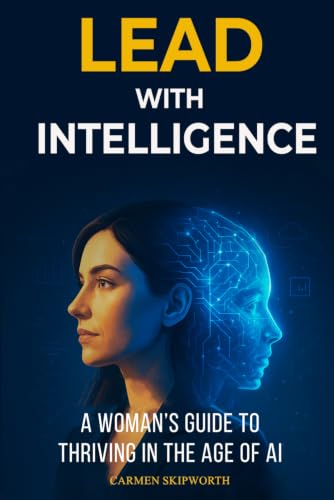
Lead with Intelligence: A Woman's Guide to Thriving in the Age of AI
by Carmen Skipworth
Release Date: -
Lead with Intelligence: A Woman's Guide to Thriving in the Age of AI by Carmen Skipworth is a practical roadmap for women leading through the AI era. Drawing on her L.E.A.D. Framework, Carmen equips readers with the strategy, ethics, and confidence to turn intelligence into lasting influence, income, and impact.
Buy on Amazon
AI Can Make You Smarter
by Charles B. Kreitzberg
Release Date: July 13, 2026
Work is changing fast, and efficiency alone is no longer enough. This book goes beyond productivity to show how AI can help you make better decisions, adapt to change, and build stronger professional relationships. You’ll learn to guide ChatGPT—and similar tools such as Gemini, Copilot, and Claude—with precise prompts, evaluate accuracy, and recognize bias and hallucinations, all without jargon.
Buy on Amazon
Quite Possibly the Best Introduction to the Economy (Instant Expert)
by Fola Yahaya
Release Date: July 14, 2026
Quite Possibly the Best Introduction to the Economy will empower you to understand what causes crashes, bangs, and economic wallops, and how to leverage your newfound knowledge to do more than just survive in the global economy.
Buy on Amazon
Powering Profits
by Gareth Evans
Release Date: -
Your energy bill is now a boardroom problem. Rates are climbing faster than inflation. Outages cost your industry $150 billion a year. The grid holding your operations together was built when your grandparents ran the company—and it is buckling. You’re paying whatever the utility asks and hoping the lights stay on.
Buy on Amazon
The Battery Age
by Janson Hwang
Release Date: -
The Battery Age is a guide to the hidden system behind one of the defining industries of the twenty-first century. Most battery books focus on either chemistry, electric vehicles, or critical minerals. This book connects them all. It follows the battery from ions and electrodes to factories, packs, BMS software, customers, corporate strategy, geopolitics, and recycling.
Buy on Amazon
Leading for Positive Impact
by Kristian Pultz Schlosser
Release Date: -
The book's step-by-step, visual approach makes it easy to grasp even complex concepts, and the model presented has been designed so you can use it immediately with your teams, for your own development path, and within organizations.
Buy on AmazonComing of Age and Chasing Tomorrow: Young Adult Novels For You
The future is full of possibilities, and every choice matters. These young adult novels follow compelling characters as they face challenges, embrace change, and discover their place in the world. Filled with emotion, adventure, and unforgettable relationships, each book offers a story worth remembering. Your next favorite YA read is waiting.
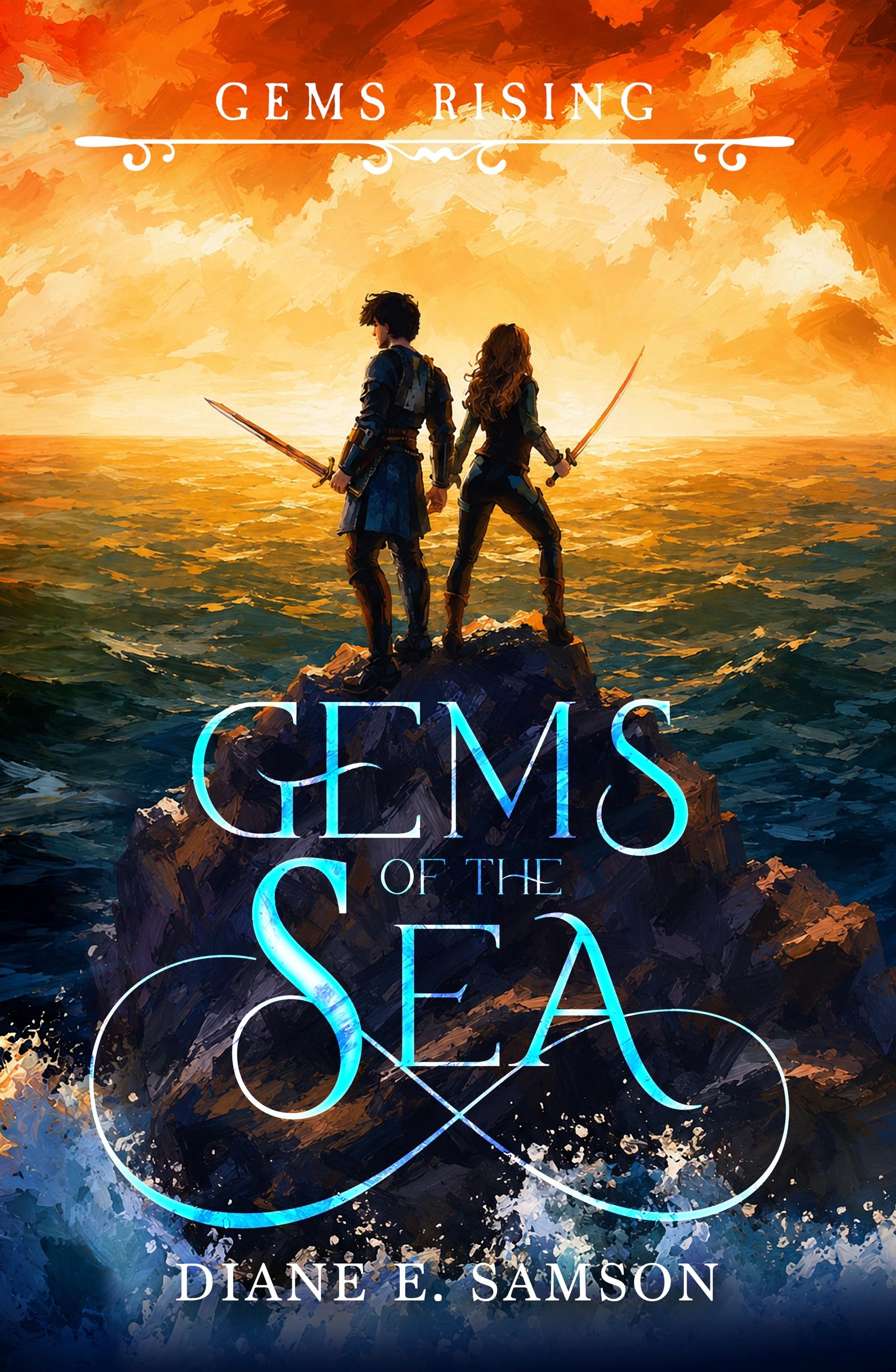
Gems of the Sea
by Diane E. Samson
Release Date: July 28, 2026
Frida unwittingly awakens an ancient horror that terrorizes Puledor’s turquoise waters. A disturbing vision drives Prince Tomas south, where he reunites with his free-spirited childhood friend. Sparks fly as Tomas and Frida battle deadly tidewraiths, navigate a treacherous court, and face a vengeful sea god who threatens to hunt them forever.
Buy on Amazon
Heart To Break (Montgomery U Book 2)
by Jake Grenier
Release Date: June 25, 2026
Some connections are brewed where you least expect them. Alex Fields doesn’t have time for distractions. After a painful breakup and his mother’s declining health, Alex takes a job at Montgomery’s Honeycomb Café to help keep his struggling family afloat.
Buy on Amazon
Bitten Drawn Bound (Shifter Awakening: Shadow Huntress)
by Melissa Haag
Release Date: July 14, 2026
Clarity has always followed the rules. No lying. No junk food. And never tell anyone her mom believes in werewolves. Then a new neighbor moves in. Sam—and his pectoral-hugging flannel—checks every book-boyfriend box Clarity never knew she had. And the best part? He actually wants to talk to her.
Buy on Amazon
Kiss of Death (Death Academy Book 2)
by Scarlett Haven
Release Date: July 10, 2026
After discovering the truth about my origins, I am taken to Avermorath, where I learn that nothing is as it seems. My parents lied. Azrael lied. And I’m not sure who I can trust anymore. But when Crown Prince Raven proposes a deal to bring peace to our two kingdoms, how can I refuse, knowing how much both kingdoms need it? But the real enemy was never Avermorath or Vaelrith.
Buy on Amazon
Royal Vengeance (Royal Blood Book 3)
by Aimée Carter
Release Date: -
The media believes they have uncovered all the royal scandals about the "killer princess," but there is one game-changing secret remaining that will take the crown in the final book of the Royal Blood series, which Jennifer Lynn Barnes calls "A Darker Princess Diaries."
Buy on Amazon
The Heirs
by Faridah Àbíké-Íyímídé
Release Date: -
These are the five heirs of the illustrious billionaire Leontes Button. Adopted and viciously trained with their father’s infamous “Button Method” to prove his hypothesis for creating prodigies—child geniuses—the Button siblings have had no choice but to be brilliant according to their father's impossibly high standards. Until he is murdered at his annual Prodigy Ball.
Buy on AmazonKingdoms and Future Frontiers: Fantasy & Science Fiction Novels For You
Explore ancient empires, mysterious realms, and civilizations light-years from Earth in this unforgettable collection. These fantasy and science fiction novels combine immersive world-building, high-stakes adventure, and characters you'll root for until the very end. Every story invites you to discover new possibilities beyond the limits of reality. Prepare to journey farther than you've ever imagined.

Dr. Gnoll (Flint Dagger Book 1)
by Coy Kissee and Geoff Habiger
Release Date: -
The name is Dagger. Flint Dagger. My latest mission: stop the nefarious Dr. Gnoll from taking over all magic on Ados. With the aid of a noble steed and the help of a sexy rival, I’ll track a dangerous artifact to stop the megalomaniacal villain and his incompetent minions from carrying out his world-threatening master plan. Time to go to work.
Buy on Amazon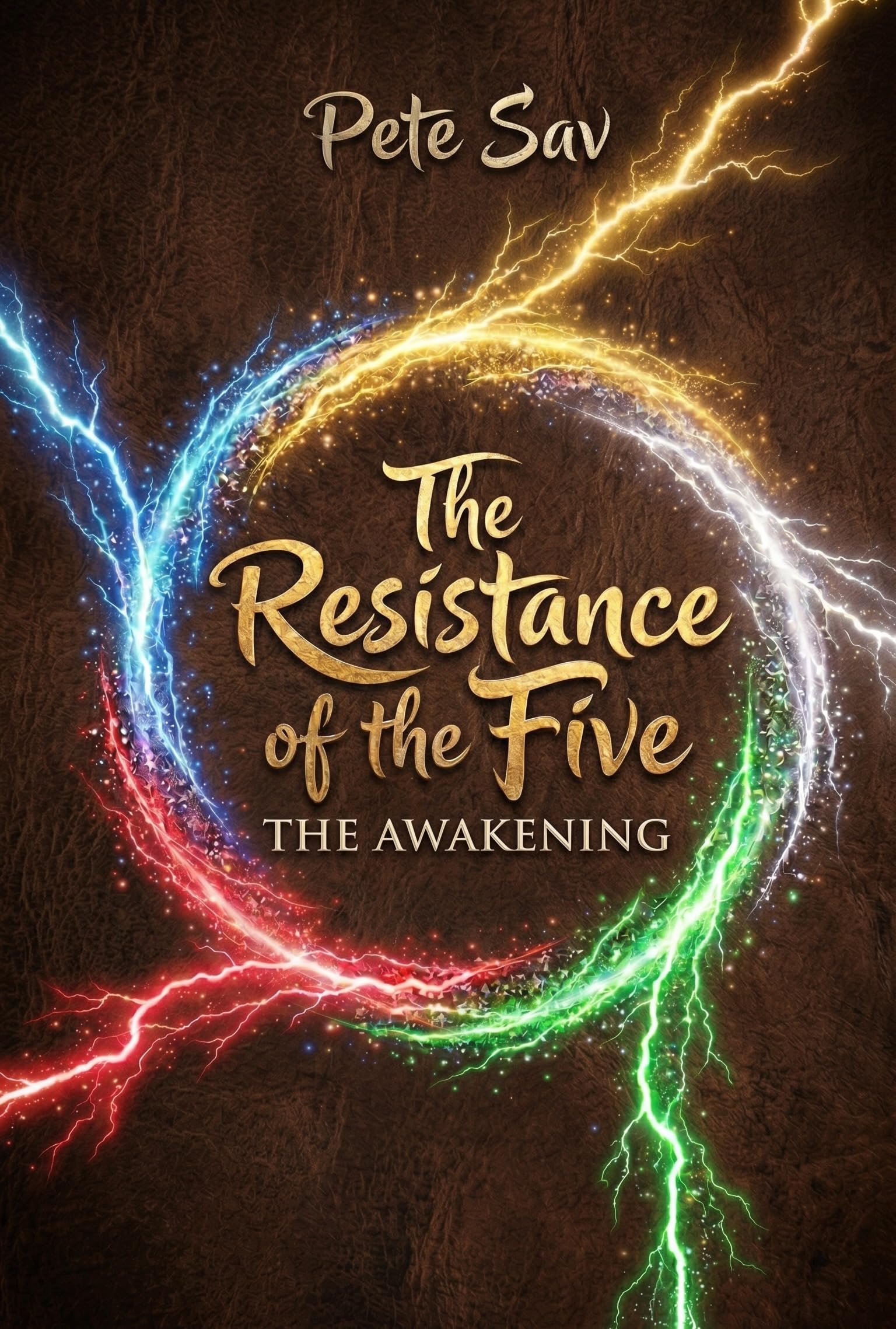
The Awakening (The Resistance of the Five Book 1)
by Pete Sav
Release Date: July 20, 2026
From the capital of Jingnan arose an elemental Resistance brought together with loss. The first volume of a sweeping epic that spans a continent in the throes of being hollowed out by the Void, told through clinical, earnest prose, and packed with grounded slice-of-life humour, explosive action, and emotional heft.
Buy on Amazon
Claimed by the Guard
by L.V. Lane
Release Date: July 21, 2026
A lass should not creep up to the battlements at midnight. Not when an alpha like me stands the watch. The west tower is a lonely post, and the guards grumble whenever the duty roster sends them there. I volunteer. Because some nights—if a man is patient—light footsteps come sneaking up the winding stair. And tonight, the lass they belong to carries a scent that would test the restraint of anyone.
Buy on Amazon
Edict: AI
by J.S. Morin
Release Date: -
This AI parable is 100% the product of human creativity—no AI was involved in its creation. How many times will AI destroy the world? The first AIs were video game monsters. LLMs spewed semi-intelligible gibberish. The bots were mathematical super geniuses but intellectual children. EDICT will usher in the AI Singularity. Who do you want shaping that singularity?
Buy on Amazon
The Delivery
by Gregg Hurwitz
Release Date: July 1, 2026
Rebecca and Mark Higgins are doing their best to hold their family together. She’s healing from the pain of a miscarriage, he’s drowning in pressure at work, and their neurodivergent daughter, Maddy, needs all the care she can get. So when a cutting-edge tech company offers the perfect solution, they jump at the chance and welcome “Mr. Man”—a humanoid AI companion—into their home.
Buy on Amazon
Fourth Wave (First Command Book 4)
by Michael Simon
Release Date: May 12, 2026
Cole’s motley group of misfits was the tip of the spear when Fleet struck deep into Coven space and destroyed their Home World, plunging the aliens into a bloody internecine war. But the respite has been short-lived. The rising Highborn, Grom, has forged new alliances among the warring tribes, focusing them on their one true enemy: the humans.
Buy on AmazonCrossroads, Choices, and Changing Lives: Literary Fiction Novels For You
Life is often defined by the choices we make and the paths we leave behind. These literary fiction novels examine turning points, personal growth, and the relationships that shape our identities. Through nuanced storytelling and unforgettable characters, every book offers insight into the complexities of the human heart. Find your next deeply moving read here.

The Reimagined Life of Jade Morrow
by Vannetta Chapman
Release Date: -
Bestselling author Jade Morrow has spent her career reimagining the lives of famous women. But when crippling panic attacks force her to leave New York for small-town Texas, she must confront a difficult truth: sometimes the hardest story to rewrite is your own. A novel of healing, friendship, and second chances.
Buy on Amazon
What We Carry Forward
by Aithal
Release Date: June 13, 2026
What We Carry Forward is a collection of four interconnected novellas exploring migration, faith, family, identity, and time. With emotional clarity and restraint, these intimate stories reveal how crossing borders reshapes home, how memory becomes inheritance, and how love, loss, and truth define what we carry into the future—and leave behind too.
Buy on Amazon
The Rector's Daughter (The Dunmara Series Book 2)
by Jean Grainger
Release Date: June 30, 2026
Billy DeVere has spent his boyhood in the shadow of expectation—the heir his aristocratic father needs him to be. Then the Great War claims his father and both his brothers, and the life mapped out for him simply vanishes. In its place comes something unexpected: freedom. As Billy comes of age, he dares to imagine his own future, and the path he chooses will leave its mark on Dunmara.
Buy on Amazon
The Forgotten Midwife
by Laura Anthony
Release Date: May 12, 2026
New Jersey, 2023. Riley Carmichael is getting married and finally joining a huge, loving family, but she can’t help but feel the emptiness of her own side of the church. For most of Riley’s life, it’s been just her and her grandmother, Betty, but as late-stage dementia overtakes her grandmother’s mind, Riley knows she’s losing her, too.
Buy on Amazon
The Bride He Never Expected (Era of Scandals Book 4)
by Martha Barwood
Release Date: June 24, 2026
The Duke of Lavenham has a reputation, and none of it is kind. They say he is cold. They say he is impossible. They say his great house on the Yorkshire moors has chased off every governess foolish enough to take the post, three in as many months.
Buy on Amazon
The Outlaw and the Angel (The Boone Brothers Book 3)
by Lynn Landes
Release Date: -
He came to the mountain to uncover a killer. He never expected to become the hunted. U.S. Marshal Malachi Boone is sent undercover to a remote Montana silver mine to investigate a string of mysterious deaths. Posing as a miner, he follows a trail of whispers, missing men, and buried secrets until someone decides he's asking too many questions.
Buy on AmazonHeartbeats, Hope, and Happily Ever Afters: Romance Novels For You
Whether you're craving sweet romance or unforgettable passion, these books deliver love stories you'll never forget. Follow compelling characters as they navigate heartbreak, healing, and the excitement of falling in love. With swoon-worthy moments, emotional depth, and satisfying endings, every romance is a journey worth taking. Your next favorite love story starts here.

Hired By The Grumpy Minotaur (Monsters Of Saltford Bay)
by Mary Auclair
Release Date: July 18, 2026
Minotaurs mate for life. Someone really should have mentioned that before I moved into his house.
Buy on Amazon
The Irresistible One (The Weston Group Book 4)
by Marni Mann
Release Date: July 23, 2026
Dating apps can’t touch the dark and uninhibited desires I keep hidden. For the kind of kink I crave, I go to Lush—a playground where fantasies become reality. That’s where I meet her: the breathtaking blonde in the crimson dress who steals the air from my lungs, becoming an instant fixation after just one night.
Buy on Amazon
Beautiful Things Obey
by Penny Dee, T.L. Smith & Kia Carrington-Russell
Release Date: July 9, 2026
Three authors. Two morally grey characters. One deadly world. In the silence of the morgue, she fixes what violence ruins. Bullet wounds disappear beneath careful stitching. Evidence vanishes. Secrets are buried with the dead. Every crew in the city relies on her. All except one. The largest. The most powerful. The one even other criminals fear. She has spent years avoiding them.
Buy on Amazon
Warrior Security: Lark's Song
by Josie Jade
Release Date: July 24, 2026
Lark Monroe runs Pawsitive Connections with a smile that doesn't always reach her eyes, an alpaca named Al Pacacino who thinks he's royalty, and a talent for recognizing broken people because she's one of them. She's built a sanctuary in Pawsitive. Forty acres of second chances for animals nobody else wanted and humans who've forgotten how to trust. It's easier to fix other people's problems.
Buy on Amazon
The Summer We Sailed Away (The Destin Diaries Book 7)
by Hope Holloway
Release Date: July 17, 2026
What began as a brief reunion of two families at the renovated Summer House has become something far more complicated and meaningful than anyone expected. And now they must weather one last storm. Just as the Lawsons and the Wylies begin to feel anchored again, a hurricane on the horizon threatens their home and happiness.
Buy on Amazon
All Bets Are Off
by Jessa Kane
Release Date: -
Vida works as a maid at Reserve, an ultra-exclusive resort on the Massachusetts coastline. She's been warned about entitled trust fund boys for years, but when she catches the ultimate rich boy's eye, he's anything but typical. Tripp Sterling is a billionaire and comes from a vastly different world than Vida. One of yachts and glitzy parties and Ivy League educations.
Buy on AmazonSilent Clues and Sinister Schemes: Mystery & Thriller Novels For You
The smallest clue can unravel the biggest mystery. Dive into stories where hidden agendas, dangerous conspiracies, and relentless investigations collide in unforgettable ways. Every twist pulls you deeper into the suspense, making it impossible to stop reading. These mystery and thriller novels will satisfy anyone who loves a well-crafted puzzle.

Despised By Darkness (Darkness Series Book 4)
by Autumn Jordon
Release Date: -
In a small town where nothing ever happens, a brutal murder changes everything and offers one reporter a dangerous chance to advance her career. But will her obituary be part of her story?
Buy on Amazon
Death Sentence (Robertson and McLean Book 3)
by CM Sinclair
Release Date: -
When notorious gangster Frank “The Judge” Morrissey walks free—declared innocent by a jury that mirrors his own twisted sense of justice—Essex Police reels. But justice takes a darker turn when Sofia Lawrence, a legal assistant involved in the case, is found brutally murdered with ten thousand pounds in cash on her body.
Buy on Amazon
Nudge Toward The Abyss
by Robert Lary
Release Date: June 27, 2026
When the secretive National Continuity of Government Advisory Committee recruits Sean North, they aren't interested in his résumé. After eight years of failing to penetrate India's most secure military networks, the Committee has finally found the one thing it could never engineer: trust.
Buy on Amazon
A Deadly Inferno Consumes (House of Croft Book 6)
by Sophie Barnes
Release Date: -
When the Duke of Wrengate’s sister vanishes, Adrian Croft uncovers a treacherous underworld and a hotel that hides a sinister secret. But with a vengeful enemy closing in and his newborn daughter in danger, he and his wife must fight with everything they have—not only for justice, but for their family's very survival.
Buy on Amazon
The Next Lie (The Secrets of Chapel Roads Book 2)
by Camden Baird
Release Date: July 14, 2026
Few marriages survive what Sadie and Allen Wilson did. They were lucky—they had each other, and their kidnapped daughter was found unharmed. Now, just as their lives are getting back to normal, their neighbor turns up dead. Murdered. And Sadie feels the panic surge all over again. But this time, she won’t have her husband to lean on… because Allen’s disappeared.
Buy on Amazon
The Aunt
by Courtney Psak
Release Date: -
The day that Amy gets the call, her whole world falls apart. Her younger sister Lexi has been killed in a tragic boating accident, along with her husband. Despite being estranged for the last ten years, Amy never stopped loving Lexi, and the news crushes her.
Buy on Amazon