Blog

No Suits Required: Books That Break Business Norms

No Suits Required: Books That Break Business Norms

From creative disruption to anti-hustle truths, these reads blow past outdated playbooks. Whether you're scaling with style or leading without the title, they prove that success doesn’t wear just one uniform. Business doesn’t need to be boring—neither should your bookshelf.


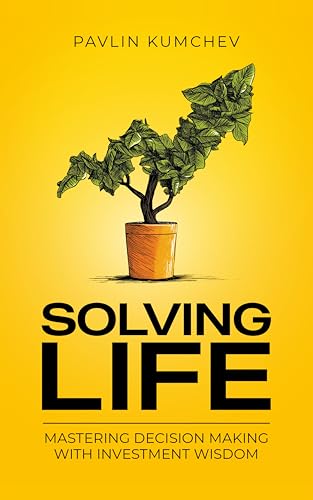
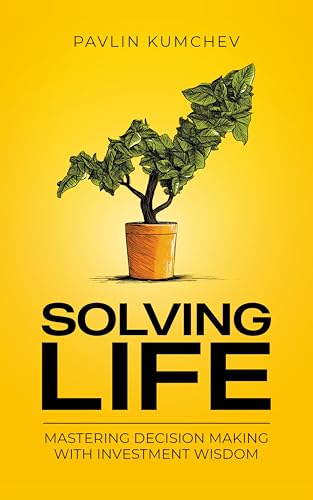
Solving Life

by Pavlin Kumchev

Release Date: April 24, 2025

Solving Life: Mastering Decision Making with Investment Wisdom introduces a framework for making better day-to-day choices, rooted in the principles of successful value investing and the psychology of decision-making. The author, Pavlin Kumchev, is an international investor with a 20-year career on Wall Street across leading institutions.

Buy on Amazon


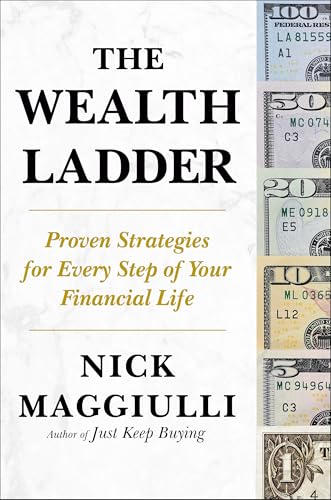
The Wealth Ladder

by Nick Maggiulli

Release Date: July 22, 2025

Do you feel stuck financially? Are you working more, trying to spend less, yet still not seeing results? If so, the issue isn’t your effort—it’s your approach. This is where The Wealth Ladder comes in. It’s not a get-rich-quick scheme or a one-size-fits-all solution to your money problems. It’s a new philosophy for thinking about money altogether.

Buy on Amazon


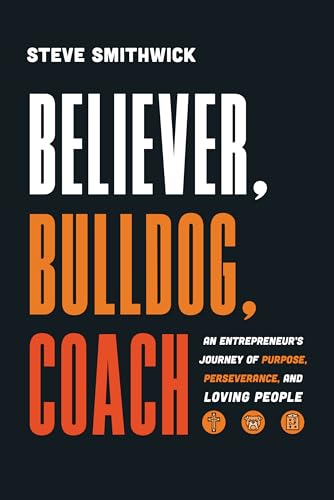
Believer, Bulldog, Coach

by Steve Smithwick

Release Date: August 12, 2025

Believer, Bulldog, Coach by Steve Smithwick is an inspiring guide to achieving success without sacrificing your principles. As the founder of Master Wall, Inc., Steve shares his remarkable journey from humble beginnings to building a multimillion-dollar business rooted in faith, perseverance, and integrity.

Buy on Amazon


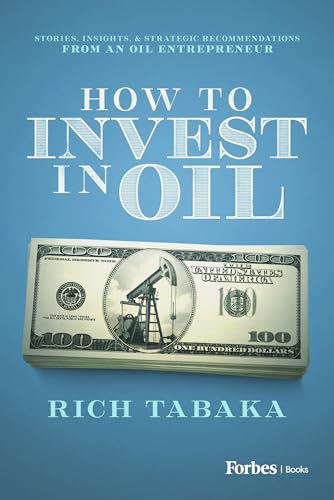
How to Invest in Oil

by Rich Tabaka

Release Date: July 15, 2025

Oil and gas investing has long been a pathway to wealth for those in the know. In How to Invest in Oil, Rich Tabaka reveals how this often-overlooked sector can deliver financial freedom, tax advantages, and portfolio diversification. Drawing from years of experience as an oil entrepreneur, Tabaka shares a no-nonsense guide to navigating the opportunities and challenges of this high-stakes industry.

Buy on Amazon


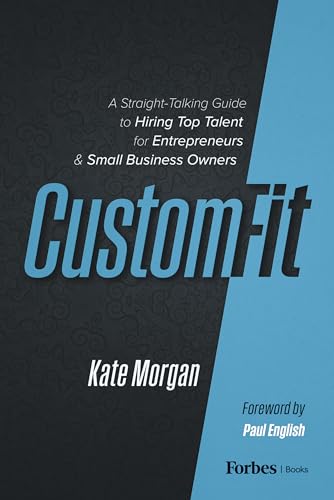
Custom-Fit

by Kate Morgan

Release Date: July 29, 2025

For small business owners, hiring the right people can make or break their company. Custom-Fit: A Straight-Talking Guide to Hiring Top Talent for Entrepreneurs and Small Business Owners by Kate Morgan is the essential resource for founders seeking practical, no-nonsense advice on building a team that fuels growth without the complications of big business HR.

Buy on Amazon


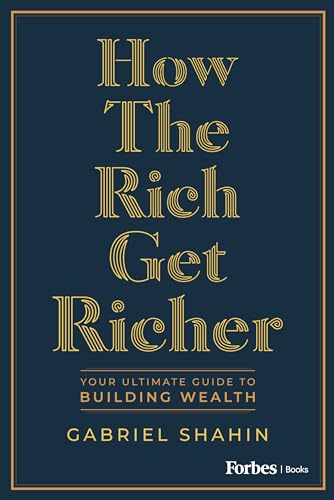
How the Rich Get Richer

by Gabriel Shahin

Release Date: July 1, 2025

Unlock the secrets behind building lasting wealth with How the Rich Get Richer by Gabriel Shahin. In this eye-opening guide, Gabriel, the Founder of Falcon Wealth Planning, shares his philosophy on smart investing, offering a refreshingly honest perspective on wealth management and financial planning. Unlike many advisors, Gabriel operates as a fee-only advisor—not commission-based—meaning his advice is free from the pressure to sell products.

Buy on Amazon


One Glitch from Chaos: Sci-Fi and Fantasy Novels on the Edge

One Glitch from Chaos: Sci-Fi and Fantasy Novels on the Edge

Whether it’s a rogue system or a rebel mind, each of these stories starts with a crack in the code. As control slips and systems unravel, humanity is forced to adapt, or be erased. These are the high-tension sci-fi reads that never let you look away.


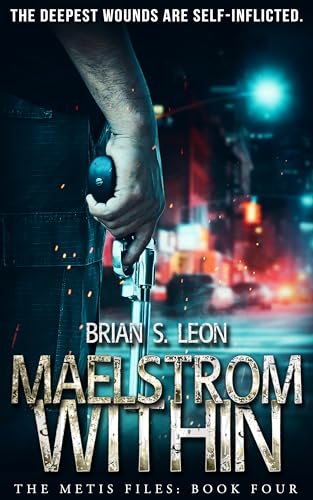
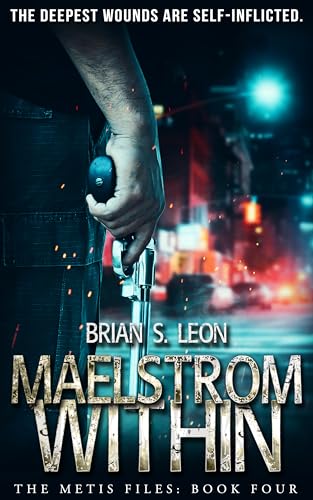
Maelstrom Within (The Metis Files Book 4)

by Brian S. Leon

Release Date: July 28, 2025

Stuck in a downward spiral of self-pity and guilt over the tragic aftermath of battling a fallen angel, Diomedes cannot bring himself to face the world, let alone the woman he failed to protect. Despite Diomedes's efforts to forget, a treacherous figure offers a dangerous solution. Just how far will Diomedes go to assuage a guilty conscience?

Buy on Amazon


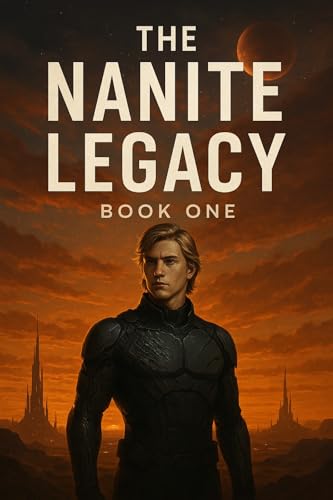
The Nanite Legacy (Book 1)

by D Levesque

Release Date: July 19, 2025

Born on a forgotten station at the edge of civilization, Albert Kuno never imagined he'd become anything more than a drifting mechanic with nowhere to go. But everything changes when he stumbles upon a hidden alien relic—an ancient nanite core that bonds with his body and rewrites his fate.

Buy on Amazon


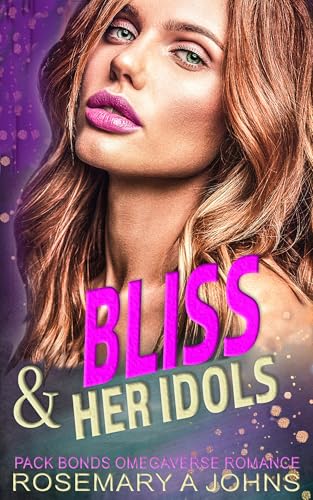
Bliss & Her Idols

by Rosemary A Johns

Release Date: July 10, 2025

When my heat hits during my favorite rock star’s concert, I don’t expect the gorgeous Beta singer to jump from the stage. It should be my dream come true to spend this heat with my fantasy pack. Their scents are intoxicating. I’m mesmerized by the sinfully beautiful Beta, his powerful, billionaire Alpha boss, and my shy Omega soulmate.

Buy on Amazon


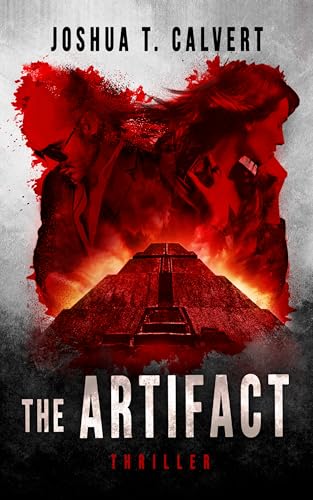
The Artifact

by Joshua T. Calvert

Release Date: July 21, 2025

Deep beneath the Pyramid of the Sun, archaeologist Charles Bowen and his protégé Marcus Brown uncover an artifact that 𝘳𝘦𝘸𝘳𝘪𝘵𝘦𝘴 𝘩𝘪𝘴𝘵𝘰𝘳𝘺—and paints a target on their backs. Within hours, killers strike. Charles is dead. Marcus is on the run. Hunted by the FBI, shadowy operatives, and the Mexican authorities, Marcus must unravel the truth about the relic—and the 𝘴𝘦𝘤𝘳𝘦𝘵 it holds about his own past. Because some discoveries weren’t meant to be unearthed.

Buy on Amazon


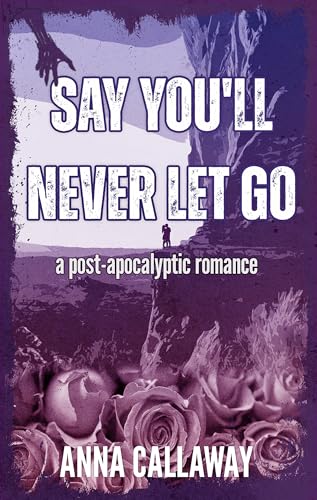
Say You'll Never Let Go (Flowers From Ashes Book 2)

by Anna Callaway

Release Date: July 22, 2025

Kara has spent the last six years fighting the infected in the ruins of a broken world, searching for the one person who ever truly understood her. Wade was her only friend growing up in the foster system, the one steady thing in a life built on instability. When the world collapsed, she thought she’d lost him for good until the enemy dumped him at her doorstep, barely conscious and scarred from years in captivity.

Buy on Amazon


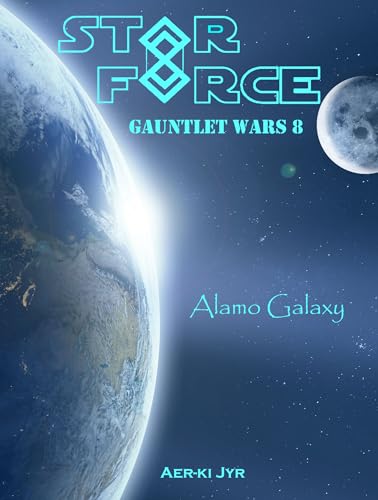
Gauntlet Wars 8: Alamo Galaxy (Star Force Book 94)

by Aer-ki Jyr

Release Date: July 8, 2025

Evan and Anya have brokered an unlikely alliance among thieves. With their sights set on a Syndicate vault brimming with alien secrets, holding the team together long enough to claim the prize will be their greatest test yet. Leading a crew of outcasts, Evan and Anya stage a high-stakes raid to seize tech that could turn the tide against Chancellor Rostov’s iron grip. However, when Conroy—long presumed dead—announces to the core worlds that he’s alive and declares Rostov a usurper, the Commonwealth erupts in chaos.

Buy on Amazon


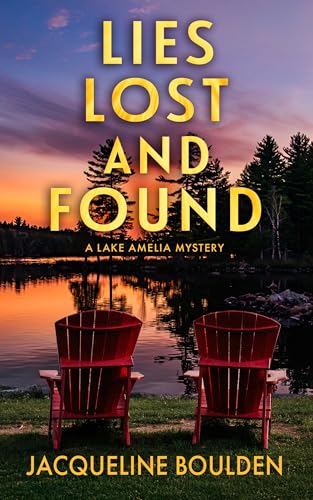
Interview with Jacqueline Boulden, Author of Lies Lost and Found

What's the story behind the story? What inspired you to write Lies Lost and Found?

Lies Lost and Found is the second book in the Lake Amelia Mystery series (Family Ties, Family Lies is Book One). I hadn’t intended to write a series, but as I was driving one day, thinking about what to write next, the first chapter of Lies Lost and Found played out in my mind. I visualized the entire scene. I realized Rose Webster, my protagonist, was telling me she had more to say, and so I listened. The first big reveal, as I began outlining the book, was Rose discovering her father may not have died of a heart attack. The suspicion fell on an unscrupulous businessman suspected of exploiting immigrants. I followed the story my characters told me.

What's your favorite genre to read? Is it the same as your favorite genre to write?

My favorite genre to read is mysteries, and that’s probably why I like to write them. But my stories are a mashup of mysteries and women’s fiction. I like a main character who’s facing challenges in her life, overcoming obstacles, and, in Lies Lost and Found, bringing attention to an important social issue—in this case, the exploitation of immigrants. Sometimes I gravitate to political thrillers. I also like to read historical fiction. And sometimes sci-fi. Mostly, I just want to read a good story.

What books are on your TBR pile right now?

Appointment with Death – Agatha Christie, Atmosphere – Taylor Jenkins Reid, and The First Gentleman – Bill Clinton and James Patterson.

What scene in your book was your favorite to write?

Chapter Twenty-Seven. Rose’s mentor from high school, the editor of the Lake Amelia Dispatch, assigns her to take photos at a picking party in Argyle. I actually drafted this chapter before I even outlined the book, because I had the idea and I loved the way it played out. I probably should have turned it into a reader magnet or short story. Maybe I still will!

Do you have any quirky writing habits? (lucky mugs, cats on laps, etc.)

I love music, but not when I’m writing. I don’t like noisy distractions. I like to hear the characters talking and telling me what’s next. That’s as quirky as I get.

Do you have a motto, quote, or philosophy you live by?

I think we are all here to help walk each other home, and that we are meant to do that with kindness and love.

If you could choose one thing for readers to remember after reading your book, what would it be?

To treat each other fairly and with respect. Most of our ancestors came to this country as immigrants. Most of us are trying to get by the best we can.


Jacqueline Boulden is the author of the new book Lies Lost and Found

Connect with Jacqueline Boulden

Author Site

Facebook

Buy The Book


Buy The Book

Sign up for our email and we’ll send you the best new books in your favorite genres weekly.

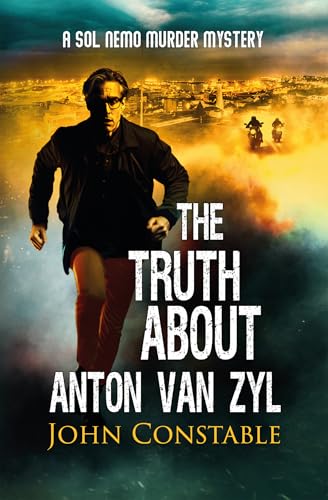
Interview with John Constable, Author of The Truth About Anton Van Zyl

What's the story behind the story? What inspired you to write The Truth About Anton Van Zyl?

This is the second novel in a series featuring PI Sol Nemo, who is based in South Africa. The first in the series was The Chanteuse from Cape Town. The genesis for the series was the fact that my wife is South African, and we visit the country every year. There is not much mystery/thriller fiction set in South Africa, and my novels are an attempt to redress the imbalance, which typically features so much that is set in the US, Europe, and Scandinavia.

If you had to pick theme songs for the main characters of The Truth About Anton Van Zyl, what would they be?

It would be “I Will Survive.”

What's your favorite genre to read? Is it the same as your favorite genre to write?

My favorite genre to read is classic crime and mystery fiction, like Raymond Chandler, Ross Macdonald, Eric Ambler, etc.

What books are on your TBR pile right now?

Precipice by Robert Harris, Cry, the Beloved Country by Alan Paton, and Fifty Stories of the Great War.

What scene in your book was your favorite to write?

It was pulling all the threads together at the end of the book, describing how the political fallout came about and what was done to mitigate the damage and deflect criticism away from the ruling elite.

Do you have any quirky writing habits? (lucky mugs, cats on laps, etc.)

Endless cups of tea, because writing is thirsty work.

Do you have a motto, quote, or philosophy you live by?

Do unto others… Carpe Diem… I’m still here, you bastards!

If you could choose one thing for readers to remember after reading your book, what would it be?

One thing for readers to remember is: Wow! That is a great story and so well written.

John Constable is the author of the new book, The Truth About Anton Van Zyl

Connect with John Constable

Author Site

Buy The Book


Buy The Book

Sign up for our email and we’ll send you the best new books in your favorite genres weekly.

Interview with Brian S. Leon, Author of Maelstrom Within

What's the story behind the story? What inspired you to write Maelstrom Within (Metis Files Book 4)?

It is a sort of continuation of the series. The specific events and circumstances in the book were inspired by a variety of things. I always try to write down things I find interesting as potential material for plot lines. It always surprises me how they all come together in a book.

If you had to pick theme songs for the main characters of Maelstrom Within (Metis Files Book 4), what would they be?

Diomedes’ theme would probably be something like Frogman by Whiskey Myers. Duma is definitely “To Get Down” by Mixbeat Masters. Abrades would be something like “Thunderstruck” by AC/DC. Ned’s would be a Jimmy Buffett song, not sure which.

What's your favorite genre to read? Is it the same as your favorite genre to write?

Urban Fantasy, for sure. Exactly the same genre I write. But I also like mysteries, too.

What books are on your TBR pile right now?

Several of the Pendergast novels by Preston and Child, a book by Clive Cussler, and I always re-read The Count of Monte Cristo by Dumas.

What scene in your book was your favorite to write?

I like writing the action scenes. I particularly like the nightclub scene. I also enjoy writing the fishing scenes.

Do you have any quirky writing habits? (lucky mugs, cats on laps, etc.)

Not really, no. I’m kinda boring.

Do you have a motto, quote, or philosophy you live by?

I have a few, but the big one is: “The deed is everything. The glory is naught.”

If you could choose one thing for readers to remember after reading your book, what would it be?

I don’t make up my mythologies. They are based on existing myths and legends. The stuff that already exists is cool enough. I don’t need to make my legends more legendary.


Brian S Leon is the author of the new book Maelstrom Within (Metis Files Book 4)

Connect with Brian S Leon

Author Site

Facebook

Buy The Book


Buy The Book

Sign up for our email and we’ll send you the best new books in your favorite genres weekly.

Interview with Pavlin Kumchev, Author of Solving Life

What's the story behind the story? What inspired you to write Solving Life: Mastering Decision Making with Investment Wisdom?

I originally wrote this as a letter to my sons, a way to pass on what I’ve learned through two decades in investing. But the more I wrote, the more I realized these ideas could help others too. Life, like investing, is uncertain. This book helps people make better decisions when the future is uncertain.

If you had to pick theme songs for the main characters of Solving Life: Mastering Decision Making with Investment Wisdom, what would they be?

The reader is the main character. Their theme song would be “Lose Yourself” by Eminem because life gives us moments of big opportunity, and you have to be ready to act.

What's your favorite genre to read? Is it the same as your favorite genre to write?

I love books that help you think better. Psychology, decision theory, and investing are my go-to areas. I’m drawn to ideas that challenge how we see the world.

What books are on your TBR pile right now?

The Art of Learning by Josh Waitzkin; Antifragile by Nassim Taleb; 4,000 Weeks by Oliver Burkeman; The Happiness Hypothesis by Jonathan Haidt.

What scene in your book was your favorite to write?

The story of shark attack survivor Ali Truwit, who won a swimming medal in the Paralympics, embodies the power of the human spirit to overcome even the greatest challenges.

Do you have any quirky writing habits? (lucky mugs, cats on laps, etc.)

Very late at night, when everyone’s asleep, or on a train ride to work.

Do you have a motto, quote, or philosophy you live by?

Do good. It’s the ultimate cheap option. Nothing to lose, everything to gain.

If you could choose one thing for readers to remember after reading your book, what would it be?

You don’t have to predict life. You just have to structure your choices so they protect you from the worst and leave room for the best.


Pavlin Kumchev is the author of the new book Solving Life: Mastering Decision Making with Investment Wisdom

Connect with Pavlin Kumchev

Author Site

Podcast

Facebook

Buy The Book


Buy The Book

Sign up for our email and we’ll send you the best new books in your favorite genres weekly.

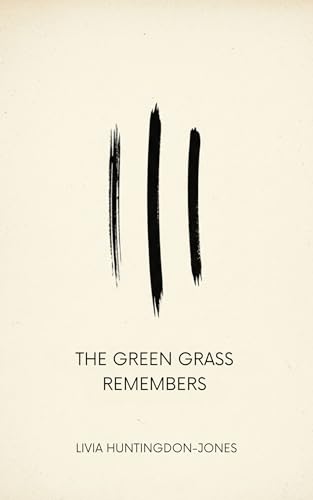
Interview with Livia Huntingdon-Jones, Author of The Green Grass Remembers

What's the story behind the story? What inspired you to write The Green Grass Remembers?

At its heart, the novel is an exploration of memory—not just the memories people hold, but the memories held by the land itself. I've always been fascinated by the English countryside, particularly around a place as ancient as Cambridge, where every lane and field feels like a palimpsest, with centuries of forgotten stories lying just beneath the surface.

I wanted to write a mystery where the central motive wasn't something as fleeting as money or revenge, but something far more profound: a sacred obligation to protect one of those forgotten stories from being erased forever. This idea gave birth to the two opposing forces of the novel.

On one side, you have Marcus Tyne, a man who embodies a certain kind of brutal modernity. To him, the land is a blank canvas, a commodity, and even history is just another "nice little bonus" to be leveraged for profit. He is the disease, the blight that threatens to pave over the past.

On the other side, you have Julian Theis. He is the book’s tragic heart. He is a man who speaks the language of trees better than the language of men, a quiet scholar whose church is a cathedral of wood and leaf. When Tyne threatens to destroy the one place that holds the memory of a century-old injustice, Julian’s act of murder, in his mind, isn't a crime but a duty. It is a piece of necessary, dispassionate surgery to remove the blight. He is the book's central moral question: can a killer also be a hero?

Caught between these two is DCI Eleanor Blackwell. She is, in many ways, my ideal protagonist. She is a woman of immense intellect and integrity, navigating a professional world that often dismisses her. Her passion for antique maps is her sanctuary, but it is also her greatest investigative tool. For Ellie, a map isn't just a drawing; it's a narrative, a text that reveals the truth of a place. She understands the impulse to impose order on chaos, which is what drives her as a detective. Her past with her condescending ex-husband, Alistair, has sharpened her resolve and made her fiercely independent. She is the only person who could possibly understand Julian, because on some level, they are both guardians of a silent, paper world.

The investigation itself is a journey through a pageant of masks. You have the grieving widow, Isabelle Tyne, whose icy composure hides a desperate secret of her own. You have the theatrical activist, Alistair Finley, whose righteous anger is not quite as pure as it seems. Even Julian himself wears the mask of a simple, easily overwhelmed tree surgeon. Ellie’s task is to peel back these layers of performance to find the truth, which turns out to be older and sadder than anyone could have imagined.

The haiku left at the scene is the key to it all. It is not, as the other police officers and the arrogant Professor Blackwell believe, a simple clue or a misdirection. It is a memorial, a title card for the entire tragedy, a signpost pointing not to a person, but to a place and a time. It is the voice of the ghost at the center of the story: Kenji Tanaka, the gentle Japanese poet and pacifist, whose only grave is the meadow Tyne plans to destroy. Ultimately, The Green Grass Remembers is about the stories we choose to tell and the ones we choose to forget. It’s about the violence that can be born from a love of history and the question of what we owe to the ghosts who whisper to us from the soil.

If you had to pick theme songs for the main characters of The Green Grass Remembers, what would they be?

Of course. I love this question because music is such a powerful way to get to the emotional heart of a character. If I were creating a soundtrack for the novel, here’s what I would choose:

DCI Eleanor Blackwell — “Spiegel im Spiegel” by Arvo Pärt
For Ellie, it has to be this. The title means “Mirror in the Mirror,” and the music itself is a stunning piece of minimalist precision. It builds slowly, methodically, layering simple, clear notes to create something of profound beauty and clarity. It’s the perfect sonic parallel to how Ellie uses her antique maps to find order in the chaos of a crime. It’s not loud or emotional; it’s the quiet, focused, and deeply intelligent sound of her map room, a reflection of a mind that finds truth in structure.

Julian Theis — “The Unquiet Grave” (Traditional Folk Ballad)
Julian is the book’s tragic, grieving heart. His actions are driven by a duty to a memory, a love for a story that he refuses to let die. This ancient folk ballad, which tells of a love that transcends death and a grief that will not let a soul rest, captures his motive perfectly. He is the living mourner for Kenji Tanaka’s “only grave,” and his crime is a terrible, violent extension of the ballad’s plea. The music is unsettling, sorrowful, and beautiful—just like Julian’s quiet, tectonic rage.

DS Ben Carter — “The Boxer” by Simon & Garfunkel
Ben is the story’s conscience, its steadfast and reliable anchor. He’s a good man haunted by past professional failures and now facing the collapse of his personal life because of his dedication to the job. This song is about perseverance in the face of struggle and disappointment. He gets knocked down, but he “still remains.” He learns to fight the easy narrative and the pressures from his superiors to find the real truth. The song captures his quiet integrity and his profound, bone-deep weariness perfectly.

Professor Alistair Blackwell — “You’re So Vain” by Carly Simon
I admit this choice is a little playful, but it is inescapably perfect for Alistair. His entire character is built on a foundation of intellectual vanity and polished condescension. He deliberately misleads a murder investigation, not for any grand reason, but out of the petty, corrosive fear that his ex-wife might be more brilliant than himself. The central lyric, “You probably think this song is about you,” is the absolute essence of Alistair. His world is so self-referential that he would risk everything simply to protect his own ego.

What's your favorite genre to read? Is it the same as your favorite genre to write?

That’s an excellent question, and it gets to the heart of why I wrote this book. My favourite genre to read is, without a doubt, intelligent, literary crime fiction. I adore writers who use the framework of a mystery to explore deeper questions about character, society, and place. Authors like P.D. James, who was a master of the form, or more contemporary writers like Tana French or Kate Atkinson, create such a profound sense of atmosphere and psychological depth.

I love a good puzzle, but I’m less interested in a simple whodunnit and more in the why—the complex web of history and motive that leads to a crime. I also have a great love for historical non-fiction, for those stories that uncover the hidden lives of the past.

So, to answer your second question, yes, it is absolutely my favourite genre to write as well. In many ways, writing a mystery feels like a natural extension of my legal work. Both professions are about constructing a narrative from evidence, about understanding motive, and about finding the truth within a complex, often contradictory, set of facts.

Writing in this genre allows me to be both an architect and an archaeologist. I get to build the intricate puzzle of the plot, which satisfies the logical, analytical side of my brain. But I also get to dig into the past, to unearth these forgotten stories and explore the emotional lives of my characters, which is where the real heart of the novel lies for me. It’s the perfect marriage of a rigorous intellectual challenge and a deep, empathetic exploration of the human condition.

I truly can’t imagine writing anything else.

What books are on your TBR pile right now?

My "To Be Read" pile is a rather ambitious, slightly precarious tower on my bedside table, I must confess. It never seems to get any smaller, but that’s the wonderful curse of a book lover, isn’t it?

Let’s see what’s at the very top right now… I’m incredibly eager to start The Wager by David Grann. I adore historical non-fiction that reads like a thriller, and from everything I’ve heard, he is a master at unearthing these incredible true stories of survival and human drama. It feels like the perfect book to get lost in.

For my crime fiction fix, I have The Raging Storm by Ann Cleeves. I find her sense of place so immersive, and I’m always in awe of how she weaves such intricate plots with such compelling, down-to-earth characters. She’s a giant of the genre for a reason.

Then there’s The Bee Sting by Paul Murray. It was shortlisted for the Booker Prize, and I’m a complete sucker for those big, sprawling family sagas that are both heartbreaking and darkly funny. It feels like the kind of book you live inside for a week.

And finally, one that feels a bit like a busman’s holiday is The Murder Rule by Dervla McTiernan. A law student working with the Innocence Project who suspects her client is guilty… it touches on so many of my own professional interests. I have a feeling I won’t be able to put that one down.

Of course, that’s just the top layer! The real challenge is finding the time to read them all. It’s a lovely problem to have.

What scene in your book was your favorite to write?

That is a wonderful question, and a surprisingly difficult one to answer, as different scenes feel like favourites for different reasons. Some are thrilling because the plot clicks into place, while others are satisfying because a character’s emotional arc resolves.

However, if I have to choose just one, it would be the scene in Chapter 2 where we are first introduced to DCI Eleanor Blackwell in her map room. That was the moment the character truly came alive for me. I wanted to create a protagonist who wasn’t just a brilliant detective, but whose methods were deeply rooted in her personality.

Her map room isn’t just a hobby; it’s her sanctuary, a physical manifestation of her mind. It’s a place of quiet, meticulous order, where she can impose a rational grid upon a chaotic world. As a lawyer, I feel a great affinity for that impulse.

Writing that scene allowed me to establish the central theme of the novel: the search for meaning and truth in the layers of the past. Ellie does it with her antique maps, these beautiful, empirical documents. It sets her up as the perfect intellectual foil, and yet a kindred spirit, to Julian Theis, who reads the history of the land itself—the shape of a burial mound, the line of an ancient track. They are both guardians, just of different kinds of texts.

It was also a joy to introduce the ghost of her past, Professor Alistair Blackwell, through her memory in that room. His condescending dismissal of her passion—calling her maps “just topography”—lays the groundwork for their entire dynamic and her journey towards intellectual and emotional freedom.

That scene is the quiet heart of the book for me. It’s where we learn that Ellie isn’t just investigating a crime; she’s a scholar, a cartographer of human nature, and the only person in the world equipped to understand a killer who leaves a poem as a map.

Do you have any quirky writing habits? (lucky mugs, cats on laps, etc.)

I suppose from the outside, they might seem a bit quirky, but to me, they feel absolutely essential. My life is a constant juggling act between the very logical, structured world of law and the rather more chaotic, imaginative world of fiction, so I have a few rituals to help me shift gears.

Firstly, I am a ridiculously early riser. My writing is almost always done between 5 and 7 a.m. The house is completely silent, the city hasn’t woken up yet, and my legal mind hasn’t had a chance to start dissecting contracts for the day. It’s the only time I feel I have a completely clean slate.

There must be tea. Specifically, Earl Grey, in a very fine bone china cup that belonged to my grandmother. It’s absurdly delicate and completely impractical, but there’s something about the ritual of it that signals it’s time to create, not to litigate.

Do you have a motto, quote, or philosophy you live by?

I don’t know if it’s a formal motto, but there is a philosophy that guides both my legal work and my writing. It’s simply this: “Find the pattern, tell the truth.”

In my life as a lawyer, I’m presented with a chaos of facts, evidence, and conflicting testimony. My job is to find the underlying pattern, the logical thread that connects everything and reveals a coherent, truthful narrative. It’s about imposing order on a mess to get to the heart of what really happened.

It’s precisely the same in my writing. A crime, like the one in my novel, is an act of chaos. But the story isn’t in the chaos itself; it’s in the structure beneath it. My protagonist, Ellie Blackwell, does this with her maps. I do it with plot and character.

I believe that even in the most complex and tragic human situations, there is a pattern, a “geometry” to it all, as one of my characters says. My job, whether I’m in a courtroom or at my writing desk, is to find that pattern and then have the integrity to tell its story as truthfully as I can. It’s the belief that truth exists, even when it’s buried, and that our most important work is to bring it to light.

If you could choose one thing for readers to remember after reading your book, what would it be?

If there is one single thing I would hope readers carry with them after they close the final page, it is the idea that the ground beneath our feet is never just empty space. We move through a world of roads and buildings, of property lines and development sites, and it’s so easy to see the landscape as a commodity, a thing to be used. But what I hoped to explore in the novel is that every field, every quiet lane, every ancient tree is a library of forgotten stories. It holds the memory of grief, of love, of injustice.

I would want a reader to finish the book and, the next time they walk through a park or drive down a country lane, to look at a gentle rise in the land and wonder if it’s a grave. To see an old oak and wonder if it was planted as a memorial.

I want them to remember that there is a quiet, profound history living just beneath our feet, and that it is a fragile thing, easily erased by those who cannot, or will not, see it.

The book is called The Green Grass Remembers because that’s the central truth I wanted to explore: that nature is a silent witness, and that sometimes, the most important stories have no voice but ours.

 

Livia Huntingdon-Jones is the author of the new book The Green Grass Remembers

Buy The Book


Buy The Book

Sign up for our email and we’ll send you the best new books in your favorite genres weekly.

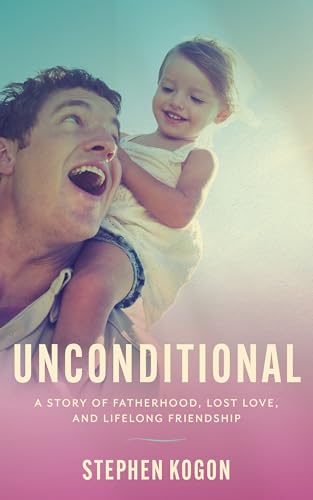
Interview with Stephen Kogon, Author of Unconditional

What's the story behind the story? What inspired you to write Unconditional: A Story of Fatherhood, Lost Love, and Lifelong Friendship?

How and why I wrote it: First off, a bit of a surprise—I’m not a father… So, you’re probably asking, “Then why did you write a book about fatherhood?” It’s a fair question. Most stories come to me as fully realized ideas, but UNCONDITIONAL didn’t. It came to me in moments. And that first moment was the ending. I won’t spoil it, but it was a scene where the two characters were together—and they had a shared interaction—one that touched me very deeply… But I had no idea who these two characters were yet—or what the story was.

Then, a few weeks later, a second moment came to me in another scene. But it wasn’t yet connected to the previous moment. The scene was where an indecisive bachelor was heading to a hospital room to meet his just-deceased brother’s newborn baby. He’d been told there were two choices: either he adopt her, or social services would decide her fate. Being indecisive, he had no idea what he’d do with such a MAJOR life decision… But then he met her. And he fell in love. And for the first time in his life, he had no indecisiveness… He wanted to be her father.

So, for the second time in three weeks, I was touched very deeply by a moment that came to me. But even more importantly, I now knew who the characters were in the previous moment (the ending). It was a father and daughter. And with that, I had my story.

I’ve never been more compelled to write something in my life. With most stories, I primarily write them with my brain. This one I wrote with my heart. And that’s how and why I wrote UNCONDITIONAL.

If you had to pick theme songs for the main characters of Unconditional: A Story of Fatherhood, Lost Love, and Lifelong Friendship, what would they be?

“No Woman, No Cry” by Bob Marley, since it was Matthew and Allie’s favorite song in the book.

What's your favorite genre to read? Is it the same as your favorite genre to write?

My favorite genres to read are mystery and fantasy. I like writing in every genre.

What books are on your TBR pile right now?

Up next is J.D. Robb's "Imitation in Death."

What scene in your book was your favorite to write?

The moment when Matthew met his orphaned newborn niece in the hospital fell in love with her and knew he wanted to be her father.

Do you have any quirky writing habits? (lucky mugs, cats on laps, etc.)

My favorite time to write is between 10:00 PM and 2:00 AM.

Do you have a motto, quote, or philosophy you live by?

Focus on the love of doing.

If you could choose one thing for readers to remember after reading your book, what would it be?

To cherish and be grateful for their loved ones.


Stephen Kogon is the author of the new book Unconditional: A Story of Fatherhood, Lost Love, and Lifelong Friendship

Connect with Stephen Kogon

Author Site

Facebook

Twitter

Buy The Book


Buy The Book

Sign up for our email and we’ll send you the best new books in your favorite genres weekly.

New Mystery and Thriller Books to Read | July 29

Hold on to the edge of your seat as we hunt for clues and solve the case with these exciting new mystery and thriller books for the week! There are so many bestselling authors with new novels for you to dive into this week, including John Constable, Jacqueline Boulden, T.J. McLaughlin, and more. Enjoy your new mystery, thriller, and suspense novels. Happy reading!


Sign up for our email and we'll send you the best new books in your favorite genres weekly.