Blog

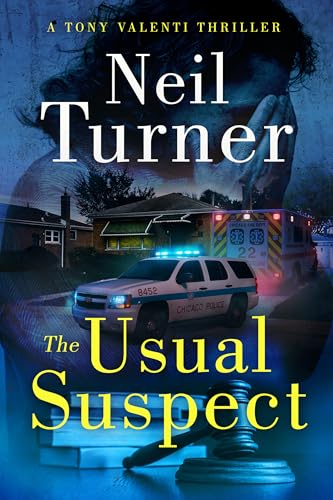
Interview with Neil Turner, Author of The Usual Suspect

What's the story behind the story? What inspired you to write The Usual Suspect?

I like to toy with societal expectations and tropes, particularly when they make no sense to me within the context of the lives they impact. Van Booker isn’t your typical woman; the situation she finds herself in is atypical for a mother. Yet there is a lot of standard idiocy in play from characters who seem to be boxed into ways of thinking and behaving that don’t serve anybody’s interests, including their own. Van, who is a no-BS type, often struggles to understand the motivations of people whose lives intersect with hers—often with potentially disastrous results. My readers know that I’m a sucker for a good underdog story, and Van is certainly buried deep beneath a bewildering pile of woes. Our judgments about who are good people and who are evil are often largely a matter of perspective, which is a little scary when you think of it. My team is good; your team is evil. It’s seldom that simple… and it isn’t in this novel.

If you had to pick theme songs for the main characters of The Usual Suspect, what would they be?

The musician Sly Stone passed away while I was hunkered down editing this book, and I found myself listening to a lot of his music as I worked. I could have chosen a few of his songs, but his classic “Everyday People” with his band The Family Stone truly resonated with me. It’s a feel-good song musically, wrapped around a compelling message of inclusion and hope. I’ve always been moved by its message about opening our hearts to everyone. The Usual Suspect ended up with an unusual assortment of characters—people who came from anywhere and everywhere and intersected in unusual ways. Everyone—to use a clichéd term—brought their own baggage to the game. I remember pausing to drink in a handful of Sly’s timeless lyrics as I worked: “different strokes, for different folks … we are the same, whatever we do … we got to live together.” Amen.

What's your favorite genre to read? Is it the same as your favorite genre to write?

I have always read very widely: all sorts of fiction, biography, history, and a little philosophy. If pressed (as I am by this question!), I’d pick thrillers, but I won’t narrow it down to a specific sub-genre. It so happens that this is also the genre I write in, but it’s not necessarily my favorite. I dabble in some quirky stuff that’s a lot of fun to play with, but it isn’t commercially viable. Great for building my writing chops, though! Speaking of which, I think it’s essential for a writer to read a lot!

What books are on your TBR pile right now?

I’m most of the way through a new novel from a writer pal of mine, Roll Them Bones by Danielle Gomes. Charlie Donlea has a new book out this week called Guess Again, which I’m very excited to sink my teeth into, and I was thrilled just today to pre-order Ken Follett’s upcoming historical fiction novel, Circle of Days. What a writer he is! I’m working my way through The Lyrics by Paul McCartney—fascinating trivia, particularly for someone with a soft spot for the Beatles. The History of France is also waiting for me to crack it open. Taft by Ann Patchett, who is one of my favorite authors, is also lingering on the shelf. It’s the only one of her novels I haven’t read, and the idea of a world without an Ann Patchett book to look forward to strikes me as a bleak world indeed! It’s always comforting to know there’s another one waiting. 🙂

What scene in your book was your favorite to write?

That’s a tough question! Courtroom scenes can be fun, what with all the inherent conflict we get to play around with, but it’s difficult to sort through them in search of a favorite. I enjoy writing scenes that have a bit of sprawl in terms of characters and content, and if a little humor gets sprinkled in, so much the better! In this book, there’s a scene where I bring back a character I’ve always enjoyed writing, Max Maxwell, who is a retired Chicago PD detective. He’s also an audiophile with a love for old LP records. Max is colorful, and his interactions with Tony are always fun. In the scene I’m referencing here, Tony ropes Max into using his old police contacts to do a little investigative work for Van’s defense team. Tony trots out an excellently preserved copy of the 1967 album United by Marvin Gaye and Tammi Terrell to entice Max. Are you detecting a bit of a theme in all these musical references? Read on.

Do you have any quirky writing habits? (lucky mugs, cats on laps, etc.)

I’m afraid this is yet another boring aspect of me. I’d like to tell you that I write naked with a 1930 Underwood typewriter at the end of a pier hanging over the ocean, in all four seasons yet! Perhaps accompanied by a pet parrot who suggests dialogue. Alas, I sit at an unremarkable oak desk in an unremarkable spare bedroom in an unremarkable home in an unremarkable neighborhood in a typical Canadian city. What fun is that! But wait! I seldom write without music playing, which is apparently somewhat unusual, especially given that I listen to the music without it becoming a distraction. At this point, hearing no music is the distraction. You’ll find plenty of references to music in my books, often a result of it leaking onto the page from my ears. That’s my big quirk. See? Boring. 🙂

Do you have a motto, quote, or philosophy you live by?

Live and let live.

If you could choose one thing for readers to remember after reading your book, what would it be?

Be very, very slow to judge others; be equally slow and deliberate in reaching conclusions about things you neither fully know nor entirely understand.


Neil Turner is the author of the new book The Usual Suspect

Connect with Neil Turner

Author Site

Facebook

Buy The Book


Buy The Book

Sign up for our email and we’ll send you the best new books in your favorite genres weekly.

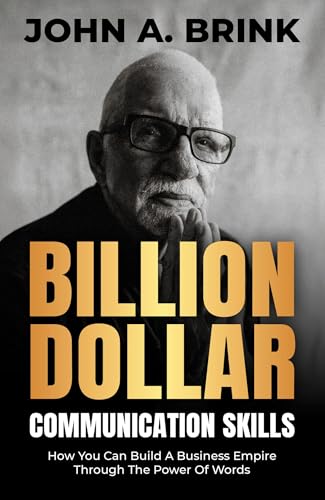
Interview with John A. Brink, Author of Billion Dollar Communication Skills

What's the story behind the story? What inspired you to write Billion Dollar Communication Skills?

The inspiration behind Billion Dollar Communication Skills really stems from my own personal journey. I’ve spent decades as an entrepreneur, business leader, and public speaker — but it wasn’t always easy. In fact, there was a time when I struggled with communication. I joined Toastmasters over ten years ago, and that experience truly transformed my life. It gave me the tools to express myself more clearly, lead more effectively, and connect with people on a deeper level — whether in the boardroom or in everyday conversations. This book is my way of paying it forward. I wanted to distill the lessons I’ve learned — through experience, failure, and growth — into a practical, accessible guide that anyone can use. Because at the end of the day, communication isn’t just about speaking well — it’s about building trust, inspiring action, and creating real impact. And I believe that when you master this skill, you open doors — not just in business, but in life.

What's your favorite genre to read? Is it the same as your favorite genre to write?

Non-Fiction and Autobiographies.

What books are on your TBR pile right now?

Peter Legge's latest book.

What scene in your book was your favorite to write?

My history with Toastmasters.

Do you have any quirky writing habits? (lucky mugs, cats on laps, etc.)

Absolutely — I do have a few quirky habits when I write. For starters, I always write early in the morning, often before the sun is up. That’s when my mind is the clearest. I sit in my favorite chair with a strong cup of Dutch coffee — in a mug that says, “Don’t Wait for Opportunity. Create It.” It’s a simple reminder of how I’ve lived my life.

Do you have a motto, quote, or philosophy you live by?

Attitude. Passion. Work Ethic.

If you could choose one thing for readers to remember after reading your book, what would it be?

If there’s one thing I want readers to take away from Billion Dollar Communication Skills, it’s this: your ability to communicate effectively is your greatest asset—in business, in leadership, and in life. You don’t need to be the loudest voice in the room or have all the answers—but if you can connect with people, listen with intention, and express yourself with clarity and purpose, you’ll go farther than you ever imagined.


John A. Brink is the author of the new book Billion Dollar Communication Skills

Connect with John A. Brink

Author Site

Facebook

Buy The Book


Buy The Book

Sign up for our email and we’ll send you the best new books in your favorite genres weekly.

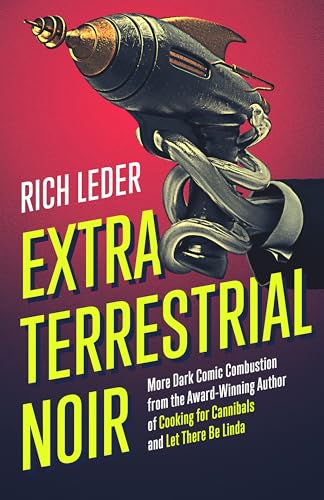
Interview with Rich Leder, Author of Extraterrestrial Noir

What's the story behind the story? What inspired you to write Extraterrestrial Noir?

I have a long Hollywood history, which has forged in me an unyielding connection to high-concept, causally motivated storytelling. So the idea of mashing together dark comedy, science fiction, film noir, and suburban family drama—with the tagline: You have never met an alien like this one—seemed like a whiplash idea when it flash-banged into my brain. Turned out to be just that, I’m happy to say.

What's your favorite genre to read? Is it the same as your favorite genre to write?

Let’s tackle this by mentioning that I’m currently re-reading everything by Vonnegut, everything by Palahniuk, and everything by Robbins. I’ve been reading some Elmore Leonard too, and some Jasper Fforde. And let’s not forget Christopher Moore—heavens no. Or Bradbury. Or Westlake. Whatever genres you think those guys are writing, that’s what I like to read.

What books are on your TBR pile right now?

Recently finished Cowgirls, Still Life, and Jitterbug by Robbins. Just read Galapagos by Vonnegut. In the middle of Bluebeard by Vonnegut. Reading Red Side Story by Fforde next. Maybe Cat’s Cradle by Vonnegut after that.

What scene in your book was your favorite to write?

Every scene with my protagonist, Mike, the super-genius daughter of Maggie and Connie Devine. Those first scenes when the extraterrestrial shape-shifts. All the crazy crime scenes. The massive shootout in Alpine. The zero-gravity finale. Honestly, I had a blast writing all the scenes. So what? I often make myself laugh out loud, gasp, cry, or sit on the edge of my seat. What writer doesn’t?

Do you have any quirky writing habits? (lucky mugs, cats on laps, etc.)

No quirky writing habits. I’m pretty good at getting in the zone. No, wait—I can think of one. I often read my characters’ dialogue out loud, with whatever emotional zeal the moment demands from that character. When they were little and living at home, my kids would stand at my office door and say things like, “There’s something wrong with you, Daddy.” Maybe they were right. Yes, they were definitely right.

Do you have a motto, quote, or philosophy you live by?

Live by, no. But I have a mantra that has guided me throughout my decades-long career, which I have shared with many of my writing students: “Write anyway.” Those two words have saved me more times than I can count.

If you could choose one thing for readers to remember after reading your book, what would it be?

Great question. I want readers to remember how much fun I had reading—how easy and enjoyable it was to read Extraterrestrial Noir or any of my books.


Rich Leder is the author of the new book, Extraterrestrial Noir

Connect with Rich Leder

Author Site

Buy The Book


Buy The Book

Sign up for our email and we’ll send you the best new books in your favorite genres weekly.

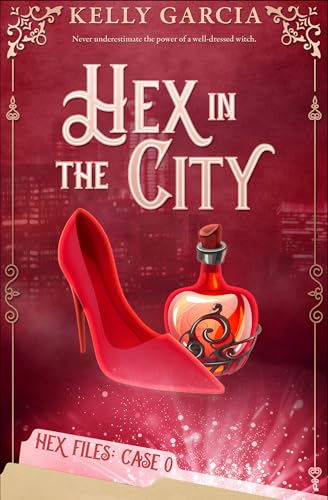
Interview with Kelly Garcia, Author of Hex in the City

What's the story behind the story? What inspired you to write Hex in the City?

This story started when a friend was going through a tough divorce, and it brought up memories of my aunt’s—one of those situations where someone tries to take more than their fair share, and it flips a switch. I saw firsthand how messy it can get, but also how strong women can be when pushed to the edge. Writing this was my way of channeling that fire. It’s about standing up, hitting back when it counts, and knowing that even after the worst of it, women survive—and they move on.

If you had to pick theme songs for the main characters of Hex in the City, what would they be?

"Look What You Made Me Do" by Taylor Swift, "If I Were a Man" (also by Taylor Swift), and "King" by Florence + The Machine.

What's your favorite genre to read? Is it the same as your favorite genre to write?

I tend to read various genres in spurts. Right now, I’m hooked on urban fantasy. Six months ago, I was tearing through thrillers. Before that, it was contemporary romance all the way.

What books are on your TBR pile right now?

At the top of my pile are The Golden Age of Magic, The Vampire in the Potting Shed, and Neverthorn.

What scene in your book was your favorite to write?

Definitely the scene at the Hung Jury Pub when she meets Jack.

Do you have any quirky writing habits? (lucky mugs, cats on laps, etc.)

I just love to sit outside on my patio early in the morning with a cup of coffee and my two dogs.

Do you have a motto, quote, or philosophy you live by?

If it won’t matter in a year, it doesn’t matter now. It’s just another way of saying, “Don’t sweat the small stuff.”

If you could choose one thing for readers to remember after reading your book, what would it be?

I want them to remember Bella and, hopefully, be inspired by a strong, resourceful woman.


Kelly Garcia is the author of the new book Hex in the City

Connect with Kelly Garcia

Author Site

Facebook

Instagram

Buy The Book


Buy The Book

Sign up for our email and we’ll send you the best new books in your favorite genres weekly.

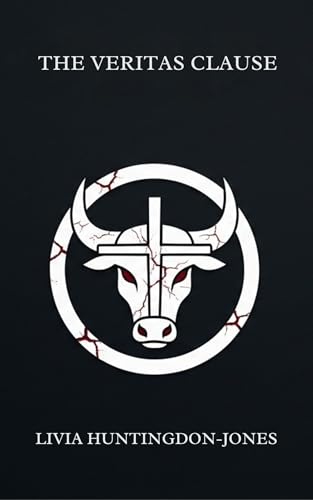
Interview with Livia Huntingdon-Jones, Author of The Veritas Clause

What's the story behind the story? What inspired you to write The Veritas Clause?

That’s a great question. It gets right to the heart of why I write. The truth is, the story behind the story is my day job. I’m a lawyer—that’s what I do from nine to five, and often much later. I spend my days navigating complex systems, dealing with large, powerful institutions—corporations, trusts, and sometimes even government bodies. And what you learn very quickly in that world is that every institution has two identities. There’s the public mission statement, the noble motto carved in stone over the entrance… and then there’s the way things actually work in the boardroom when the doors are closed.

I see it all the time: the immense pressure to protect the institution, to manage a narrative, to make a problem—or a person—quietly go away. The official story is rarely the whole story.

So, The Veritas Clause really started there. It was a way for me to explore those same dynamics, but to heighten them, to push them to their most dramatic conclusion. Creating Blackwood University was like building a laboratory. I took all these themes I see in my legal practice—the power plays, the secret histories, the way people’s ideals are compromised by their ambition—and I put them under a microscope.

The three professors—Isobel, Anand, and Ken—are really just different arguments, aren’t they? Isobel is like a barrister arguing from precedent and history. Anand is the solicitor building a case from context and narrative. And Ken is the forensics expert who believes the data is the only thing that’s real.

The murder is the catalyst, of course. It’s the event that puts the whole system under stress and forces the truth, in all its messy and contradictory forms, to the surface.

For me, writing is a spare time, an escape. But the material… the material comes from the office every single day.

If you had to pick theme songs for the main characters of The Veritas Clause, what would they be?

For Isobel Reed, it would have to be something dramatic and literary, with a slow-burning intensity that finally explodes. I think “Seven Devils” by Florence + The Machine is perfect. It has that epic, almost biblical feel of righteousness and vengeance, with lines about “a thousand armies” and “hell upon your doorstep.” It captures her transformation from a quiet academic into this formidable force.

For Anand Sharma, my heart breaks for him. He’s under such immense, suffocating pressure. His theme song is definitely “Fake Empire” by The National. The whole song is about trying to keep up appearances—“tiptoeing through our shiny city with our diamond slippers on”—while you know the entire structure is hollow and about to collapse. It’s the perfect anthem for his quiet, intellectual desperation.

Ken Leung... he’s all about cold logic and the terror of becoming obsolete. It has to be “Losing My Edge” by LCD Soundsystem. It’s the ultimate song for an arrogant genius who is secretly terrified that he’s a fraud and that all the kids are coming up from behind him with better, newer ideas. It’s anxious, it’s funny, and it’s deeply insecure—which is exactly what Ken is under all that data.

For Detective Maeve O’Connell, she’s the grounded, relentless heart of the story. She’s on this long, lonely journey. I’d give her something by The War on Drugs—maybe “Red Eyes.” It has that constant, driving beat that feels like a long car ride through the night, the feeling of being weary but still pushing forward, trying to find a single point of truth in all the darkness.

And finally, Gary Reed. The tragic monster. He needs something that sounds beautiful and poetic on the surface but is deeply menacing underneath. Without a doubt, his theme is “Red Right Hand” by Nick Cave & The Bad Seeds. It’s this grand, gothic ballad about a tall, handsome man who appears in your town to solve all your problems—but he’s a ghost, a god, a guru, and a whisper... and he’s not what he seems. It perfectly captures Gary’s role as the secret, vengeful priest of his own dark little story.

What's your favorite genre to read? Is it the same as your favorite genre to write?

That’s an interesting question. I think for most writers, the two are tangled up together, but not always identical. My absolute favorite genre to read is what I’d call a “literary thriller.” I’m not talking about airport paperbacks, but something with real intellectual and psychological depth. I love a book that respects my intelligence but also keeps me turning the pages. Think Donna Tartt’s The Secret History, which was obviously a huge influence on this book, or anything by Tana French. I love a slow-burn mystery that’s really an excuse to do a deep dive into a closed-off world and the complex psychologies of the people inside it.

As for writing, I suppose it ends up being the same genre, but I don’t think I set out with that intention. I start with a question or a theme—in this case, the nature of truth within a powerful institution—and the thriller plot becomes the engine to explore that question in the most dramatic way possible. The suspense, the murder, the conspiracy… they’re all tools to put the characters under immense pressure, to strip them down to their essential selves.

So, I guess I write what I love to read: a story with a puzzle at its heart, but one where the solution reveals as much about the characters and the world they inhabit as it does about “who did it.”

What books are on your TBR pile right now?

Oh, the TBR pile. It’s a dangerous, ever-growing creature, isn’t it? It lives on my nightstand and mocks me.

Let’s see what’s at the very top right now? First is Tana French’s new book, The Hunter. I pre-ordered it the second it was announced. For me, she’s the absolute master of the literary thriller. No one is better at creating that sense of creeping dread and exploring the dark, messy psychologies of a small community. I’ll drop everything for one of her books.

Then I have Paul Murray’s The Bee Sting. Everyone has been talking about it, and it won the Booker Prize, so I feel like I’m late to the party. I’m drawn to these big, sprawling family sagas where secrets from the past come back to haunt the present. It feels like it’s right in my thematic wheelhouse.

On the nonfiction side, I’ve been meaning to read Patrick Radden Keefe’s Empire of Pain. As a lawyer, I’m fascinated by the legal architecture of impunity—how powerful people and corporations build systems to protect themselves from consequences. His work is just phenomenal investigative journalism that reads like a thriller.

And finally, I have a copy of Zadie Smith’s The Fraud. I love her work, and the idea of her tackling a historical novel based on a real, famous legal trial is just too intriguing to pass up. It feels like the perfect blend of high literature and courtroom drama.

So... I should probably get off this interview and get to reading!

What scene in your book was your favorite to write?

Hands down, my favorite scene to write was Anand’s first visit to Stephen Tyler’s house—the chapter where he knocks on the door of The Croft. For a writer, there are moments when a character or a setting just arrives fully formed in your head, and that was Stephen Tyler and his house. I had so much fun creating that space—the “tomb of books,” the teetering geological stacks, the air thick with pipe tobacco and righteous bitterness. The house isn't just a setting; it's a physical manifestation of Tyler's mind, a fortress he built against a world that had betrayed him.

But the real joy was the dialogue. You have Anand, this modern, desperate man, stepping across the threshold into the past. And then you have Tyler, this brilliant, broken “king in exile.” He doesn't speak—he pronounces. He's this oracle, this ghost, who sees the whole sordid history of the university not as politics, but as a Greek tragedy. Writing his voice—that mix of classical erudition and pure, uncut rage—was just exhilarating.

That scene is the fulcrum on which the whole book pivots. It’s the moment the reader, along with Anand, realizes that this isn't just a campus murder mystery. The story cracks open, and we see the forty-year-old conspiracy beneath it. It was the scene where I got to stop laying the groundwork and really start digging into the thematic heart of the book. It was an absolute gift to write.

Do you have any quirky writing habits? (lucky mugs, cats on laps, etc.)

I don’t know if it’s quirky or just a side effect of my day job, but I have a very rigid, two-stage process. I absolutely cannot write prose directly onto a computer screen—it feels too permanent, too final. So, every single scene starts its life on a yellow legal pad. And it has to be a yellow legal pad, not a white one.

I use a very specific fine-tipped fountain pen, and I essentially brief the scene, almost like a legal argument. I use a color-coded system—blue ink for plot points and dialogue, red for character motivations or internal thoughts, and green for thematic connections or bits of imagery I want to include. It’s the lawyer in me. I need to build the case for the story on paper first, to see the structure and make sure all the evidence is there before I write the closing argument, so to speak.

Only after a scene is fully mapped out and “briefed” on the legal pad do I turn to the laptop. That’s when I actually write. The transcription process becomes the first real draft, where the structured notes get translated into prose and the characters are allowed to breathe.

So my office is usually littered with these color-coded legal pads. It probably looks like madness, but it’s a madness with a system. It’s the only way I can bridge the gap between my two brains.

Do you have a motto, quote, or philosophy you live by?

That’s a deep question. I don’t know if I have a single motto, but I do have a guiding principle that comes from living in these two different worlds of law and fiction. It’s a quote from Joan Didion: “We tell ourselves stories in order to live.” I think about that line constantly.

As a lawyer, my entire job is to work with competing narratives. You have a set of facts—the evidence, the timeline, the testimony—and both sides construct a story around those facts. The story that is the most coherent, the most persuasive, the one that best explains the messy data of human behavior, is the one that usually wins. It’s a powerful reminder that the “truth,” in a legal sense, is often just the most compelling version of the story that can be proven.

Then, as a writer, I do the exact opposite. I start with a human truth—a feeling of betrayal, a moment of moral compromise, the weight of a secret—and I build the facts of a fictional world around it to make that truth feel real and resonant for the reader.

So, my philosophy is to always be interrogating the story. Whether it’s the official story from a corporation’s press release, the narrative a witness is telling on the stand, or the story a character is telling themselves about their own motivations. The facts are the bricks, but the story is the architecture. I live by the idea that if you can understand the story someone is telling, you can understand everything about them. And if you can find the cracks in that story... that’s where the real truth is hiding.

If you could choose one thing for readers to remember after reading your book, what would it be?

If I could choose just one thing, it would be the idea that Isobel arrives at in the final pages. The university’s motto is Veritas vos liberabit—The truth will set you free. We see that carved in stone, we hear it in speeches. It’s the promise of every great institution, every legal system, every religion.

But the one thing I hope readers remember is that the truth doesn’t set you free—not in the way we think. The truth is a fire. It’s a brutal, indiscriminate, and terrifyingly powerful force. It doesn’t gently unlock your chains; it burns down the entire prison. It burns away the lies, the compromises, the career you built, the person you thought you were, the marriage you thought you had. And once the fire has passed, you’re left standing in the ashes.

You might be free, but you’re also standing in a ruin. The question then becomes: what do you build now? What can grow in that scorched earth? That, to me, is the real, difficult, and often unbearable work of the truth. It’s not a destination; it’s the aftermath.

Livia Huntingdon-Jones is the author of the new book The Veritas Clause

Buy The Book


Buy The Book

Sign up for our email and we’ll send you the best new books in your favorite genres weekly.

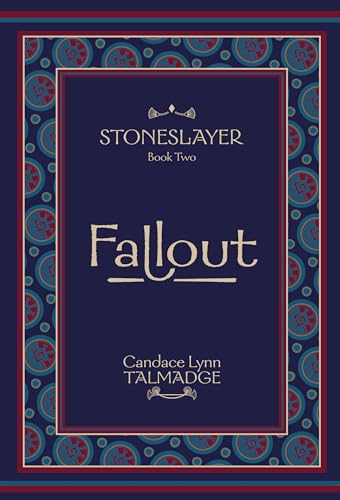
Interview with Candace Lynn Talmadge, Author of Stoneslayer

What's the story behind the story? What inspired you to write Stoneslayer (Fallout Book 2)?

The Stoneslayer series is based on four of my past lives, and the past lives of family and friends. The story started bugging me when I was a preteen and has not let me alone for more than six decades. I write for peace of mind, heart, body, and soul.

If you had to pick theme songs for the main characters of Stoneslayer (Fallout Book 2), what would they be?

Theme song for Helen Andros: I Gotta Try by Kenny Loggins.

What's your favorite genre to read? Is it the same as your favorite genre to write?

Anything except horror and literary fiction, lowbrow for me!

What books are on your TBR pile right now?

I will devour any new novel in the Ghost Walk series by Melissa Bowersock; the Miss Fortune series by Jana DeLeon; the Genevieve Lenard series by Estelle Ryan; and the Fallowtide sequence by M.C.A. Hogarth. Yum!

What scene in your book was your favorite to write?

Helen Andros fights with the medical establishment to win permission to conduct an experimental procedure to heal her best friend. This is very self-revealing for both Helen and me.

Do you have any quirky writing habits? (lucky mugs, cats on laps, etc.)

No morning caffeine, no words. Not so much a quirk as sheer necessity.

Do you have a motto, quote, or philosophy you live by?

From Gandhi: “Be the change you wish to see in the world.”

If you could choose one thing for readers to remember after reading your book, what would it be?

Helen Andros is your basic Timex, takes a licking but keeps on ticking.


Candace Lynn Talmadge is the author of the new book Stoneslayer (Fallout Book 2)

Connect with Candace Lynn Talmadge

Author Site

Facebook

Instagram

Buy The Book


Buy The Book

Sign up for our email and we’ll send you the best new books in your favorite genres weekly.

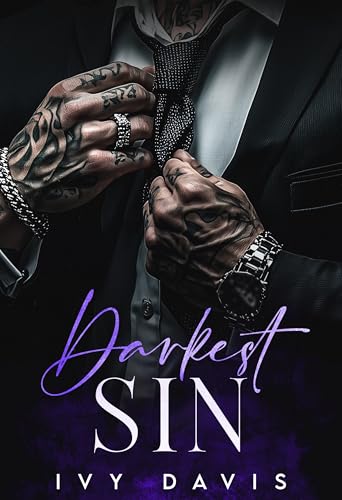
Interview with Ivy Davis, Author of Darkest Sin

What's the story behind the story? What inspired you to write Darkest Sin?

I love writing mafia romance novels, and I wanted to write one that explores the desire between pain and pleasure. I always love writing a classic good girl meets bad boy story, and this one is no exception.

If you had to pick theme songs for the main characters of Darkest Sin, what would they be?

This is sort of a silly one, and it’s probably because I’m currently obsessed with K-pop Demon Hunters like everyone else, but the song “Your Idol.” Granted, the song itself is about demons, haha. But it’s also about becoming obsessed with one person that you see as not even human. This book captures some of that feeling of becoming consumed by another person and seeing the dark desires within them.

What's your favorite genre to read? Is it the same as your favorite genre to write?

I honestly love all genres. I purposefully rotate between them, so I’ll read a romance book one week, then a thriller the next, and then a historical drama after that—so I never get bored with any one genre.

What books are on your TBR pile right now?

The next book in my TBR pile is The Favorites by Layne Fargo.

What scene in your book was your favorite to write?

My favorite scene to write was the meeting of Natalya and Mikhail, the main characters. It’s kind of sexy but also mysterious. I love writing scenes like that.

Do you have any quirky writing habits? (lucky mugs, cats on laps, etc.)

I mostly stick to a schedule when writing that I know keeps me on track. I always outline my books, so that helps guarantee I’ll write. But I’m pretty boring when it comes to fun, quirky things. I just need my fingers and my laptop, and I’m off to write.

Do you have a motto, quote, or philosophy you live by?

My motto is one chapter at a time. I just focus on that, and I’m able to write as much as I can.

If you could choose one thing for readers to remember after reading your book, what would it be?

I would choose for readers to remember that it’s okay to explore your hidden desires (within reason, of course). Never feel ashamed of the things that you need in life.

Ivy Davis is the author of the new book, Darkest Sin

Connect with Ivy Davis

Facebook

Buy The Book


Buy The Book

Sign up for our email and we’ll send you the best new books in your favorite genres weekly.

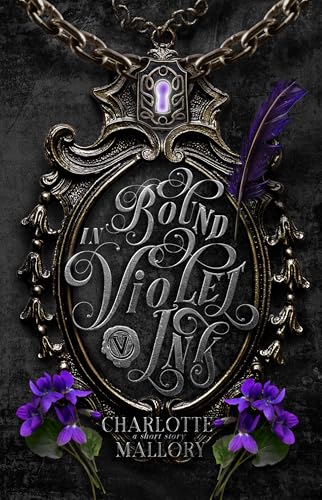
Interview with Charlotte Mallory, Author of Bound in Violet Ink

What's the story behind the story? What inspired you to write Bound in Violet Ink?

Romantasy can be such a daunting genre, so I wanted something that captured the "vibes" but in a short span of time, which meant really focusing on the letters being exchanged and the tension that builds before they meet.

If you had to pick theme songs for the main characters of Bound in Violet Ink, what would they be?

Mine by Sleep Token.

What's your favorite genre to read? Is it the same as your favorite genre to write?

Anything titillating.

What books are on your TBR pile right now?

Shh, don’t acknowledge it, or it will get very jealous of whatever I’m currently reading.

What scene in your book was your favorite to write?

When he gets her letter that has her scent on it, and realizes he’s committed to finding her now.

Do you have any quirky writing habits? (lucky mugs, cats on laps, etc.)

Mugs, mugs, mugs, and tiny espresso cups.

Do you have a motto, quote, or philosophy you live by?

The first draft is always telling the story to myself, whereas every draft after is learning to tell it to the reader.

If you could choose one thing for readers to remember after reading your book, what would it be?

That we should write letters to each other again with wax seals.


Charlotte Mallory is the author of the new book Bound in Violet Ink

Connect with Charlotte Mallory

Author Site

Facebook

Buy The Book


Buy The Book

Sign up for our email and we’ll send you the best new books in your favorite genres weekly.

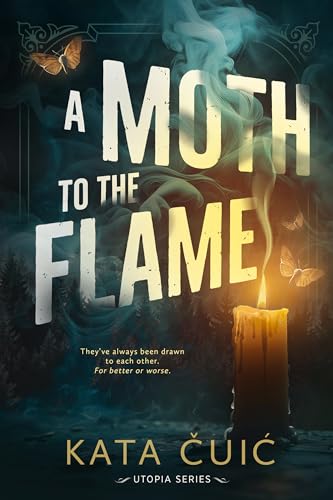
Interview with Kata Čuić, Author of A Moth to the Flame

What's the story behind the story? What inspired you to write A Moth to the Flame?

A Moth to the Flame started out the way all my books do, by asking myself, "What if...?" In this case, I was listening to a lot of fantasy series audiobooks to get through my miserable commute, and all the modern descriptions of fae kind of stuck with me. I’m from Appalachia, so I’m no stranger to folklore and cryptids. My mind just automatically made a connection to the descriptions of Mothman. The rest pretty much spiraled from there.

If you had to pick theme songs for the main characters of A Moth to the Flame, what would they be?

For Cordelia: “Control” by Halsey.
For Duke: “Just Pretend” by Bad Omens.
For them together as a couple: “Lightning and Thunder” by Marianas Trench.

What's your favorite genre to read? Is it the same as your favorite genre to write?

My favorite genre to read and write is romance, hands down. I live for the HEA. I read widely, but I always find myself dissatisfied with stories that don’t end well for the characters, even if it’s a realistic ending.

What books are on your TBR pile right now?

This is a trick question, right? LOL, my TBR pile is thousands of books long, and yet I have a running tally of releases that I’m waiting on. I’m greedy—what can I say?

What scene in your book was your favorite to write?

Without giving away any spoilers, I’d have to say it’s towards the end of the book when Cordelia and Duke take control of the narrative. They don’t play the game perfectly, but they are done lying down and taking it. I love to see characters come into their own strength and power.

Do you have any quirky writing habits? (lucky mugs, cats on laps, etc.)

It’s different for every book, actually. For some books, I might light a candle to start a writing session; for others, I just go, go, go. I’ve written before dawn and also burned the midnight oil. Every book has a distinctive personality, and I adapt in the way that fits the story best.

Do you have a motto, quote, or philosophy you live by?

Fight for something. It’s literally tattooed on my arm.

If you could choose one thing for readers to remember after reading your book, what would it be?

That you’re never alone, no matter how lonely you may feel.


Kata Čuić is the author of the new book A Moth to the Flame

Connect with Kata Čuić

Author Site

Facebook

Buy The Book


Buy The Book

Sign up for our email and we’ll send you the best new books in your favorite genres weekly.

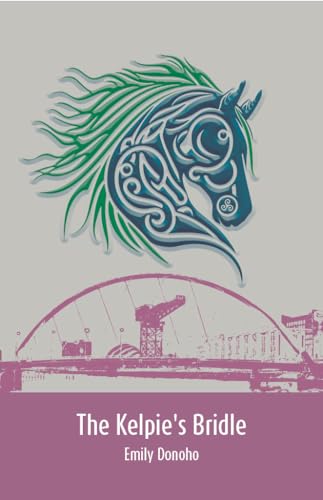
Interview with Emily Donoho, Author of The Kelpie's Bridle

What's the story behind the story? What inspired you to write The Kelpie's Bridle?

I bought a horse with a bizarre background; he came from a feral herd in Northeast Scotland that wasn’t meant to be there. The owner had turned a breeding herd of Highland ponies loose on the moors, and they lived wild until the population grew into a welfare crisis, prompting the authorities to step in. All the males were castrated, and twenty or thirty horses were removed in 2011. The rest continued living wild, but without breeding. There were subsequent, smaller roundups, and my horse was caught in one of those. The captured horses were tricky to handle and train, so not all of them ended up in good homes.

What's your favorite genre to read? Is it the same as your favorite genre to write?

I'm reading a lot of Doctor Who novelizations at the moment.

What books are on your TBR pile right now?

A couple of Doctor Who novelisations.

What scene in your book was your favorite to write?

The one where Matt has a whitey at the Edinburgh New Year’s street party.

Do you have any quirky writing habits? (lucky mugs, cats on laps, etc.)

I do a lot of my writing at 4 a.m.

Do you have a motto, quote, or philosophy you live by?

River Song: Does sarcasm help?
The Doctor: Wouldn’t it be a great universe if it did?

If you could choose one thing for readers to remember after reading your book, what would it be?

That Glasgow itself is a great character.


Emily Donoho is the author of the new book The Kelpie's Bridle

Connect with Emily Donoho

Facebook

Buy The Book


Buy The Book

Sign up for our email and we’ll send you the best new books in your favorite genres weekly.