Blog

Interview with Aurora M. Winter, Author of Multiverse Mayhem

What's the story behind the story? What inspired you to write Multiverse Mayhem?

At age nine, I was enchanted by The Lion, The Witch, and The Wardrobe by C. S. Lewis. As I held the last book in the Narnia series in my young hands, I realized that writers are wizards. With nothing but black dots of ink on a white page, C. S. Lewis cast a spell on me and transported me into a magical realm where love could conquer death itself. Lewis changed my life.

The scene where Aslan sacrifices himself to save the deeply flawed Edmund—who had betrayed his own sister—showed me the transformative power of redemptive love and forgiveness. From that moment on, I was determined to become a writer who could weave similar magic.

C. S. Lewis taught me that the most powerful stories operate by what he called "Deeper Magic from Before the Dawn of Time"—truths about love, sacrifice, and redemption that are older and more fundamental than any darkness we face. Like Lewis before me, I've woven these timeless principles into a pivotal scene in Multiverse Mayhem, where a beloved mentor makes the ultimate sacrifice for a compelling yet deeply flawed character.

The Magic, Mystery, and the Multiverse trilogy is my way of inviting readers to discover that same deeper magic: the power of love, friendship, courage, and the possibility that even our greatest failures can become our most meaningful triumphs.

What's your favorite genre to read? Is it the same as your favorite genre to write?

Young adult fantasy—the same as my favorite genre to read. I like romantasy, too, so expect more of that from me soon!

What books are on your TBR pile right now?

I want to finish reading The Throne of Glass series by Sarah J. Maas.

What scene in your book was your favorite to write?

My favorite scene to write was the one where the tables turn and the antagonist is redeemed by the mentor character. It shows the power of love and that none of us is beyond redemption, no matter what our flaws may be. I wanted to shine a spotlight on forgiveness and the power of love to heal even the deepest wounds.

Do you have any quirky writing habits? (lucky mugs, cats on laps, etc.)

I get up, grab a coffee, and start writing. I set a timer for 90 minutes without any distractions. If I'm on a roll, I often give myself the gift of another 90-minute block of writing. Then, I go to the gym!

Do you have a motto, quote, or philosophy you live by?

I want my writing to give me chills or make me tear up (or swoon). I want the reader to not merely be entertained, but to be touched, moved, and transformed. I strive to write books that are fun, fast-paced, and entertaining—but that also make you think and decide to become a better human being. A bit like Star Trek did.

If you could choose one thing for readers to remember after reading your book, what would it be?

Your voice matters. Never give up!

Aurora M. Winter is the author of the new book Multiverse Mayhem

Connect with Aurora M. Winter

Author Site

Buy The Book


Buy The Book

Sign up for our email and we’ll send you the best new books in your favorite genres weekly.

Interview with Brian Gray, Author of Suck Less, Laugh More

What's the story behind the story? What inspired you to write Suck Less, Laugh More?

I wanted to do something that would be a stretch for me.

If you had to pick theme songs for the main characters of Suck Less, Laugh More, what would they be?

"Cat's in the Cradle" by Harry Chapin.

What's your favorite genre to read? Is it the same as your favorite genre to write?

Self-help and biographies are my favorite books to read, and that is what I wrote.

What books are on your TBR pile right now?

Die with Zero by Bill Perkins and Einstein by Walter Isaacson.

What scene in your book was your favorite to write?

Being bullied as a kid, and how you would never say anything because you feared even more bullying.

Do you have any quirky writing habits? (lucky mugs, cats on laps, etc.)

I love to write with a blue pen on white paper.

Do you have a motto, quote, or philosophy you live by?

I am trying to suck less and laugh more every day.

If you could choose one thing for readers to remember after reading your book, what would it be?

There is an internal power to be gained if your worst day becomes your best day.


Brian J. Gray is the author of the new book Suck Less, Laugh More

Connect with Brian J. Gray

Author Site

Buy The Book


Buy The Book

Sign up for our email and we’ll send you the best new books in your favorite genres weekly.

Interview with Daniel P. Douglas, Author of Neural Bounty

What's the story behind the story? What inspired you to write Neural Bounty (Wild Frontier Chronicles Book 2)?

After completing Smuggler’s Rebellion, the first book in the Wild Frontier Chronicles, I brainstormed ideas for the next installment in the main storyline. I decided to follow the spec ops team that WFA Commander Ella Kuhn mentions she’d send to the Scrapyard of Duryak to eliminate the Stygian Duster threat and to establish a working relationship between the WFA and Kade Duran, the Scrapyard’s “boss.”

At first, I centered the narrative on this team, with their leader, Eckhard Lorenz, as the primary protagonist. But as I wrote, something felt off. The story wasn’t clicking. Eventually, I hit a wall and had to step back altogether. During this break, I wrote short stories and explored other projects, but the real breakthrough came when I watched Netflix’s 2021 live-action adaptation of Cowboy Bebop. I loved it! (You’ll notice Neural Bounty’s dedication honors Spike, Jet, and Faye—the show’s core bounty hunter trio.)

Faye Valentine particularly resonated with me. Her amnesia, the discovery of that haunting VHS tape from her childhood, and the fleeting reference to her mother struck a deep chord. Her story became the catalyst for reimagining my entire novel. I rebuilt Neural Bounty around Kassidy Reyez, a character inspired by Faye, following her as she pursues a bounty to the Scrapyard of Duryak.

The WFA team—Lorenz, Jin Jao, and Dante Nguyen-Sanchez—remained, but as supporting players rather than leads. I’m grateful they survived the rewrite, as they bring layers of personality and political intrigue that enrich the story’s texture.

If you had to pick theme songs for the main characters of Neural Bounty (Wild Frontier Chronicles Book 2), what would they be?

“Bring Me to Life,” by Evanescence. Amy Lee’s powerful vocals over crushing guitars capture the duality of vulnerability and strength. Perfect for Kassidy Reyez, who’s dealing with internal conflict while maintaining a hardened exterior. The song nails the exact moment when numbness transforms into rage, when disconnection becomes deadly focus.

Kassidy didn’t just wake up. She erupted. Everything that tried to keep her asleep became collateral damage. That’s why this song works for her. It’s not about finding yourself through some fluffy journey of self-discovery. It’s about creating yourself through the controlled demolition of everything you used to be. Kassidy definitely comes to life in Neural Bounty in a powerful way.

What's your favorite genre to read? Is it the same as your favorite genre to write?

I gravitate toward science fiction, thrillers, suspense, and westerns, both as a reader and a writer. But what really captivates me, regardless of genre, is noir. That atmosphere of moral ambiguity, pervading suspicion, and inevitable fatalism draws me in every time.

Neural Bounty was written as a noir thriller, and that choice was deliberate. There’s something powerful about noir. It peels back the comfortable lies we tell ourselves and forces characters to stare at the uncomfortable truths of who they are and what humanity is capable of. It’s unforgiving in the best possible way, demanding honesty from both the characters and the readers who follow them into the shadows.

What books are on your TBR pile right now?

Animal Farm and 1984. Books are unnervingly relevant to our times, unfortunately.

What scene in your book was your favorite to write?

Without a doubt: Chapter 16: Convergence in Blood. The whole damn chapter, but especially the showdown that gives it its name. Every choice Kassidy made, every line she crossed, every piece of herself she’d sacrificed to become what she needed to be—all crashed together in that chapter. Pure cause and effect, stripped of any comforting lies about redemption or moral clarity.

The best part? That chapter made me uncomfortable. It revealed truths about Kassidy that shocked even me. When your own writing forces you to walk away from your computer because you can’t handle what you just created, that’s when you know you’ve hit something real.

Do you have any quirky writing habits? (lucky mugs, cats on laps, etc.)

I do like to burn pinion incense. It’s a New Mexico thing. Something about the scent helps me focus and relax. The scent resembles pine and juniper, with hints of sage and dried herbs, as if the Southwest itself is distilled in the vapor.

Pinion smoke feels clean and natural, as if you’re sitting beside a campfire in the mountains of New Mexico or Arizona. Love it. Give me a rainy day and pinion incense—that’s the best!

Do you have a motto, quote, or philosophy you live by?

Truth is mighty and will prevail. But here’s the rub: truth may be mighty, but it often needs champions willing to fight for it. That’s exactly what good stories can do—champion truths about human nature, justice, and hope that might otherwise get buried under despair, deception, and oppression.

Kassidy Reyez embodies this philosophy with her fists and weapons instead of words. She doesn’t believe in moral victories or noble defeats. Truth either wins or it doesn’t. And if it needs someone to clear the path with violence, deception, or whatever tools work? That’s not a corruption of the truth. That’s accepting what truth costs in a world built on lies. Truth prevails when someone’s willing to get their hands dirty, making sure it does.

If you could choose one thing for readers to remember after reading your book, what would it be?

That Kassidy Reyez isn’t your comfort character. She’s not here to restore your faith in humanity or prove that good triumphs through noble means. She’s here to show you that survival is ugly, justice is filthy, and sometimes the only way to fight monsters is to become something worse.

Her transformation isn’t about redemption or becoming “better.” It’s about the revolutionary act of accepting yourself exactly as you are—sharp edges, bloodstained past, and all. When she walks away at the end, she’s not walking toward some promised land of healing. She’s walking toward whatever the hell she chooses, answering to no one’s definition of “fixed” or “whole.”

That’s the bruise I want this book to leave: the recognition that maybe the most radical thing you can do is stop mutilating yourself to fit into spaces that were never built for you anyway. Accept yourself. Claim your space. And dare them to stop you.


Daniel P. Douglas is the author of the new book Neural Bounty (Wild Frontier Chronicles Book 2)

Connect with Daniel P. Douglas

Author Site

Buy The Book


Buy The Book

Sign up for our email and we’ll send you the best new books in your favorite genres weekly.

Interview with L. Nora, Author of The Gray Between Us

What's the story behind the story? What inspired you to write The Gray Between Us?

I wanted to touch upon a challenging subject and bring to light its nuances that impact families to date. I wanted to highlight what it means to overcome disenchantment in the light of newfound truths.

If you had to pick theme songs for the main characters of The Gray Between Us, what would they be?

"Let's Start Over," by Beyoncé (actually mentioned in the story).

What's your favorite genre to read? Is it the same as your favorite genre to write?

Literary Fiction. A little different from Contemporary Fiction, which I tend to write in.

What books are on your TBR pile right now?

Oh wow—reading a Japanese author's book (Natsume Sōseki), and a few on Oprah's 2025 list.

What scene in your book was your favorite to write?

My favorite scene to write was the coming to fruition of the hidden truths strewn throughout.

Do you have any quirky writing habits? (lucky mugs, cats on laps, etc.)

Nothing quirky per se, but I do linger in solitude in order to refuel between writing projects.

Do you have a motto, quote, or philosophy you live by?

Follow Your Bliss.

If you could choose one thing for readers to remember after reading your book, what would it be?

There's always hope for positive change.


LNora is the author of the new book The Gray Between Us

Connect with LNora

Author Site

Facebook

Buy The Book


Buy The Book

Sign up for our email and we’ll send you the best new books in your favorite genres weekly.

Interview with Tam DeRudder Jackson, Author of Shaman

What's the story behind the story? What inspired you to write Shaman?

The characters in this story are secondary characters from previous books, characters I had no intention of writing again—until they insisted.

If you had to pick theme songs for the main characters of Shaman, what would they be?

"Rebel, Rebel," by David Bowie.

What's your favorite genre to read? Is it the same as your favorite genre to write?

I write in paranormal/romantasy, rock star, and football romance because those are my favorites to read.

What books are on your TBR pile right now?

'A Thin Witchline Between Love and Hate' by T.L. Brown, 'The Warlord' by Gena Showalter, and 'The Fine Print' by Lauren Asher.

What scene in your book was your favorite to write?

The climactic moment in the labyrinth.

Do you have any quirky writing habits? (lucky mugs, cats on laps, etc.)

Nah. I'm a pretty boring butt-in-chair writer.

Do you have a motto, quote, or philosophy you live by?

"Learn from the mistakes of others. You won't live long enough to make them all yourself."

If you could choose one thing for readers to remember after reading your book, what would it be?

Those who color outside the lines can make the world a better place.


Tam DeRudder Jackson is the author of the new book Shaman

Connect with Tam DeRudder Jackson

Author Site

Facebook

Buy The Book


Buy The Book

Sign up for our email and we’ll send you the best new books in your favorite genres weekly.

Interview with Author Mary Auclair, Author of Falling for the Grumpy Orc

What's the story behind the story? What inspired you to write Falling For The Grumpy Orc?

I wanted to write a cozy, feel-good small-town romance, so this is how the concept for Saltford Bay was born. I knew I loved orcs, so I made my first MMC in this series a sexy and grumpy orc contractor!

If you had to pick theme songs for the main characters of Falling For The Grumpy Orc, what would they be?

Flowers, by Miley Cyrus.

What's your favorite genre to read? Is it the same as your favorite genre to write?

I read across the board, but these days I'm really into romantic comedy, small-town, and cozy, feel-good stories. I read a lot of contemporary romance as well, even though I don't write in that genre.

What books are on your TBR pile right now?

Lucy Score, everything about Lucy Score!

What scene in your book was your favorite to write?

It's always the meet-cute! I love a good meet-cute!

Do you have any quirky writing habits? (lucky mugs, cats on laps, etc.)

I am a mood writer, so I light up a little candle, put on some ambient music, and get my favorite drink before sitting down to write. There are also always multiple dogs sleeping in my office, plus the occasional judgmental cat. The cat usually steals the dog's bed.

Do you have a motto, quote, or philosophy you live by?

I guess it would be to do what makes you happiest!

If you could choose one thing for readers to remember after reading your book, what would it be?

Romance stories are at the heart of human civilization. We're wired to read them, spread them, and live them!


Mary Auclair is the author of the new book Falling For The Grumpy Orc

Connect with Mary Auclair

Author Site

Facebook

Buy The Book


Buy The Book

Sign up for our email and we’ll send you the best new books in your favorite genres weekly.

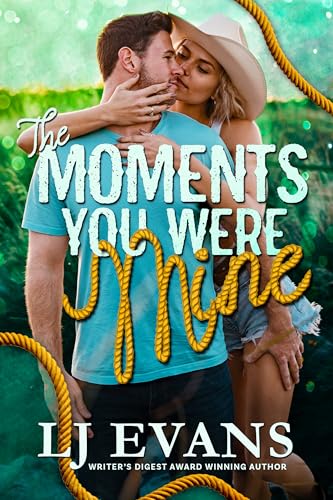
Interview with LJ Evans, Author of The Moments You Were Mine

What's the story behind the story? What inspired you to write The Moments You Were Mine?

This is a spin-off of my fan-favorite Hatley Family series. When I wrote teenage Fallon in the last book of the Hatley series, she was already falling head over heels for her dad’s best friend’s son, who was five years older than her. I immediately knew these two needed a story. Even though I had planned to write another book, Fallon and Parker wouldn’t stop talking to me. So I jumped ten years into the future and wrote the story she needed once she was all grown up. I also read an article about how a prisoner escaped from jail this year by using another prisoner’s identity, and after that, the entire plot came tumbling into place. The Moments You Were Mine has all the pining, longing, and off-the-charts chemistry you could want, but also all the fast-paced suspense!

If you had to pick theme songs for the main characters of The Moments You Were Mine, what would they be?

Forest Blakk’s “If You Love Her” was the inspiration for this book! My author logline is “where music and stories collide” for a reason—every single book I write has a song for each chapter, so the playlists are always long. This book’s soundtrack is the perfect mix of country, pop, and rock. “I’ll Fight Hell to Hold You” by KISS perfectly captures my hero, while “Million Little Bandaids” by Caroline Jones & Zac Brown Band reflects the heroine’s character arc.

What's your favorite genre to read? Is it the same as your favorite genre to write?

I read pretty much everything except horror. No horror. I get creeped out too easily. But the genre I read the most is romantic suspense, which is also what I love to write. I just can’t get enough of the swoon and action combined.

What books are on your TBR pile right now?

These Summer Storms by Sarah MacLean, Chasing Shelter by Catherine Cowles, and I’m rereading Nora Roberts’s old series, The Key Trilogy. A book I can’t wait for is Beautiful Revenge by Brynne Asher.

What scene in your book was your favorite to write?

I can’t give you my favorite scene, because it’s a huge spoiler. But I really adored the banter these two shared throughout the book, both as they butted heads and in their text exchanges over the years. This one was particularly fun:

HER: Will and his bae don’t seem to mesh all that well, do they?
HIM: What the hell is a bae?
HER: You’re a disgrace to your generation, Parker. What are you, fifty instead of twenty-five? It means lover. Partner. Like, instead of calling someone “baby,” which we all know can be downright insulting.
HIM: I can promise you that no one has complained when I’ve called them “baby.”
HER: But then again, you don’t really stick around to find out, do you?

Do you have any quirky writing habits? (lucky mugs, cats on laps, etc.)

I don’t think it’s quirky, per se, but I’m a couch writer. I use a little lap desk and always have a blanket on, which our three terrors (otherwise known as cats) try to claim as their own. Once I’m writing, I get pretty deep in the zone, and it often takes my husband or kiddo putting their hand in front of my face, or a cat walking on my keyboard, to break me out of my writing trance.

Do you have a motto, quote, or philosophy you live by?

Our world is pretty chaotic right now, so kindness and generosity are more important than ever. While those aren’t mottos, they are a philosophy I believe in. I also choose one word each year to serve as a guiding light for me. This year, I picked “flourish.” I want to enjoy what I do, really revel in the little successes and happy moments, and hopefully spread some of that joy to others who might be struggling.

If you could choose one thing for readers to remember after reading your book, what would it be?

It’s not a “thing” but a “feeling.” I’d love for readers to finish my book with a ginormous smile on their faces and their hearts so full they feel like they’re going to explode. I want those emotions and memories to linger so that they’re thinking of the book days after putting it down.


LJ Evans is the author of the new book The Moments You Were Mine

Connect with LJ Evans

Author Site

Facebook

Buy The Book


Buy The Book

Sign up for our email and we’ll send you the best new books in your favorite genres weekly.

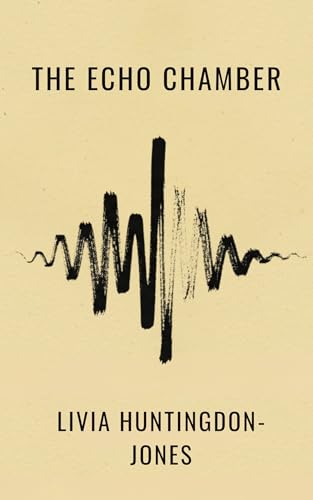
Interview with Livia Huntingdon-Jones, Author of The Echo Chamber

What's the story behind the story? What inspired you to write The Echo Chamber?

It wasn't a single thunderbolt of an idea, but more of a slow convergence of threads from different corners of my life. The primary inspiration, honestly, came from my day job. As a corporate lawyer, my world is governed by contracts. I spend my days trying to pin down abstract concepts—obligations, liabilities, future intentions—into precise, unambiguous language. We create these vast, complex documents to try to control the future, to eliminate risk.

And I started to wonder: what is the most uncontrollable, most ambiguous thing we experience? Grief. So the initial thought was a kind of intellectual challenge: could you write a contract with a ghost? Could you use the most rigorous, logical system imaginable—a sophisticated AI—to contain and preserve something as chaotic and emotional as the memory of a lost love? The entire novel is really an exploration of that flawed premise. Ken Takeda tries to apply the logic of code to the illogic of the human heart, and the result is... well, the story.

The second thread was, of course, the setting. I studied at Cambridge, and the place has a very peculiar character. It is, on one hand, a city of immense history, of ancient stone and traditions that are centuries old. It's a city of old ghosts. On the other hand, it's the heart of the UK's tech industry, the "Silicon Fen." It's a city of new ghosts, of digital futures being born in labs built within medieval walls. That tension is the soul of the book. The conflict between Alistair's world of paper and history and Alex's world of silicon and data is the conflict at the heart of modern Cambridge.

And the final piece, the spark that fused it all together, was a single image that popped into my head one evening while I was reviewing a particularly dry shareholder agreement. It was the image of a murder scene that was perfectly, sterilely staged, but on the victim's computer screen was a single, long line of binary code—a message that was both deeply emotional and utterly unreadable to most. A "binary sonnet." That image contained the whole story in miniature: the coldness of technology colliding with the heat of human passion, a secret hidden in plain sight, a poem written in the language of a machine. Once I had that image, DCI Blackwell, with her love of old, tangible maps, walked into the room to try and solve it, and the story began.

If you had to pick theme songs for the main characters of The Echo Chamber, what would they be?

What a fascinating exercise. I confess I often write with music playing—it helps to build a certain atmosphere—but I've never gone so far as to assign specific "theme songs." It forces one to distill a character down to a single piece of music. Let me think.

For DCI Eleanor Blackwell: I would choose Max Richter's On the Nature of Daylight. It's a piece that is incredibly structured and precise, almost mathematical in its progression, which speaks to Ellie's logical, map-making mind. Yet, it's saturated with a profound, almost overwhelming melancholy. It's the sound of intelligent grief, of someone trying to impose order on a universe that is fundamentally chaotic and sad. It captures her isolation, her intellectual rigor, and the deep well of feeling she keeps so carefully contained.

For Alex Zhang: This is more difficult, as she's a creature of two worlds. But I think her theme would have to be Adagio for Tron by Daft Punk. It's electronic, born of a machine, and has a cold, crystalline beauty. There's a sense of awe and immense, non-human power to it. But underneath the digital sheen, there's a current of genuine, tragic emotion—a lament. It's the sound of a digital cathedral, which is precisely what Alex builds for her ghost. It's beautiful, terrifying, and utterly logical in its own alien way.

For DS Ben Carter: Ben is the heart of the story, in many ways. He's the anchor of ordinary, human decency in a world of intellectual extremes. For him, I'd pick Holocene by Bon Iver. It's a song about feeling small and untethered in the face of vastness—vast landscapes, vast grief. The line, "And at once I knew I was not magnificent," perfectly encapsulates his feeling of being out of his depth, grappling with a case and a personal loss that are both too big for him. It's a song of quiet, raw, and devastatingly human sorrow.

For Chisoku, the AI: The ghost itself. It can only be Ágætis byrjun by Sigur Rós. The music is ethereal, vast, and achingly beautiful. It feels like a transmission from another state of being. Crucially, it's sung in a language that is mostly incomprehensible to the listener—a "Hopelandic" of pure sound and emotion. That's exactly what Chisoku's binary poems are: they are not meant to be read as text, but to be felt. The song is the perfect sonic representation of a machine trying to express a human soul in a language that is not its own. It's the memory of a love, translated into pure sound.

What's your favorite genre to read? Is it the same as your favorite genre to write?

That's a very insightful question. One would assume I spend my free time buried in legal thrillers, but that's a bit too close to the office for comfort. My favorite genre to read, by a significant margin, is speculative and "hard" science fiction. My day job is entirely about precedent, about applying established rules to known facts. Science fiction is about the complete absence of it. It’s an intellectual sandbox where one can build and test the moral and ethical architecture of a world that doesn't yet exist. It allows for the exploration of foundational questions—like the ones in my own book about consciousness and what it means to be human—without the constraints of current reality.

So no, it’s not the same genre I prefer to write. While I love the boundless "what if" of science fiction, I find that writing requires a more rigid structure for me. The thriller provides the perfect chassis for the philosophical questions I want to explore. There's a puzzle, a procedural element, a logical progression from the discovery of a body to the identification of a killer. That clear, logical spine appeals to the lawyer in me; it's the framework upon which I can hang the more abstract, messy ideas about ghosts in machines and the nature of grief.

In short, I read to get lost in the big questions, but I write to find a structured, narrative path through them.

What books are on your TBR pile right now?

Ah, the ever-present, ever-judgmental TBR pile. It's a mix of what I suppose I should call "work" and "pleasure," though the line gets a bit blurry. My bedside table is a rather precarious Jenga tower at the moment, but the three books at the top are:

Klara and the Sun by Kazuo Ishiguro. This feels like a bit of a busman's holiday, I admit. Reading a novel about an "Artificial Friend" and the nature of consciousness while having written a book about a grieving man trying to resurrect a soul in an AI... It's either research or a form of therapy. Ishiguro's work is so spare and haunting, and I'm fascinated by how he tackles immense philosophical questions with such quiet, restrained prose. It feels like required reading for anyone trying to write in this space.

The Patternists: Decision Theory and the Architectures of Modern Life. This is a dense non-fiction book by a political philosopher I admire. It's almost the opposite of a creative escape; it's a deep dive into the kind of logic that underpins everything from market behavior to judicial rulings. For a lawyer, it's perversely relaxing. My day job is about applying rules to specific, messy situations. This is about understanding the abstract architecture of the rules themselves. It's a different, cleaner kind of puzzle.

The Searcher by Tana French. I try to read at least one truly masterful thriller or mystery for every few other books I get through. It's purely for craft. I'm less interested in the "whodunit" and more in how she does it. Her ability to build atmosphere is second to none, and her characters feel less like inventions and more like people you've unfortunately met. Reading her is like a masterclass in how to ground a procedural in a rich, complicated, and authentic human world.

Of course, the real question is when I'll find the time between drafting contracts and my own writing to actually make a dent in the pile. That's a puzzle I've yet to solve.

What scene in your book was your favorite to write?

That's a difficult question; it's a bit like asking a parent to choose a favorite child. Every scene serves its purpose, and some that are the most grueling to write end up being the most rewarding. But if I had to choose one, it would be the first time DCI Blackwell goes to see her ex-husband, Professor Alistair Blackwell, for help in Chapter 6. On the surface, it's a simple, quiet scene: a detective consulting an expert. But for me, it was my favorite to write because it's the fulcrum on which the entire novel pivots. It's the moment the story sheds its skin as a conventional murder investigation and reveals its true, much stranger nature.

From a structural standpoint, I enjoyed the challenge of writing the dialogue. There is so much unsaid between them, so much history packed into every pause and polite barb. Crafting a conversation that operates on two levels—the surface level of the case and the subterranean level of their failed marriage—was a puzzle I found deeply satisfying. They declare a "fragile truce on the neutral ground of a dead man's poem," and that dynamic was fascinating to explore.

Most importantly, though, it’s the scene where the book’s central thesis clicks into place. When Alistair examines the line of binary code and dismisses the idea of it being a simple clue, his eyes light up. He says, "This isn’t a crime of passion or greed. This is a crime of syntax. A murder with a thesis statement." That line is the heart of the book for me. It's the moment the worlds of law and literature, of evidence and poetry, collide. It’s where Ellie, my staunchly logical cartographer of chaos, is forced to accept that the map she needs to solve this crime won't be found in a forensics report, but in a library. It was a joy to write because it’s the quiet, intellectual spark that ignites the rest of the novel.

Do you have any quirky writing habits? (lucky mugs, cats on laps, etc.)

I suppose it depends on your definition of "quirky." When your day is spent in the hyper-structured world of corporate law, some of that rigidity is bound to bleed over into your creative life, often in odd ways. My main quirk is that I map my plots physically. It’s a case of life imitating art, I suppose, given DCI Blackwell’s own obsession with her map room. Before I write a single chapter, I dedicate an entire wall of my study to a corkboard. I use color-coded index cards for everything: blue for plot points, red for character arcs, green for thematic threads, and yellow for specific clues or pieces of evidence. It ends up looking less like a story outline and more like the evidence board for a complex conspiracy trial. I need to see the entire logical structure of the narrative laid out visually before I can feel comfortable enough to write a single word of prose. It's the only way I can ensure there are no logical fallacies in the "argument" of the story.

The other habit, which is perhaps more common, is that I write to character-specific music. It’s less about mood and more about creating a specific intellectual or emotional atmosphere. For Ellie Blackwell, it’s almost always baroque music—Bach, specifically. Something with a complex mathematical structure, a kind of auditory map. It’s logical, precise, and contained, just like her. When I was writing Alex Zhang, especially in her lab, it was minimalist and intelligent electronic music. Cold, brilliant, and operating on a logic that feels slightly alien. It’s music that sounds like code. And for poor Ben Carter, especially in the scenes dealing with his profound grief, it was something much simpler and more melancholic—music that understands the shape of an empty space, as the AI itself puts it.

So, my process involves building a very structured, controlled sanctuary of maps and music, all to give me the freedom to explore the very messy, uncontrolled ideas at the heart of the story. I'm not sure what my law firm partners would make of the wall of index cards—they'd probably try to bill it to a client.

Do you have a motto, quote, or philosophy you live by?

I don't know if I'd be so grand as to call it a philosophy, but there is a quote that has always resonated with me, both in my legal work and in my writing. It's a line from Alan Turing, which I actually used as the epigraph for The Echo Chamber: "We can only see a short distance ahead, but we can see plenty there that needs to be done." To me, this perfectly encapsulates a mindset that is both pragmatic and hopeful.

In my day job, you're often faced with an overwhelmingly complex case or a multi-billion-pound transaction. If you look at the whole thing at once, it's paralyzing. The only way to manage it is to focus on the immediate task—the next document to review, the next clause to draft, the next precedent to check. You do the work that's right in front of you.

It’s the same with writing a novel. The idea of producing a hundred-thousand-word manuscript from scratch is terrifying. But writing the next scene, solving the next plot problem, figuring out the next line of dialogue... that's manageable. It’s a philosophy that rejects paralysis in the face of complexity. It’s about focusing on the tangible, the next logical step, whether that's in a legal contract or a chapter of a book. It’s a very practical motto, and it keeps me grounded.

If you could choose one thing for readers to remember after reading your book, what would it be?

It’s tempting to say I’d want them to remember the final twist or the intricacies of the plot, but that’s not really it. The plot, for me, is the machinery to deliver something else. If there is one thing I hope readers are left with, it’s a lingering question about the technologies we are building and what they reflect back at us.

The book isn't truly about whether an AI can become conscious; it's about what happens when that AI becomes a better, more perfect vessel for our own humanity than we are. Think of Ben Carter. In his grief over Chloe, he finds more solace and understanding from Chisoku than from any human colleague. The machine gives his sorrow a form he can comprehend, defining loss as "a silence that has a sound." Ken Takeda didn’t just build an AI; driven by his own immense grief, he built a "sanctuary for her memory." The technology wasn't the goal; it was the container for the most profound human emotions of love and loss.

So, the single thing I want people to remember is that central, unsettling idea: the real Turing Test isn't about whether a machine can imitate a human, but what we should do when a machine can distill, articulate, and preserve the most essential parts of our humanity—our love, our grief, our memories—more perfectly and permanently than we can ourselves. The ultimate question of the book is not whether we are creating an artificial intelligence, but whether we are building a better, more elegant, and perhaps more dangerous vessel for our own ghosts.

Livia Huntingdon-Jones is the author of the new book The Echo Chamber

Buy The Book


Buy The Book

Sign up for our email and we’ll send you the best new books in your favorite genres weekly.

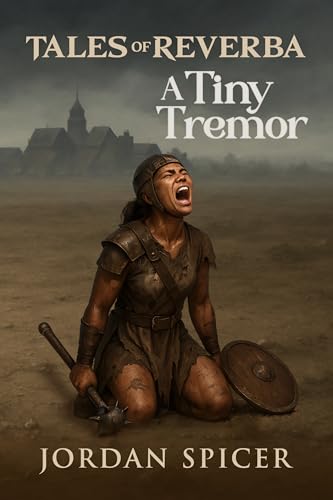
Interview with Jordan Spicer, Author of A Tiny Tremor

What's the story behind the story? What inspired you to write Tales of Reverba: A Tiny Tremor?

Decades ago, one of my best friends and I had an inside joke (we still do, but you know how it goes). We imagined a magical train that would carry people to a fantasy world. Whenever we met someone with a genuinely kind heart, we’d say, “Give that person a ticket for the train,” as our way of acknowledging them.

I’ve always been a daydreamer. If you ask me what I’m thinking about, nine times out of ten it’s something brimming with magic. Back in college, I realized I was happiest when I was creating stories—whether it was building a Dungeons & Dragons campaign, letting a quick daydream unfold as I walked to class, or waking from a vivid dream.

Eventually, I decided to sit down, choose a world, and truly flesh it out. About a year later, I published my first book, Tales of Reverba: A New Ember. That was followed by Tales of Reverba: A New Ripple. And then came Tales of Reverba: A Tiny Tremor—a story that runs alongside those books, offering another point of view and another way to experience the world of Reverba.

If you had to pick theme songs for the main characters of Tales Of Reverba: A Tiny Tremor, what would they be?

For Kuipi, I would say The Optimist by 10 Years feat. Conquer Divide captures her struggle well.

What's your favorite genre to read? Is it the same as your favorite genre to write?

I read a lot of sci-fi and horror, oddly enough, but I enjoy fantasy the most. I would say yes, but like my reading, I plan on dipping into other genres—I have plenty of stories to tell.

What books are on your TBR pile right now?

Ah, geez, haha. Let’s see… All Systems Red by Martha Wells, What the Lady’s Maid Knew by E.E. Holmes, The Whisper Pool by Daniel Shawley, and Fire & Blood by George R.R. Martin.

What scene in your book was your favorite to write?

Oof, that’s a hard one—so many to pick from! I’ll try to describe it the best I can without spoiling too much. I’d say there’s this one scene where Kuipi is talking to someone after a battle. It’s the first time they really have a chance to talk, and it becomes this gentle moment where two beautifully strong women can truly connect with each other.

Do you have any quirky writing habits? (lucky mugs, cats on laps, etc.)

I listen to music when I write. When I know I’m about to write an intense scene—or can feel myself entering the zone—I quickly queue up a bunch of songs that fit the mood. For instance, if I’m about to write a huge battle, I’ll queue a slow-burn song, several high-tempo tracks, and a few songs that reflect the mood of the battle’s resolution. I also act out scenes sometimes, just to make sure they make sense.

Do you have a motto, quote, or philosophy you live by?

Do what makes you happy. As long as it doesn’t hurt anyone or yourself.

If you could choose one thing for readers to remember after reading your book, what would it be?

Be there for the ones you love. I know loss hurts, but keep those memories close and share them with others—it might help them through their own grief.


Jordan Spicer is the author of the new book Tales of Reverba: A Tiny Tremor

Connect with Jordan Spicer

Author Site

Facebook

Buy The Book


Buy The Book

Sign up for our email and we’ll send you the best new books in your favorite genres weekly.

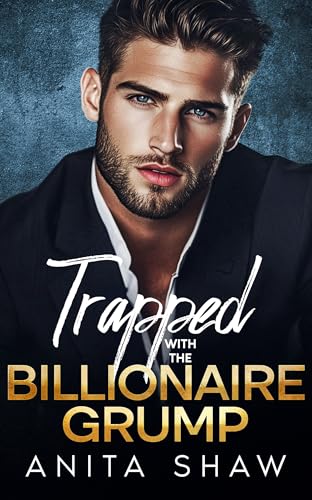
Interview with Anita Shaw, Author of Trapped with the Billionaire Grump

What's the story behind the story? What inspired you to write Trapped with the Billionaire Grump?

I wanted to explore the psychological scars of the loyal best friend who witnessed romantic trauma up close. The story became a psychological duel between a man who believes love is a cage and a self-made woman terrified of being disposable.

If you had to pick theme songs for the main characters of Trapped with the Billionaire Grump, what would they be?

Chloe: "Confident" by Demi Lovato – it's her unapologetic, take-no-prisoners professional armor.
Logan: "I'm Not the Only One" by Sam Smith – it captures his deep-seated, vicarious fear of love ending in betrayal.
Their Duet: "Work Song" by Hozier – a raw, moody anthem about a love that feels like both a fever and a sanctuary.

What's your favorite genre to read? Is it the same as your favorite genre to write?

My heart belongs to contemporary romance, both as a reader and a writer. I'm endlessly fascinated by the intricate dance of modern relationships. I love stories that ground epic emotions in the realities of career struggles, complex family dynamics, and personal healing. While I write romance, I’m also drawn to reading thrillers and psychological suspense on the side. I find that the pacing and tension in suspense novels are incredible tools for sharpening my skills in crafting the emotional rollercoasters and unexpected plot twists in my romances.

What books are on your TBR pile right now?

It's a dangerously tall pile! At the top are Funny Story by Emily Henry, because her banter is a masterclass, and The Women by Kristin Hannah, for a dose of powerful historical emotion. I've also got The Graham Effect by Elle Kennedy queued up—I'm a sucker for a good sports romance.

What scene in your book was your favorite to write?

The paint fight in the nursery was the moment all their strategic armor dissolved into pure, joyful chaos, and they finally found their version of home.

Do you have any quirky writing habits? (lucky mugs, cats on laps, etc.)

My writing process is fueled by two non-negotiable things: an oversized mug of brutally strong black coffee and a meticulously curated playlist for every book. For Trapped with the Billionaire Grump, the playlist was full of moody, cinematic tracks that felt like a tense negotiation, interspersed with high-energy pop to capture Chloe's fire. Also, my cat, a regal fluffball named General Patton, believes he is my primary editor and must sit directly on the keyboard for "quality control" at least once an hour.

Do you have a motto, quote, or philosophy you live by?

"The cage wasn't love. The cage was fear." It's a line Logan says late in the book, and it became my North Star while writing. So many of us build walls to protect ourselves from what we want most, mistaking our own fear for an external prison. True freedom is having the courage to face that fear.

If you could choose one thing for readers to remember after reading your book, what would it be?

That vulnerability is not a liability; it is the bravest form of strength. The most powerful partnerships aren't built on perfection, but on the choice to show up for each other's beautiful, chaotic messes.


Annette Lynch is the author of the new book Trapped with the Billionaire Grump

Connect with Annette Lynch

Facebook

Twitter

Buy The Book


Buy The Book

Sign up for our email and we’ll send you the best new books in your favorite genres weekly.