Blog

Interview with Jeremy Clift, Author of Space Shield: The Wrath of the Sun

What's the story behind the story? What inspired you to write this book?

The idea for Space Shield grew out of my fascination with how dependent modern life has become on technology in space. GPS, communications, aviation, financial systems, power grids, and, increasingly, autonomous vehicles all rely in some way on satellites and precise timing. An extreme solar storm could disrupt many of those systems simultaneously, with consequences that cascade far beyond space.

The idea really began to take shape during one of my visits to the annual Space Symposium in Colorado Springs. It’s a treasure trove for a science fiction writer because you can see emerging technology and talk directly with the scientists, engineers, and satellite specialists working on it. One conversation about the vulnerability of satellite systems to solar interference got me thinking: instead of simply trying to make individual satellites more resilient, could humanity eventually build something capable of protecting the planet itself?

That became the starting point for Space Shield. I imagined a future in which lunar industry has advanced far enough for humanity to manufacture an enormous distributed shield from the resources of the Moon and position it between Earth and the Sun. But once I had the technology, the more interesting questions followed. Who would pay for something built to protect everyone? Who would own it? And what happens when one corporation controls technology on which billions of lives depend?

Those questions turned Space Shield from an engineering idea into a human story about power, ambition, family, love, and sacrifice—all unfolding against a countdown to a potentially devastating solar event.

If you had to pick theme songs for the main characters of your book, what would they be?

This is a fun one. For Arturo Rich, I’d choose “The Pretender” by Foo Fighters. He spends much of Space Shield trying to escape the enormous shadow cast by his billionaire father, Howie, and prove that he can make his own choices rather than simply inherit someone else’s empire.

For Airi Abe, it would have to be “Titanium” by David Guetta featuring Sia. She’s a test pilot, fearless and fiercely independent, and after surviving a devastating crash, she refuses to let it define her. There’s a resilience to her that makes the song feel right.

And for Howie Rich? Perhaps “Money” by Pink Floyd. Howie sees an existential threat to humanity and immediately understands that saving the world could also be an extraordinary business opportunity. That probably tells you quite a lot about him!

If Arturo and Airi needed a song together, I might choose “A Sky Full of Stars” by Coldplay. Their relationship develops against this enormous backdrop of the Moon, the Sun, and a planet running out of time, but ultimately, theirs is a very human story.

What's your favorite genre to read? Is it the same as your favorite genre to write?

I write science fiction, but my reading is much more eclectic. I certainly enjoy good science fiction, particularly books that combine big ideas with strong characters, but I also read a great deal of history and biography. I spent many years as a journalist, so I suppose I’ve never lost the urge to understand why people behave as they do and how events, personalities, politics, and ideas come together to shape the world.

I’m also fascinated by literature itself—how great writing works and why certain books and plays continue to speak to us across centuries. Shakespeare is an enduring interest, and I enjoy reading criticism and discussions about his plays almost as much as the works themselves. Among contemporary writers, I’m particularly drawn to Rachel Cusk and other authors who experiment with voice, character, and the way we construct stories about our lives.

So science fiction is definitely my favorite genre to write, but I wouldn’t call it my single favorite genre to read. Reading widely outside science fiction is important to me. History, biography, literary fiction, and Shakespeare all find their way, consciously or otherwise, into the worlds and characters I create.

What books are on your TBR pile right now?

My TBR pile is, as usual, rather ambitious. I want to spend more time with Iain M. Banks and his Culture novels. I came to Banks later than I should have, and there are still books in that extraordinary universe waiting for me.

I’m also looking forward to Ann Leckie’s Radiant Star, her new standalone novel set in the Imperial Radch universe. I’ve always admired the way Leckie combines enormous science-fiction ideas with questions of identity, culture, and power.

Then there’s Rachel Cusk’s Life of M, which is due out later this month. Cusk is about as far from space opera as you can get, but I find the way she experiments with voice, identity, and the boundaries between fiction and reality fascinating.

And on the nonfiction side, I have Robert Zubrin’s The New World on Mars on my list. Zubrin has spent decades thinking seriously about how humans might actually establish a civilization on Mars, so that’s obviously irresistible territory for someone writing about humanity’s future in space.

That’s a fairly accurate picture of my reading habits: give me space opera, experimental literary fiction, and a serious argument about colonizing Mars, and I’m happy.

What scene in your book was your favorite to write?

One of my favorite scenes to write was when the first elements of Kavach—the orbital shield—are finally launched from the Moon. I’d spent so much time researching and imagining how such an extraordinary piece of infrastructure might actually be manufactured, launched, and assembled that it was enormously satisfying to finally set it in motion.

The individual elements disperse and begin organizing themselves, almost like a murmuration of birds, gradually becoming part of this vast protective structure between the Earth and the Sun. It’s a moment when an idea that has seemed almost impossibly ambitious suddenly becomes real.

But what I enjoyed most was that the scene isn’t really about machinery. It’s about the people watching it happen. They’ve risked careers, relationships, and in some cases, their lives to get this far, and for a brief moment, they can believe they might actually succeed.

I also loved writing the quieter scenes between Arturo and Airi. Against this enormous backdrop—a threatening Sun, lunar industry, and humanity racing against time—their relationship brings everything back to a very simple question: what exactly are we trying so desperately to save?

Do you have any quirky writing habits? (lucky mugs, cats on laps, etc.)

I’m afraid I don’t have a lucky mug or a cat sitting on the keyboard. My main writing quirk is that I’m very easily distracted! I’ll start researching one small scientific detail and suddenly discover that an hour has disappeared down some fascinating rabbit hole.

I do walk every day, though, and that’s probably the most important part of my writing routine. I often find that when I step away from the computer, problems with a character, a scene, or a plot suddenly begin to sort themselves out. I’ll set off thinking about one particular problem and come home with a conversation, a new scene, or sometimes a completely different direction for the story.

So I suppose quite a lot of my writing actually gets done while I’m not writing at all.

Do you have a motto, quote or philosophy you live by?

I suppose my philosophy is quite simple: try to understand before you judge. I’ve been fortunate enough to live and work in many different countries and cultures, and one thing that experience taught me is that there is rarely only one way of looking at the world. People’s beliefs and choices make much more sense when you understand where they come from. I think curiosity and tolerance go together—you listen, you ask questions, and you remain open to the possibility that someone who sees the world very differently from you may still have something important to teach you.

If you could choose one thing for readers to remember after reading your book, what would it be?

I think it would be this: tomorrow is arriving much faster than we imagine. We often dismiss ideas as “science fiction” because they seem too distant or improbable to worry about today. But artificial intelligence, genetic engineering, autonomous vehicles, permanent settlements on the Moon, and our growing dependence on satellites are moving from speculation toward reality remarkably quickly. The same is true of the risks. An extreme solar storm isn’t something I invented for Space Shield. What science fiction allows us to do is take a real possibility, follow its consequences, and ask whether we are prepared for them. So if readers remember one thing, I hope it’s that science fiction isn’t only about imagining distant futures. It can be a way of thinking about decisions we may have to make much sooner than we expect. The future has a habit of becoming the present while we’re still debating whether it’s possible.


Jeremy Clift is the author of the new book Space Shield: The Wrath of the Sun (Sci-Fi Galaxy Series Book 3)

Connect with Jeremy Clift

Author Site

Facebook

Twitter / X

Space Shield: The Wrath of the Sun (Sci-Fi Galaxy Series Book 3)

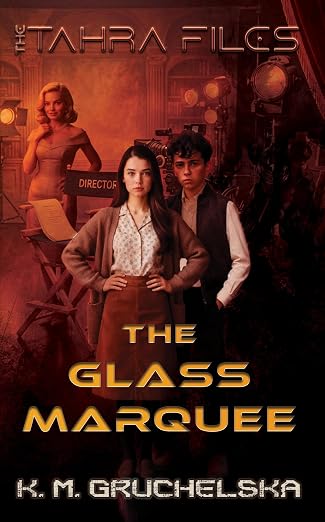
Interview with K.M. Gruchelska, Author of The Glass Marquee

What's the story behind the story? What inspired you to write this book?

This is a spin-off from a larger sci-fi epic called Seven Point Eight, and it features the same protagonist, Tahra Mamoun, covering her teenage years. The Glass Marquee continues the development of her remote viewing abilities, along with the enemies-to-friends relationship with Edward, who bullied her as a child. It has a darker angle, inspired by various conspiracies revolving around Hollywood, and I chose to tap into those themes, such as manipulation, control, and propaganda.

What's your favorite genre to read? Is it the same as your favorite genre to write?

I generally read sci-fi, paranormal thrillers, and some YA books, although lately, most of what I read is for the course I teach. Hopefully, one day I’ll have the time to kick off my shoes, put my feet up, and sink my teeth into a good book once more. I’m always super busy, so reading for pleasure is truly a luxury.

What books are on your TBR pile right now?

Actually, I have quite a few articles to read about sociolinguistics, plus research for the books I’m going to write next year. Much of my inspiration is also derived from YouTube, which is a minefield of conspiracies and hidden history.

What scene in your book was your favorite to write?

Although there are plenty of dynamic scenes, such as tense moments in which Tahra tries to outwit her father and his rules, my favourite scenes are always the ones showing the interplay between her and Edward. He’s become her rock and anchor, yet he also provides valuable life lessons for Tahra, who can be self-centred at times due to her sheltered upbringing.

Do you have any quirky writing habits? (lucky mugs, cats on laps, etc.)

Our rescue cats sometimes plant their butts on the keyboard, but the senior one usually patrols the communal garden outside, while the younger cat prefers the windowsills and only steals my office chair when I get up to make tea. I can’t drink a lot of coffee, but I am a tea connoisseur, and a carefully brewed potion supercharges me for a long writing session. My favourite is a Moroccan-style tea—a little bit spicy but flavoured with mint, lemon, and orange.

Do you have a motto, quote or philosophy you live by?

My philosophy has always been not to follow the crowd. I don’t necessarily write what’s immediately popular or what’s the current trend. It comes from the heart.

If you could choose one thing for readers to remember after reading your book, what would it be?

Loners are always the special ones, so be kind. Look beneath the surface of stardom - it may not be quite what it seems.


K.M. Gruchelska is the author of the new book The Glass Marquee (The Tahra Files Book 3)

Connect with K.M. Gruchelska

Author Site

The Glass Marquee (The Tahra Files Book 3)

Interview with Violet Crane, Author of The Morning After Las Vegas

What's the story behind the story? What inspired you to write this book?

I wanted to write romance, but not fantasy. I wanted to write about the messy part. I wanted something deeper than that. I wanted to write about human nature: secrets, lies, betrayals, consequences of wrong choices, and trusting the wrong people. The Morning After series—I liked the idea of what happens after a one-night stand. What could possibly bring two people back together when the night before was supposed to last for a moment, not a lifetime? That’s where The Morning After Las Vegas was born.

If you had to pick theme songs for the main characters of your book, what would they be?

How about Sheryl Crow’s “My Favorite Mistake”? I know I’m dating myself here, but Donna Summer’s “Hot Stuff” and “Love to Love You Baby” can work too.

What's your favorite genre to read? Is it the same as your favorite genre to write?

I love suspense—it can be romantic, it can be a psychological thriller, it can have steamy sex scenes or not. I love twists, turns, and betrayal.

What books are on your TBR pile right now?

Right now, everything by Freida McFadden. (Dear Debbie and The Housemaid—I didn’t see that ending coming.)

What scene in your book was your favorite to write?

Undoubtedly, my favorite scene had to be John and Nadine’s date at the Rise Festival (it’s based on a date I had—I don’t care if the world knows it either).

Do you have any quirky writing habits? (lucky mugs, cats on laps, etc.)

I have a secret message in every newsletter to T.S. (I can’t tell you who he is—but you can guess.)

Do you have a motto, quote or philosophy you live by?

I was having a really bad day, and I read this, and it helped me to remember everything I had overcome. I am not what they left behind. I am what I chose to rise from. They didn’t break me—they built the fire I write with now. I write for the women who’ve been abandoned, underestimated, used, abused—and got back up anyway. I am not afraid to stand alone. I am not afraid to take the lead.

If you could choose one thing for readers to remember after reading your book, what would it be?

One choice can change everything. We all make decisions in moments of loneliness, anger, fear, or desperation without knowing where they’ll lead us. Sometimes we trust the person we shouldn’t, and sometimes the person we never expect to come through becomes the one who changes everything—in the best possible way. The morning after isn’t always about regret—it’s about what we choose to do next.


Violet Crane is the author of the new book The Morning After Las Vegas

Connect with Violet Crane

Author Site

Facebook

The Morning After Las Vegas

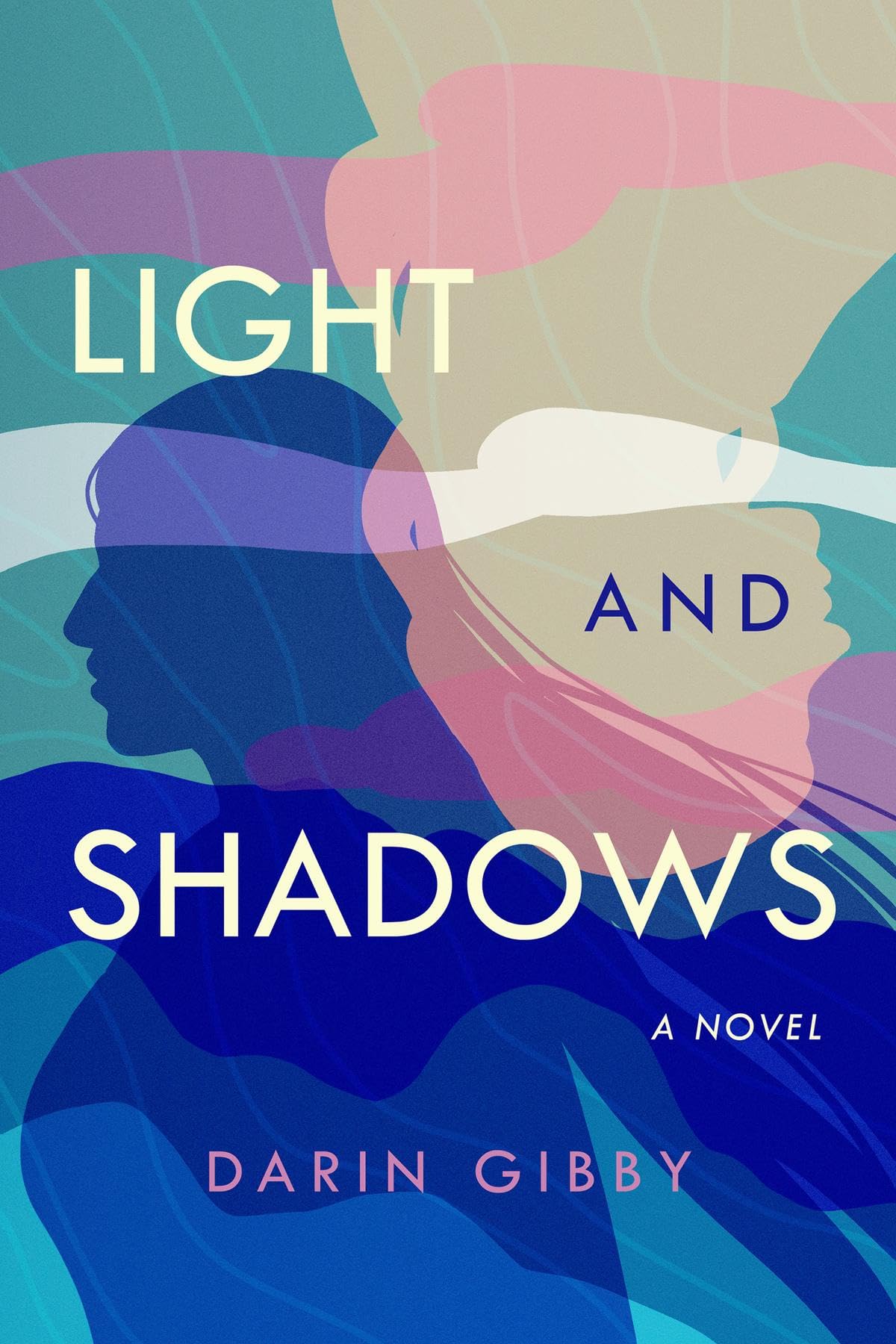
Interview with Darin Gibby, Author of Light and Shadows

What's the story behind the story? What inspired you to write this book?

For years I’ve wanted to write a book about opposites, about why there is good and evil, heavy and light, etc. The problem was finding a set of characters who could demonstrate this. I needed a family with a pair of opposite sisters. I found exactly what I needed when I spent some time in the Wind River mountain range deep in the heart of Wyoming. At the Allen Ranch, we were guided deep into the mountains on horseback, where we spent the week hiking, fishing, and enjoying the majestic Wind River range. While there, I found the characters that helped propel the story.

If you had to pick theme songs for the main characters of your book, what would they be?

Gracey—the wild-hearted, tender, land-connected sister who never felt like she fit the “golden child” mold. “Wildflowers” — Tom Petty.

Lucy—flashy, ambitious, always wanting the spotlight. “This Is Me” from The Greatest Showman.

Dade—steady, inventive, patient, the character quietly holding things together. “Ho Hey” — The Lumineers.

Mary—the mother carrying decades of secrets and grief with quiet strength. “The Rose” — Bette Midler.

Sam—Gracey’s biological father, marked by loss and a kind of hard-won redemption. “The Dance” — Garth Brooks.

What's your favorite genre to read? Is it the same as your favorite genre to write?


I like to read from any genre, provided the book is well written. A well-written book is the key for me. But if I had to choose only one, it would probably be narrative nonfiction, especially from authors like Erik Larson, Jon Krakauer, and Laura Hillenbrand. A close second would be upmarket fiction, with books from authors like Kristin Hannah. I write in both of these genres, and I love aspects of both. With literary fiction, I love the challenge of getting inside each character and trying to see life as they view it. Nonfiction is all about the discovery of some shocking story that has never been told.

What books are on your TBR pile right now?

The Anthony Bourdain Reader
A Far-Flung Life by M. L. Stedman
Yesteryear by Caro Claire Burke
London Falling by Patrick Keefe
Kin by Tayari Jones
Strangers by Belle Burden

What scene in your book was your favorite to write?

My favorite “fun” scene is the one where Gracey goes to Los Angeles to be with her sister, Lucy. She experiences the beach for the first time, wearing her cowboy boots and hat—a stark contrast to the beach scene in Southern California.

Do you have any quirky writing habits? (lucky mugs, cats on laps, etc.)

I live on the beach in La Jolla, California, so I’m often on the beach under an umbrella while I pluck away at the keys on my laptop.

Do you have a motto, quote or philosophy you live by?

Never let a sunny day go to waste.

If you could choose one thing for readers to remember after reading your book, what would it be?

The main idea I wanted to instill is that life isn’t about getting to one place and avoiding going to another. Life is about the ride between the ups and downs. That is what changes you and makes life meaningful. And the family setting is the perfect place to experience all of this.


Darin Gibby is the author of the new book Light and Shadows

Connect with Darin Gibby

Author Site

Facebook

Twitter / X

Light and Shadows

New Mystery and Thriller Books to Read | August 18

Hold on to the edge of your seat as we hunt for clues and solve the case with these exciting new mystery and thriller books for the week! There are so many bestselling authors with new novels for you to dive into this week including Maggie FitzRoy, Kae Allen, James Patterson, Karin Slaughter, Noelle W. Ihli, and more. Enjoy your new mystery, thriller, and suspense novels. Happy reading!


New Science Fiction and Fantasy Books to Read | August 18

Set off on an adventure to new worlds this week! This selection of new science fiction and fantasy books will surely please! Science Fiction fans should be excited about the latest from bestselling authors Ulysses Namon, Jeremy Clift, Robert Rath, Jasper T. Scott, and Kayle Widmyer. If Fantasy is what your library needs, you’ll be able to pick up the latest from Liv Zander, Vasilisa Drake, Trio Stars, Chris Vines, and Zoe Nauman. Enjoy your new science fiction and fantasy books. Happy reading!