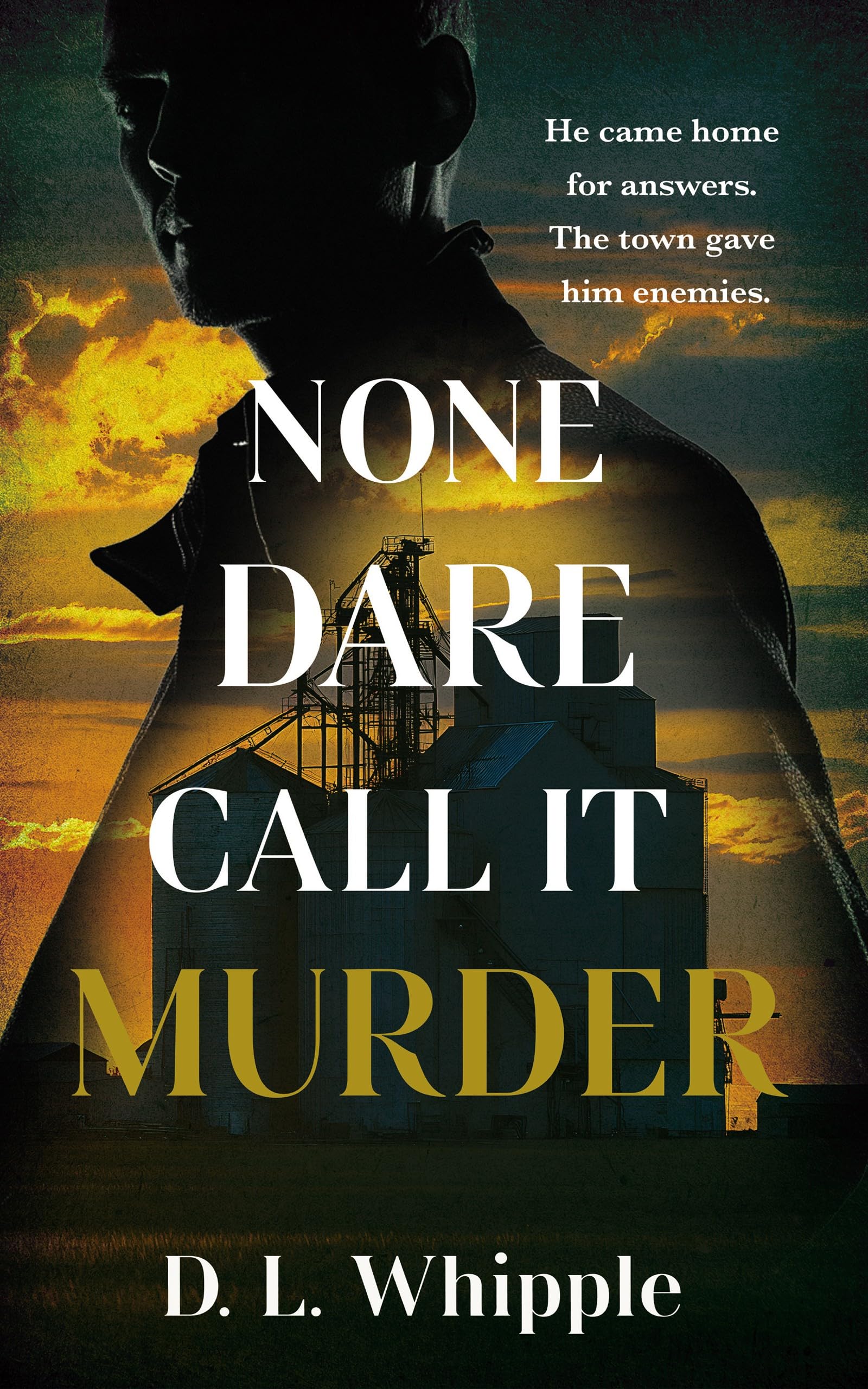

What's the story behind the story? What inspired you to write this book?
None Dare Call It Murder grew out of the underlying tensions in small-town life—silent histories, resentments, and loyalties that shape people more deeply than they often acknowledge. I wanted to examine how a community responds when a death cannot be easily explained and how ordinary people can be forced into unexpected moral dilemmas. The story draws inspiration from rural Iowa scenery, the burden of memory, and the notion that truth in close-knit communities is seldom straightforward and always contested.
If you had to pick theme songs for the main characters of your book, what would they be?
Mara Ellison: “House of the Rising Sun” — The Animals; “In the Air Tonight” — Phil Collins.
What's your favorite genre to read? Is it the same as your favorite genre to write?
I don’t stick to just one genre or read all works by a single author. I usually avoid serials where characters remain the same and only the plot evolves. My reading preferences favor literary crime and rural noir—stories where atmosphere matters as much as plot, and characters face moral ambiguity. I enjoy writing within this genre too. There’s a compelling quality in quietly probing darkness, depicting violence without glamour, and seeking justice without certainty.
What books are on your TBR pile right now?
Jane Harper, Last One Out
Caroline Frost, The Last Verse
Amy Tintera, Listen for the Lie
Nina Simon, Mother-Daughter Murder Night
What scene in your book was your favorite to write?
I don’t have favorites, but the most challenging scenes to write linger with me. The scene where Casey confronts Wade’s best friend at the Sand Pit was especially difficult. I was deeply invested in both characters and their relationship. In that scene, Casey must choose between what his heart and gut tell him is true and what he believes, with a man’s life possibly at stake. To avoid spoiling the story for readers, I’ll leave it at that.
Do you have any quirky writing habits? (lucky mugs, cats on laps, etc.)
I love all animals. Fundamentally, they’re honest. They can’t hide their feelings. If you’re attuned to your surroundings, you know whether an animal likes you. Most of the time, they see through a person’s deception. I’ve had several muses, all cats, all strays or shelter residents. Toby, a twenty-pound tuxedo cat, is my current in-house muse. Sometimes, I sit with my fingers on the keyboard, staring at the blank screen, when Toby shows up. He can be irritating, sitting in front of my computer and refusing to move until I let him onto my lap. Nonetheless, that short break from writing often helps me find the words that later appear on the screen.
Do you have a motto, quote or philosophy you live by?
Never see failure as the end; it’s simply a step toward achievement. Top performers often learn from mistakes and setbacks. I’ve noticed that early success can sometimes hold people back more than failure. Hard work fosters a greater appreciation for accomplishments. If you struggle to accept and learn from failure, writing might not be your strength. In my first novel, The Outcast, I included Nietzsche’s quote, “What doesn’t kill you makes you stronger,” as an epigraph. Ultimately, how you interpret and respond to failure determines its importance.
If you could choose one thing for readers to remember after reading your book, what would it be?
I hope readers remember that real courage rarely looks dramatic. It’s the quiet kind—the kind shown by people who choose to stand up, ask hard questions, or refuse to accept the easy lie. Casey Colter isn’t a superhero; he’s a man trying to make sense of grief, betrayal, and the place he still calls home. His determination reflects the kind of everyday bravery that often goes unnoticed.